

Picture a normal Wednesday. Coffee on the run, no breakfast, three meetings that overrun, a sad desk lunch at 3 p.m., and by 8 p.m. you can barely face the kitchen. The gym bag sits in the car, untouched again.
That’s not a willpower problem. It’s a schedule problem, and it’s why weight loss for busy professionals needs its own approach instead of a generic diet plan written for people with free evenings.
In this guide you’ll see why managing your weight matters, how weight loss for busy professionals really works, which obstacles trip people up most, and ten tips you can try this week. No crash diets. No two-hour workouts.
Why Weight Loss Management Matters
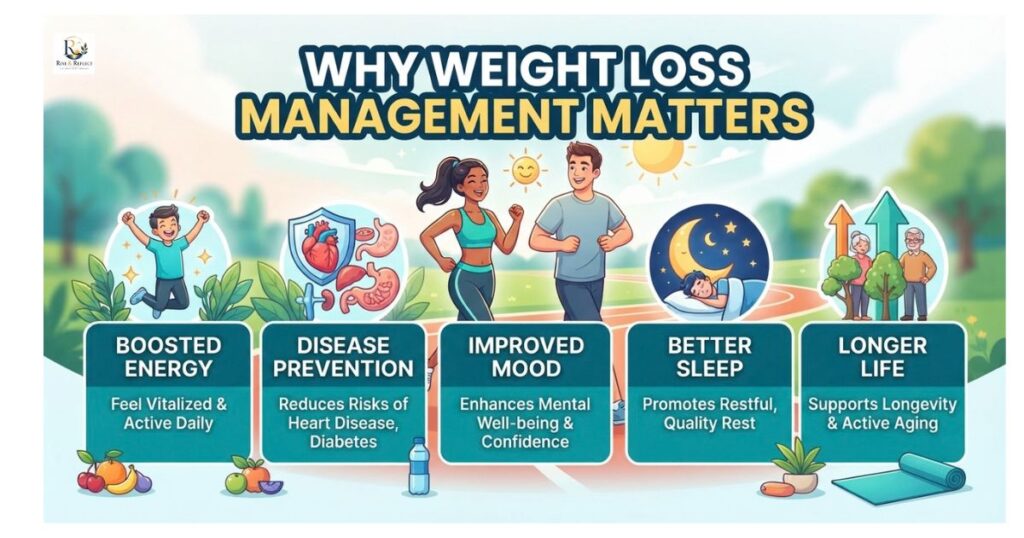
Extra weight isn’t only about how clothes fit. Over the years it adds strain on your heart, your joints and your blood sugar. The Centers for Disease Control and Prevention (CDC) links excess weight with type 2 diabetes, high blood pressure, heart disease and sleep apnea.
Work makes it trickier. Long hours, hours of sitting and constant low-level stress make weight creep up and make losing it feel slow. Deciding to manage your weight on purpose, instead of hoping it sorts itself out, protects your health and your energy at work. That’s the whole idea behind weight loss for busy professionals: results that fit around the job, not in place of it.
How Does Weight Loss Management Work?
It comes down to energy balance, but a handful of pieces make it work in real life.
Creating a Caloric Deficit
You lose weight when you eat a little less than you burn, over time. Small and steady wins. The CDC says one to two pounds a week is a safe pace and more likely to stay off than a fast drop. For most people that means slightly smaller portions and a few swaps, not skipping meals.
Prioritizing Nutrient-Dense Foods
Some foods fill you up and some just pass the time. Lean protein, vegetables, fruit, beans, whole grains and nuts keep hunger quiet for hours. A chicken and chickpea bowl gets you to dinner. A muffin and a sweet latte usually gets you to about 11 a.m.
Incorporating Regular Physical Activity
The CDC recommends at least 150 minutes of moderate activity a week, plus strength work on two days. Sounds like a lot, but a brisk 20-minute walk most days gets you close. Add some strength training too, since muscle burns more energy even when you’re sitting still.
Monitoring Progress and Adjusting Goals
You don’t need an app for everything. Weigh yourself once a week, measure your waist once a month, or just notice how your trousers feel. If nothing moves for three or four weeks, tweak one thing (portions, steps or sleep) rather than tearing up the whole plan.
Maintaining Long-Term Healthy Habits
Losing weight is one job. Keeping it off is a different one. Choose habits you can picture yourself doing next year, not a 30-day sprint you’ll quit when a busy quarter hits.
A Balanced Approach to Weight Loss for Busy Professionals
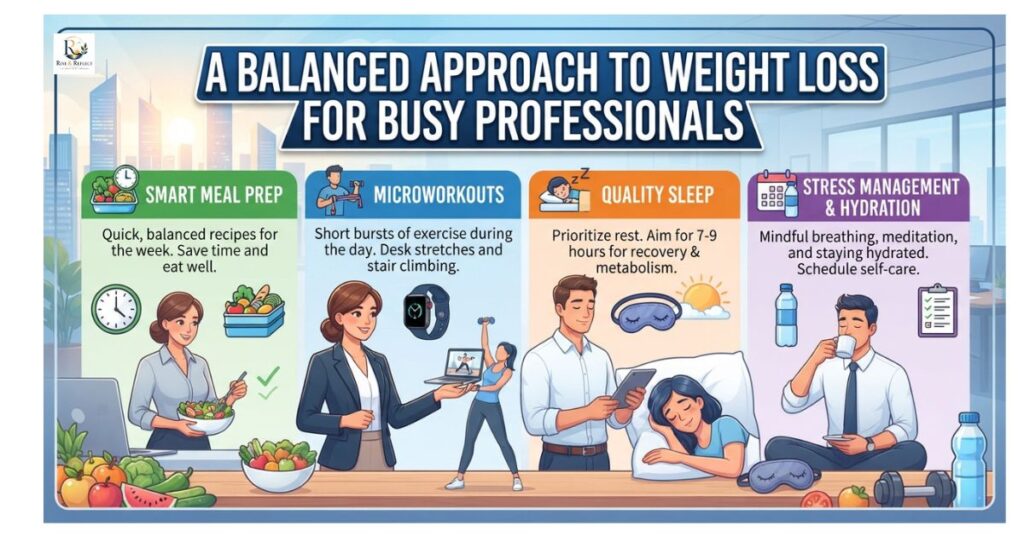
Extreme plans fall apart the first time a deadline lands. Cut out whole food groups or promise yourself six workouts a week and you’ll probably be done by week three.
Balance is what lasts. Build most meals around protein and vegetables, enjoy the client dinner and the birthday cake without guilt, and move a bit every day. Miss a workout? Fine. Do ten minutes tomorrow. Showing up often beats showing up perfectly.
Health Benefits of Weight Loss
You don’t have to hit some dream number to see results. Mayo Clinic points out that losing even 5 percent of your body weight can improve blood pressure, blood sugar and cholesterol. If you weigh 90 kg, that’s roughly 4.5 kg. Not a huge ask for a real health gain.
Health Benefits of Weight Loss Management
The scale is only part of the story. Here’s what tends to change in everyday life.
Reduced Risk of Chronic Diseases
Keeping a healthy weight lowers your odds of type 2 diabetes, heart disease and fatty liver disease, and it can take pressure off sore knees and backs, which is handy if you sit or stand all day.
Improved Energy Levels and Productivity
After a few weeks of better meals and more movement, many people say the 3 p.m. slump softens. Steadier blood sugar means fewer crashes. Better fitness means the stairs don’t feel like a punishment.
Enhanced Mental Well-Being
Moving more and eating well can lift your mood and take the edge off stress. There’s also a quieter benefit: you start trusting yourself again, because you said you’d do something and you did.
The Lasting Impact of Weight Loss Management
These habits pay you back for years. A daily walk after lunch, a few go-to meals, a proper bedtime: none of it is dramatic, but it adds up. People who sort this out in their thirties and forties often have far fewer health scares in their fifties and sixties. It’s the ordinary Tuesdays that count.
Weight Loss Management and Work Performance
Your waistline and your workday are more linked than most people think.
Sharper Focus and Better Concentration
Regular exercise and balanced meals help your brain get what it needs and keep energy steady. You think clearly, decide faster and skip the post-lunch fog. For many people, weight loss for busy professionals turns out to be a productivity upgrade as much as a health one.
Reduced Absenteeism
Healthier people usually catch fewer bugs, recover quicker and deal with fewer aches. Fewer sick days means you stay reliable, which your team, and your boss, will notice.
Embracing Weight Loss Management for a Healthier Life
Try dropping the “diet” mindset. Weight loss for busy professionals works best when it feels like part of your day and not one more thing on the to-do list. It’s not a punishment or a quick fix. It’s a way of looking after yourself so you can keep doing what you care about for longer. Pick one habit, make it automatic, then add another.
What Are Common Challenges in Weight Loss for Busy Professionals?
Know what’s coming and it’s easier to deal with.
Lack of Time for Meal Preparation
After a ten-hour day, cooking feels impossible, so takeout wins. Batch cooking helps. Give one hour on Sunday to roasting vegetables, grilling some chicken and cooking a pot of rice, then mix and match all week.
Inconsistent Exercise Routine
A fixed 6 p.m. gym slot dies the moment a meeting runs late. Go flexible: a ten-minute walk between calls, a few squats and push-ups at home, the stairs instead of the lift.
Stress and Emotional Eating
Stress hormones can make you crave sugary, salty snacks. Before you open the biscuit tin, try a short walk, a few slow breaths or a glass of water. And keep better options close, like fruit or nuts.
Social Events and Business Meetings
Client lunches and office parties come with the job. Have a protein snack first, pick grilled over fried, share dessert, and don’t beat yourself up over one meal. It’s your pattern that matters.
Travel and a Disrupted Routine
Airports and hotels aren’t kind to good intentions. Pack nuts or protein bars, walk around the city instead of taking a taxi, and look at restaurant menus before you arrive.
Lack of Sleep
Short sleep raises hunger hormones and drains willpower the next day. Aim for seven hours or more, keep a steady bedtime and put the phone down an hour before bed.
Overcoming Challenges in Weight Loss Management
Most of these problems have an easy workaround. Here’s a quick cheat sheet:
| Challenge | Quick Fix | Time Needed |
| No time to cook | Batch-prep protein and veg on Sunday | 60 minutes/week |
| Skipped workouts | 10-minute walks between meetings | 10 minutes/day |
| Stress eating | Water, slow breathing or a short walk first | 5 minutes |
| Business dinners | Eat a snack first, choose grilled dishes | 0 extra minutes |
| Travel | Pack nuts or bars, walk the city | 5 minutes of planning |
| Poor sleep | Fixed bedtime, no screens in bed | 0 extra minutes |
Weight Loss for Busy Professionals: Ten Management Tips
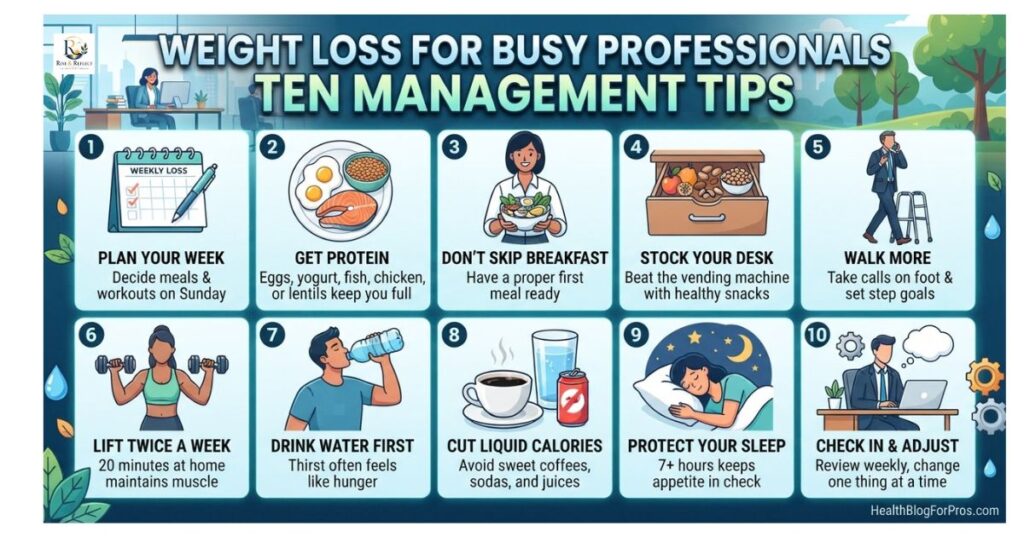
- Plan your week. Decide meals and workouts on Sunday so you’re not guessing when you’re tired.
- Get protein at every meal. Eggs, yogurt, fish, chicken or lentils keep you full.
- Don’t skip breakfast without a plan. If you fast, have a proper first meal ready so you don’t overeat later.
- Stock your desk. Fruit, nuts and roasted chickpeas beat the vending machine.
- Walk more. Take calls on foot, park further away and set a daily step goal you can actually hit.
- Lift something twice a week. Even 20 minutes at home helps you hold on to muscle.
- Drink water first. Thirst often pretends to be hunger.
- Cut back on liquid calories. Sweet coffees, sodas and juices add up fast.
- Protect your sleep. Seven hours or more keeps appetite in check.
- Check in and adjust. Review weekly and change one thing at a time.
Frequently Asked Questions
What is the fastest way to lose weight? Eat a bit less than you burn, build meals around protein, move daily and sleep well, aiming for one to two pounds a week. Crash diets tend to bounce back.
What’s the hardest age to lose weight? Many people find it harder after 40, when muscle mass drops and hormones shift, especially around perimenopause and menopause. Strength training and enough protein help.
How can a lazy person lose weight fast? Start tiny: walk after meals, swap sugary drinks for water and keep a few easy high-protein meals on hand. Small habits add up without a gym.
What are signs your body is burning fat? Clothes feel looser, your waist shrinks, energy is steadier and cravings calm down. Getting stronger and fitter counts too, even if the scale is slow.
What’s the worst carb for belly fat? Refined, sugary carbs such as soda, pastries and white bread spike blood sugar and pile on easy calories. You can’t target belly fat directly, though; overall fat loss is what slims it.
Conclusion: Start Small, Start Today
You don’t need more free time, a perfect plan or a gym membership. What works for weight loss for busy professionals is simple and a bit boring: a few decent meals, a daily walk, enough sleep and the patience to keep going when progress is slow.
So pick one tip from the list above and try it for seven days. Write it down. Then add the next one.
Ready to start? Choose your first habit today and commit to it for one week. If you have a health condition or take medication, check with your doctor or a registered dietitian before making big changes.