
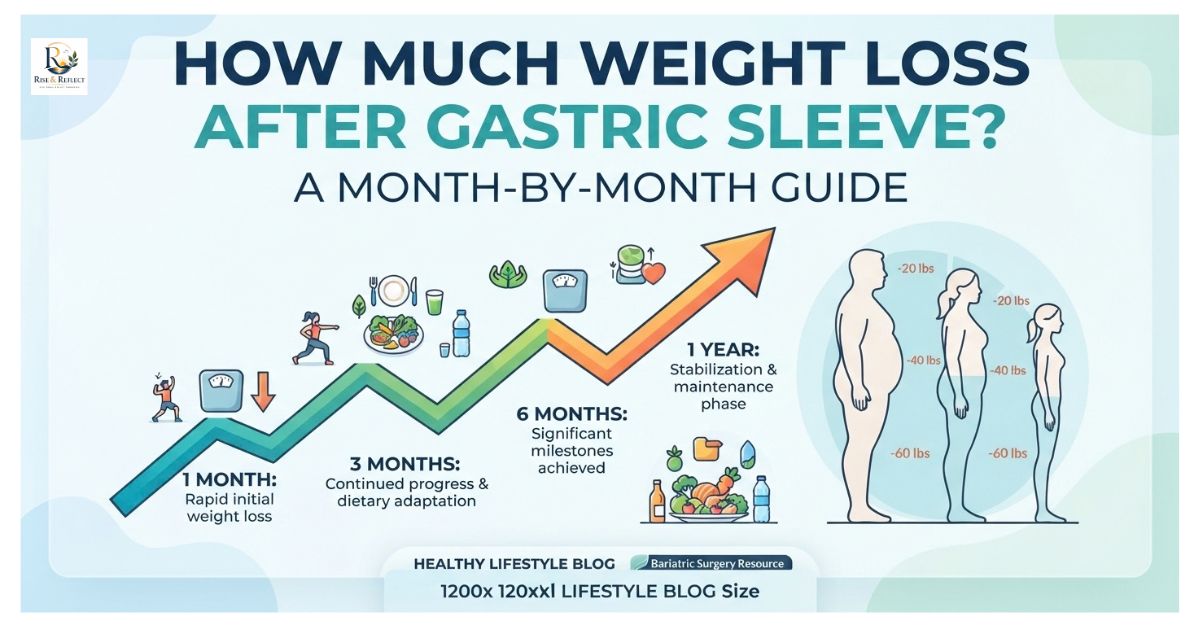
If you are planning surgery, the first thing you probably want to know is how much weight loss after gastric sleeve you can honestly expect. The numbers online vary a lot, and that makes it hard to set goals.
This guide covers the average results, a kg chart by month, what to expect at one and three months, a simple way to estimate your own result, and what you can do to lose weight faster safely.
How Much Weight Loss After Gastric Sleeve Is Normal?
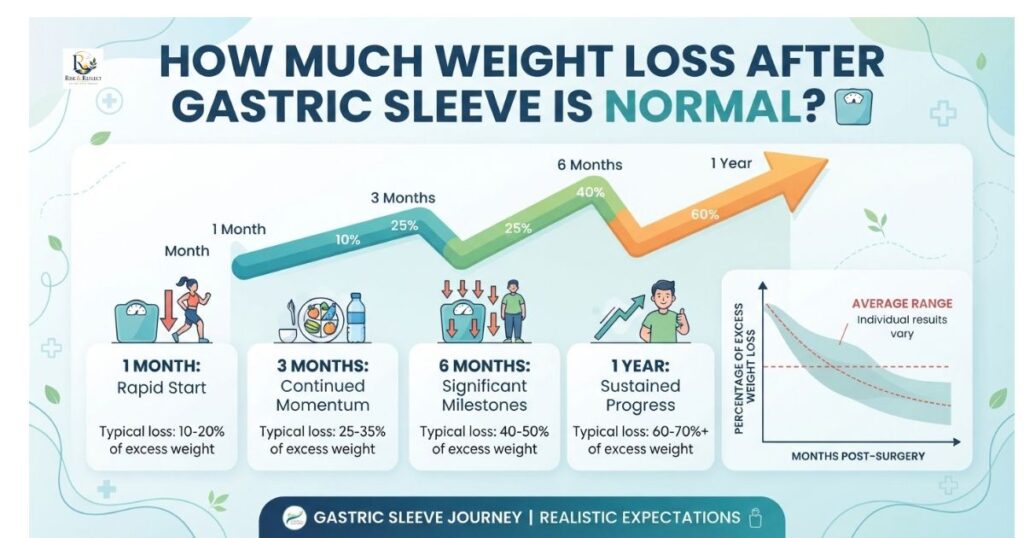
Most patients lose about 60% to 70% of their excess body weight within 12 to 18 months. Excess weight means the amount above your ideal weight, not your total weight. Both the American Society for Metabolic and Bariatric Surgery (ASMBS) and the Mayo Clinic describe results in this range for sleeve gastrectomy.
In real terms, someone who weighs 120 kg and has about 50 kg of excess weight may lose roughly 30 to 35 kg. Weight loss is fastest in the first six months. After that it slows down, and many people plateau between 12 and 18 months.
These are averages. Some people lose more and some lose less, depending on age, starting weight, habits and health conditions.
Gastric Sleeve Weight Loss Chart in KG (Month by Month)
The table below shows a typical pattern for a person starting at around 110 to 130 kg. Use it as a rough guide only.
| Time After Surgery | Typical Weight Loss (kg) | What You May Notice |
| Month 1 | 6–10 kg | Rapid loss, liquid and puréed diet |
| Month 3 | 15–22 kg total | Clothes looser, energy improving |
| Month 6 | 25–35 kg total | Steady loss, soft foods and protein focus |
| Month 9 | 30–42 kg total | Slower pace, habits setting in |
| Month 12 | 35–48 kg total | Close to goal for many people |
| Month 18 | 38–52 kg total | Weight stabilizes |
Average Weight Loss After Gastric Sleeve Per Month
On average, you can lose around 4 to 8 kg per month in the first six months. After that the pace falls to about 2 to 4 kg a month. Slowing down is normal. It does not mean the surgery has stopped working.
Gastric Sleeve Results After 1 Month
At one month, most people have lost between 6 and 10 kg. The first two weeks are usually liquids only, then you move to puréed foods. Much of the early loss comes from a very low calorie intake and some water loss.
You may feel tired, hungry for small amounts of food or a little emotional. This is common and usually settles as your body adjusts.
Average Weight Loss 3 Months After Gastric Sleeve

By the three-month mark, the average total loss is about 15 to 22 kg. Your appetite is much smaller, you are eating soft solid foods, and many people start walking or exercising more. Some people also notice hair thinning around this time. It is usually temporary, and enough protein helps.
How Much Weight Will I Lose With a Gastric Sleeve Calculator (Simple Method)
You do not need a special tool to get a decent estimate. You can work it out yourself in three steps:
- Find your ideal weight, which is the weight at a BMI of 25 for your height.
- Subtract it from your current weight to get your excess weight.
- Multiply the excess weight by 0.60 to 0.70.
For example, if you weigh 130 kg and your ideal weight is 70 kg, your excess is 60 kg. A 60% to 70% loss means about 36 to 42 kg. Online calculators use the same idea, so treat the result as a guide, not a promise.
What Affects How Much Weight Loss After Gastric Sleeve You Get

Surgery is a tool, and your results depend on how you use it. These are the main factors:
- Starting weight: People with a higher starting weight usually lose more kilograms.
- Age and metabolism: Younger patients often lose a little faster.
- Diet quality: Protein-rich, low-sugar eating leads to better results.
- Activity level: Regular movement protects muscle and raises calorie burn.
- Health conditions: Diabetes, thyroid problems and some medicines can slow progress.
- Follow-up care: Patients who attend check-ups tend to do better long term.
How Much Weight Loss After Gastric Sleeve Is Considered Successful?
Surgeons generally consider losing at least 50% of excess weight a success. Many patients also see better blood sugar, lower blood pressure and easier joint pain, even before they reach their goal weight.
How Can I Speed Up Weight Loss After Gastric Sleeve?
You cannot, and should not, force extreme weight loss. But you can support steady progress with these habits:
- Eat protein first. Aim for the amount your dietitian recommends, usually 60 to 80 grams a day.
- Drink enough water. Sip fluids between meals, not with them.
- Avoid liquid calories. Sugary drinks, juices and milkshakes slow weight loss.
- Eat slowly and chew well. This protects your new stomach and helps you feel full.
- Move daily. Start with walking, then add light strength training when your surgeon allows it.
- Track your meals. A simple food diary keeps you honest.
- Sleep well. Poor sleep raises hunger hormones.
If your weight stalls for several weeks, do not cut calories drastically. Talk to your bariatric team instead.
Gastric Sleeve vs Bypass: Average Monthly Weight Loss
People often compare the two operations. After gastric bypass, the average monthly weight loss is similar in the early months, roughly 5 to 8 kg in the first half year. Bypass patients may lose slightly more overall, around 65% to 75% of excess weight. The sleeve is simpler, though, and carries a lower risk of some nutritional problems. Your surgeon can advise which option suits your health.
Frequently Asked Questions
How much weight will I lose with a gastric sleeve in 3 months?
Most people lose around 15 to 22 kg in the first three months. The exact amount depends on your starting weight, diet and activity.
Can I eat pizza 1 month after gastric sleeve?
No. At one month you are still on liquids or puréed foods, and pizza is too dry, doughy and fatty for your healing stomach. Most surgeons allow small bites of soft solid foods much later.
Can the stomach grow again after gastric sleeve?
The sleeve itself is permanent, but it can stretch a little if you regularly overeat or drink with meals. Sticking to small portions keeps it working well.
How painful is gastric sleeve surgery?
Most patients describe soreness, gas pain and tiredness rather than severe pain. It is usually well controlled with medication and fades within a week or two.
How to speed up weight loss after gastric sleeve?
Focus on protein, water, daily walking and avoiding sugary drinks. Regular check-ups with your bariatric team keep you on track.
Conclusion
Knowing how much weight loss after gastric sleeve to expect helps you set goals that are realistic and motivating. Most people lose 60% to 70% of their excess weight within 12 to 18 months, with the biggest changes in the first six months. Your own result depends on your habits as much as the surgery.
If you are thinking about surgery, book a consultation with a qualified bariatric surgeon. They can review your health, estimate how much weight loss after gastric sleeve is realistic for you, and build a plan that fits your life. Start the conversation today.
References:
- American Society for Metabolic and Bariatric Surgery (ASMBS), sleeve gastrectomy information
- Mayo Clinic, “Sleeve gastrectomy” patient overview