
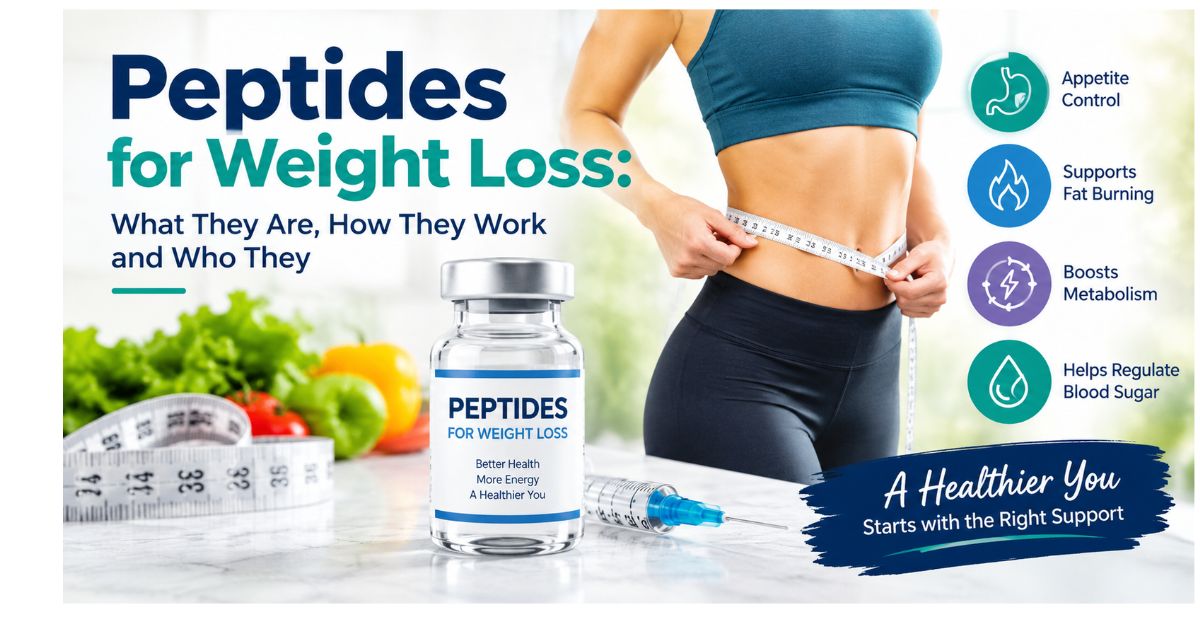
You’ve cut carbs. You’ve counted calories. Maybe you’ve done both a few times over, and the weight keeps creeping back. If that sounds familiar, here’s the part nobody says out loud: it usually isn’t about willpower. Hunger, fullness and fat storage are run by hormones, and for a lot of people those signals are simply louder than their best intentions. That’s the gap peptides for weight loss are trying to fill.
There’s a lot of noise around this topic, though. Social media is full of “peptide stacks,” unlabeled vials and miracle claims. So let’s keep this practical. Below you’ll find what these medicines actually are, what the big clinical trials showed, what side effects people run into, and how to tell whether a prescription makes sense for you.
1. What Is Peptide Therapy for Weight Loss?
A peptide is just a short chain of amino acids. Proteins are the same thing, only longer. Your body makes plenty of peptides on its own, and a good number of them work as messengers. Insulin is one. Another is GLP-1, a hormone your gut releases after you eat that tells your brain, more or less, “okay, that’s enough.”

The catch is that natural GLP-1 disappears in a couple of minutes. Drug makers got around that by building modified versions that hang around for days. Give one injection and the signal keeps running for a week.
Natural peptides vs. prescription medications
This is where people get confused, so it’s worth being blunt. The peptides your body makes aren’t a treatment, and the “research peptides” sold on websites aren’t medicines either. They haven’t been approved for people, and nobody can promise what’s actually in the vial. Semaglutide and tirzepatide are different. They went through years of human trials and regulatory review before anyone could prescribe them.
2. How Does Peptide Therapy Work for Weight Loss?
Think of it as turning down the volume on hunger. The medicines copy hormones your gut already releases, and they do a few things at the same time.
They reach the part of the brain that handles appetite, which is why many people say the constant “food noise” fades. They also slow the stomach’s emptying, so a normal meal keeps you full for longer. On the blood sugar side, they nudge the pancreas to release insulin only when glucose is high, and they dial back the hormone that pushes sugar up.
That slower digestion is also behind most of the side effects, which we’ll get to.
One more detail: semaglutide copies a single hormone (GLP-1), while tirzepatide copies two (GLP-1 and GIP). That second hormone may be part of why tirzepatide has produced larger average losses in trials.
3. What Are the Best Peptides for Weight Loss?
There’s no single winner for everyone. But two prescription drugs have far more evidence behind them than anything else, and both are only available through a licensed prescriber.
Semaglutide
Sold as Wegovy for weight management and Ozempic for type 2 diabetes. It’s a once-a-week injection. Wegovy also carries an approval for lowering the risk of heart attack and stroke in certain adults who have obesity and existing heart disease.
Tirzepatide
Sold as Zepbound for weight management and Mounjaro for type 2 diabetes. Also a weekly shot. It’s newer, and it works on two hormone pathways instead of one.
Side-by-side comparison
| Semaglutide | Tirzepatide | |
| Hormones targeted | GLP-1 | GIP and GLP-1 |
| Weight-loss brand | Wegovy | Zepbound |
| Diabetes brand | Ozempic | Mounjaro |
| How you take it | Weekly injection | Weekly injection |
| Average loss in main trial | About 15% of body weight over 68 weeks | About 15% to 21% over 72 weeks, depending on dose |
| Most common side effects | Nausea, diarrhea, constipation, vomiting | Nausea, diarrhea, constipation, vomiting |
Don’t treat them as swappable. The doses, trial results and labels differ, so your prescriber will pick based on your health history and how you tolerate each one.
4. What Are the Benefits of Peptide Therapy for Weight Loss?
The number on the scale is the obvious one. But a few other things tend to matter just as much.
Cravings often ease up. A lot of people describe finally being able to eat a normal portion and stop. Blood pressure, cholesterol and waist size frequently improve as weight comes down. Blood sugar gets better too, which makes sense since these drugs were first built for type 2 diabetes. And for adults with heart disease and obesity, semaglutide has shown a real reduction in cardiovascular events.
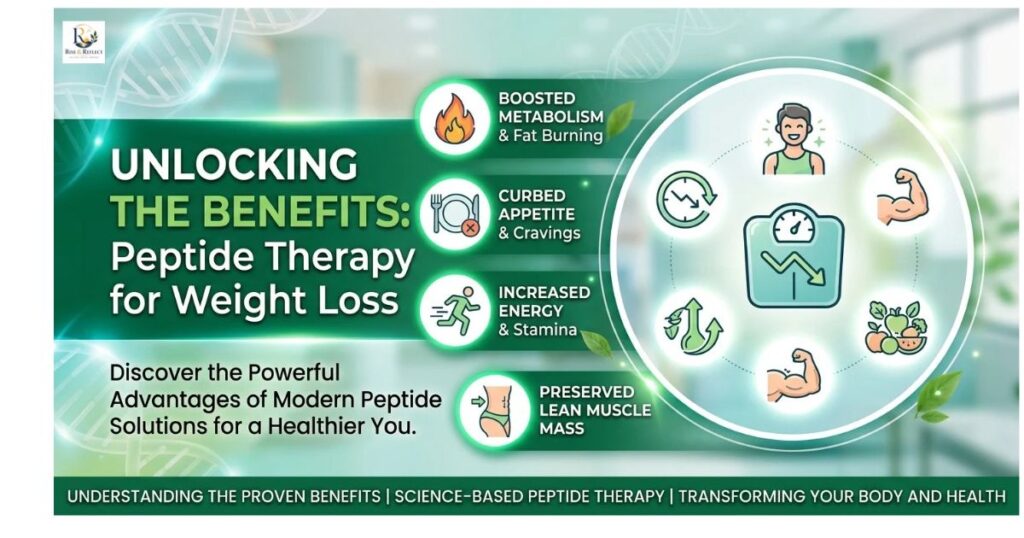
Losing 10% or more of body weight is the range where doctors usually start to see meaningful health gains, and trials show plenty of people reaching it.
5. How Much Weight Can You Lose with Peptide Therapy?
Two studies come up again and again when people talk about peptides for weight loss, and both were published in the New England Journal of Medicine.
In the STEP 1 trial (Wilding et al., 2021), adults taking semaglutide 2.4 mg lost about 15% of their body weight over 68 weeks. The placebo group lost around 2.4%. In SURMOUNT-1 (Jastreboff et al., 2022), people on tirzepatide lost roughly 15%, 19.5% or 21% depending on the dose, over 72 weeks, versus about 3% on placebo.
Why your results may not match the trials
Study volunteers got regular check-ins, nutrition counseling and a steady supply of medication. Real life is messier. People pause treatment because of side effects, can’t always reach the highest dose, run into cost or supply problems, or simply have a different body. Age, sex, starting weight, sleep, other medications and daily habits all shift the outcome. Some people lose a lot. Some lose a moderate amount. A small group barely responds. Your clinician can tell you which is more likely after a few months.
6. How Long Does Peptide Therapy Take to Work?
Slowly, and on purpose. Everyone starts on a low dose, then steps up about every four weeks. Rushing makes the stomach side effects much worse.
Some people feel less hungry within the first week or two, even on the starting dose. Weight loss in that first month is usually modest. Most people see steady progress from around month two or three, as the dose climbs. Loss generally continues for a year or more before leveling off.
Expect follow-up visits every few weeks early on. That’s when your clinician adjusts the dose, checks how you’re feeling and looks at your numbers.
7. What Are the Side Effects and Risks of Peptides for Weight Loss?

The common stuff
Mostly digestive. Nausea is the big one, followed by vomiting, diarrhea, constipation and stomach discomfort. These tend to flare after a dose increase and settle down over time. Smaller meals help, and so does skipping greasy or very rich food.
The warnings you shouldn’t skip
Both drugs carry a boxed warning about thyroid C-cell tumors, based on animal studies. If you or a close relative has had medullary thyroid cancer, or you have a condition called MEN 2, these medicines aren’t for you.
Pancreatitis and gallbladder problems are rare but serious. Severe belly pain that won’t go away needs prompt medical care. Heavy vomiting or diarrhea can also lead to dehydration and put stress on the kidneys.
They aren’t recommended during pregnancy. Tirzepatide can make birth control pills less effective, so a backup method is advised. And if you take insulin or a sulfonylurea, your risk of low blood sugar goes up, so your doses may need adjusting.
Counterfeit and unapproved products
This is the risk that worries regulators most right now. Products sold online as “research-grade” or compounded without proper oversight can be contaminated, mislabeled or wrongly dosed. Only use medicine that a licensed clinician prescribed and a legitimate pharmacy dispensed.
8. Is Peptide Therapy Safe, and Who Is a Good Candidate?
Approved peptides for weight loss are considered safe for most suitable adults when a clinician is overseeing things. Safety here depends on three things: the right person, the right product and proper monitoring.
As a rough guide, prescribing guidelines for weight-management medicines usually apply to adults with a BMI of 30 or higher, or a BMI of 27 or higher plus a related condition such as high blood pressure, type 2 diabetes or high cholesterol.
You should steer clear if you’ve had medullary thyroid cancer, have MEN 2, are pregnant or breastfeeding, or have had a serious allergic reaction to these drugs. If you’ve had pancreatitis, gallbladder disease, a severe digestive disorder or kidney trouble, you’ll need a careful conversation first.
A real evaluation covers your medical history, your current medications, some lab work and an honest talk about what you want to achieve.
9. Peptide Therapy vs. Traditional Weight Loss Methods
Here’s the honest comparison. Lifestyle change on its own helps many people lose around 5% of their body weight, and it’s the foundation of everything else. Medication added on top produces bigger average losses. Neither replaces the other, and peptides for weight loss work best when they’re one piece of a wider plan.
Eating enough protein helps you hold onto muscle while the fat comes off. Strength training does the same. Sleep and stress matter more than most people expect. For some people, especially at higher BMIs, other options like older medications, endoscopic procedures or bariatric surgery are a better fit. A good clinician will talk through all of it rather than reach for one tool by default.
10. What to Expect from a Peptide Therapy Weight Loss Plan
Your first visit is mostly questions: history, goals, medications, labs. After that, you’ll start low and move up slowly, with regular check-ins to track weight, blood pressure, blood sugar and side effects. Most good programs also give you guidance on food, protein and movement.
Cost deserves a real conversation. These drugs are expensive without coverage, and insurance rules vary a lot by plan and country. Ask what’s covered, what the monthly cost will be, and whether manufacturer assistance exists before you commit.
Finally, think about the long game. Obesity is a chronic condition, and studies show many people regain a good portion of the weight after stopping. That doesn’t mean the treatment failed. It means you should plan the next phase with your clinician instead of quitting abruptly.
Frequently Asked Questions
Do peptides really work for weight loss? Yes. Prescription options like semaglutide and tirzepatide produced significant weight loss in large trials when paired with lifestyle changes.
Which peptides are best for weight loss? Semaglutide and tirzepatide have the strongest evidence. Which one suits you depends on your health profile and your prescriber’s advice.
Is Mounjaro a peptide? Yes. Its active ingredient, tirzepatide, is a peptide-based drug that activates both GIP and GLP-1 receptors.
What peptide melts belly fat? None targets belly fat specifically. These medicines reduce overall body fat, and fat around the abdomen usually shrinks along with it.
Are peptides safe? Approved, prescribed versions are safe for most suitable people under supervision. Unregulated online products carry real risks.
Conclusion
Peptides for weight loss aren’t a shortcut, and they aren’t magic. But for the right person, prescription semaglutide or tirzepatide can be one of the most effective tools available, especially alongside better eating, regular movement and ongoing medical follow-up. Avoid unapproved products, keep your expectations realistic and plan for the long term.
References
- Wilding JPH, et al. Once-Weekly Semaglutide in Adults with Overweight or Obesity (STEP 1). New England Journal of Medicine. 2021;384:989-1002.
- Jastreboff AM, et al. Tirzepatide Once Weekly for the Treatment of Obesity (SURMOUNT-1). New England Journal of Medicine. 2022;387:205-216.
This article is for educational purposes and does not replace personalized medical advice.