
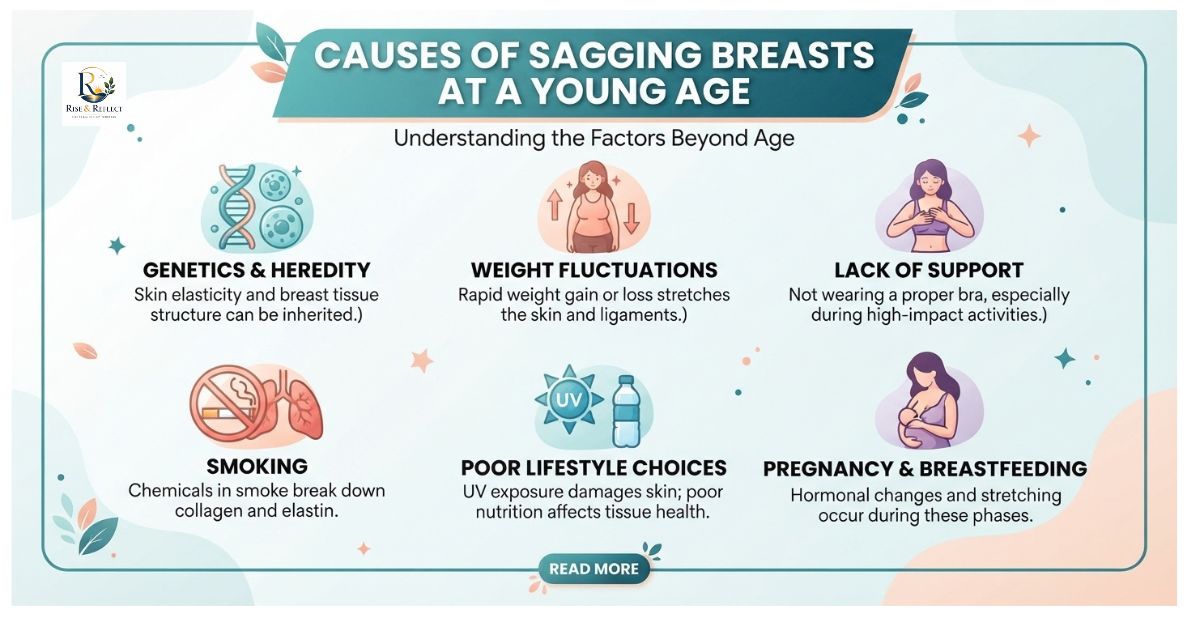
If you’re in your 20s and notice your breasts looking less perky than you expected, you’re not alone, and you haven’t necessarily done anything wrong. Breast shape changes for many reasons, and age is only one of them. The causes of sagging breasts at young age are usually a mix of genetics, size, lifestyle, and support, and most of them are easier to manage than people think.
In this guide, you’ll learn what breast sagging (doctors call it ptosis) really is, what drives it in younger women, which popular myths to ignore, and what you can realistically do about it.
Can a 20 Year Old Have Saggy Breasts?
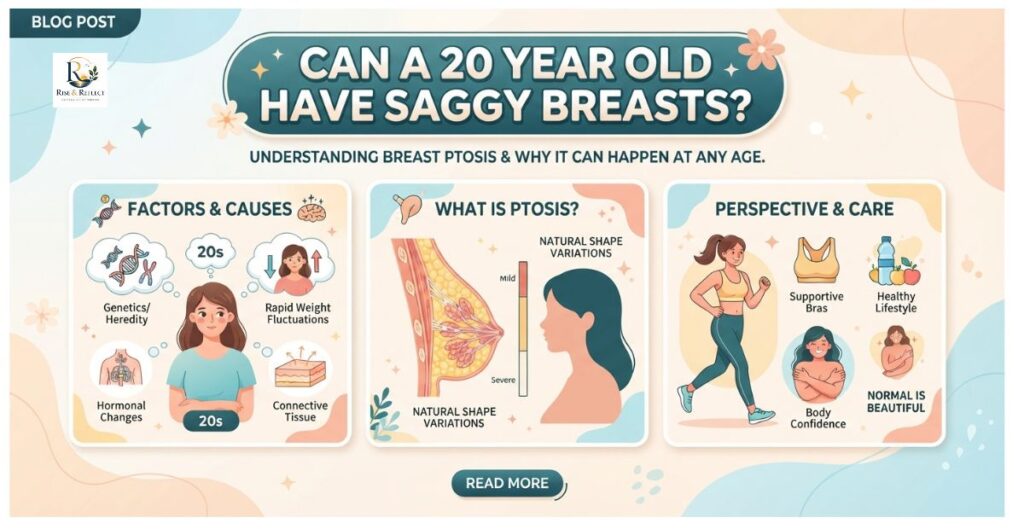
Yes. A 20-year-old can have saggy breasts. Sagging is about how the breast tissue sits on the chest, not just about age. The breast is held up by skin and thin bands of tissue called Cooper’s ligaments. If those structures are naturally stretchy, or if they’re under extra strain, the breast can sit lower even in your early 20s.
Some women also have a breast shape that simply looks “lower” from puberty onward. That’s a normal variation, not a medical problem.
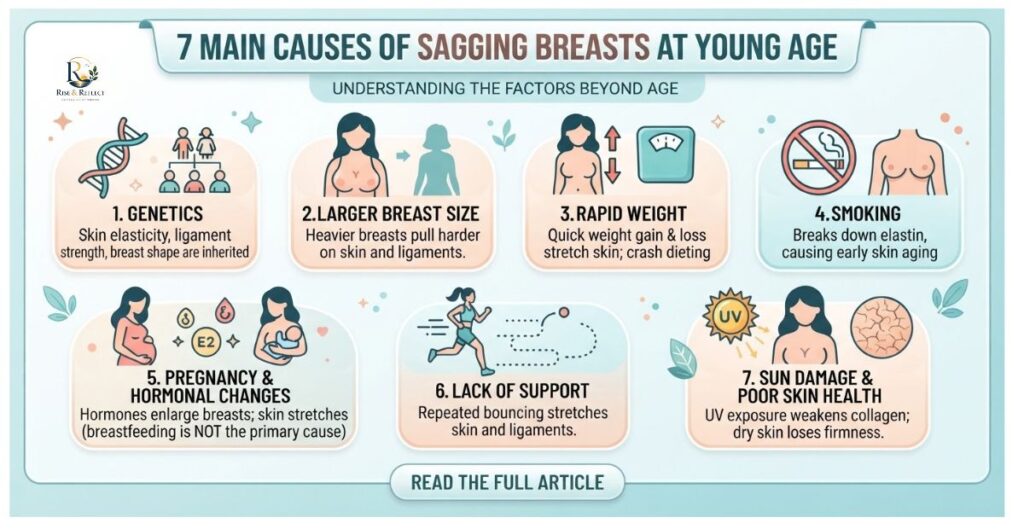
7 Main Causes of Sagging Breasts at Young Age
1. Genetics
Genetics is the biggest driver behind the causes of sagging breasts at young age. Skin elasticity, ligament strength, and breast shape are inherited. If your mother or grandmother had lower-set breasts early in life, you may too.
2. Larger Breast Size
Breast tissue has weight. Heavier breasts pull harder on the skin and ligaments all day, so women with larger cup sizes tend to notice sagging sooner than women with smaller breasts.
3. Rapid Weight Gain or Loss
When your weight goes up quickly, skin stretches. When it comes down just as fast, the skin may not tighten back to fit. Repeated cycles of crash dieting and regaining are especially hard on breast skin.
4. Smoking
Smoking breaks down elastin, the protein that keeps skin springy. It’s a well-known cause of early skin aging everywhere on the body, including the chest.
5. Pregnancy and Hormonal Changes
Hormones during pregnancy enlarge the breasts and stretch the skin. It’s worth knowing, though, that a well-known study found breastfeeding itself was not the cause of sagging. Pregnancy, age, weight, and smoking mattered more (see the references below).
6. Lack of Support During High-Impact Exercise
Running, jumping, and gym workouts make breasts move a lot. Over time, repeated bouncing without a supportive sports bra may stretch the skin and ligaments.
7. Sun Damage and Poor Skin Health
Regular sun exposure on the chest, especially without sunscreen, weakens collagen. Dry, damaged skin loses firmness faster.
Causes of Sagging Breasts at Young Age at a Glance
| Cause | How It Affects Breasts | Can You Control It? |
| Genetics | Determines skin and ligament strength | No |
| Large breast size | Extra weight strains ligaments | Partly (support, weight) |
| Rapid weight changes | Skin stretches and doesn’t fully recover | Yes |
| Smoking | Breaks down elastin | Yes |
| Pregnancy | Hormones and size changes stretch skin | Partly |
| Poor exercise support | Repeated bouncing stretches tissue | Yes |
| Sun damage | Weakens collagen in chest skin | Yes |
Can a Saggy Breast Rise Again?
Naturally, not fully. Once skin and ligaments have stretched, no cream, food, or exercise can physically lift breast tissue back to its earlier position.
Here’s what can help:
- Chest exercises like push-ups and chest presses build the pectoral muscles underneath. That gives the breasts a firmer “shelf” and can improve how the chest looks, though it doesn’t lift the breast tissue itself.
- Good posture makes a visible difference. Rounded shoulders make breasts look lower.
- Skin care keeps the area smoother and healthier.
- Medical options like a breast lift (mastopexy) are the only proven way to raise breast position. That’s a personal decision to discuss with a board-certified plastic surgeon.
Does Not Wearing a Bra Help With Sagging?
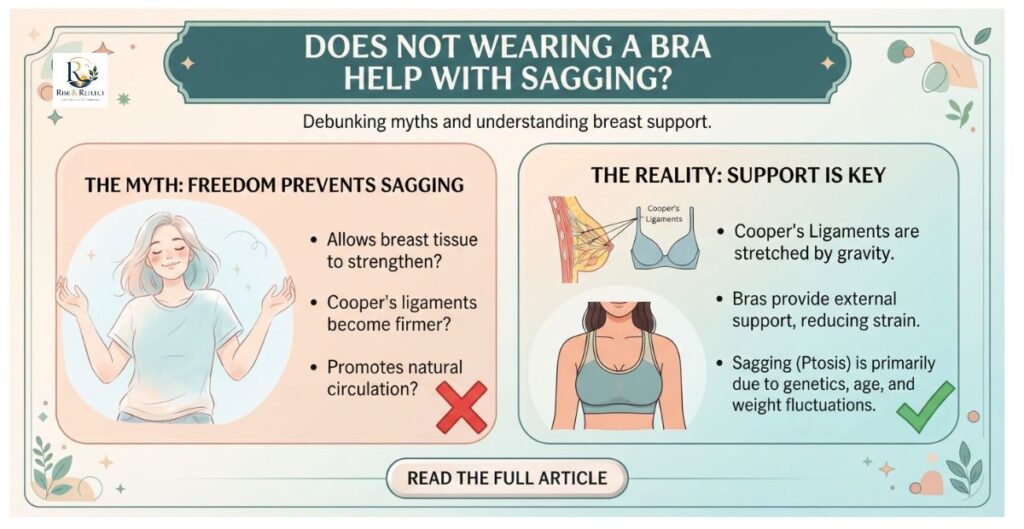
This is one of the most debated questions. A French study led by Professor Jean-Denis Rouillon suggested that women who didn’t wear bras may have developed firmer breasts over time, but it was small and hasn’t been widely confirmed. Most doctors say there isn’t enough evidence to say going braless prevents sagging.
What is clear is that a good sports bra reduces breast movement during exercise, and that matters for comfort. Wearing a bra 24 hours a day isn’t proven to prevent sagging either. The practical advice: wear support when you’re active, and choose what feels comfortable the rest of the time.
How Do I Make My Breasts Stop Sagging?
Once you know the causes of sagging breasts at young age, you can work on the ones within your control:
- Wear a properly fitted bra. Studies suggest most women wear the wrong size. Get measured every year or so.
- Use a high-support sports bra for workouts. Look for wide straps and firm cups.
- Keep your weight steady. Slow, gradual changes are gentler on your skin than rapid swings.
- Quit smoking if you smoke. It helps your skin and your overall health.
- Apply sunscreen to your chest when it’s exposed.
- Strengthen your chest and back. Rows, push-ups, and shoulder exercises improve posture and support.
- Stay hydrated and eat enough protein. Your skin needs both to stay resilient.
- Use gentle massage with a moisturizer. It won’t lift breasts, but it can improve skin feel and circulation.
When to See a Doctor
Normal sagging isn’t a health concern. But if the causes of sagging breasts at young age in your case involve a sudden change, such as one breast changing shape, a new lump, skin dimpling, nipple discharge, or pain, book an appointment. Those signs need a professional check, regardless of your age.
What the Research Says
Research on the causes of sagging breasts at young age and beyond points to consistent risk factors. A widely cited study by Rinker and colleagues in Aesthetic Surgery Journal (2008) looked at women who’d had breast surgery consultations. It found that age, higher body mass index, larger bra cup size, number of pregnancies, and smoking were tied to ptosis, while breastfeeding was not.
The Cleveland Clinic’s patient guidance on breast ptosis also describes the same factors, adding that gravity and natural loss of skin elasticity play a role.
References:
- Rinker B., Veneracion M., Walsh C.P. “The Effect of Breastfeeding on Breast Aesthetics.” Aesthetic Surgery Journal, 2008.
- Cleveland Clinic. “Breast Ptosis (Sagging Breasts).” my.clevelandclinic.org
FAQs About the Causes of Sagging Breasts at Young Age
How can I naturally lift my sagging breasts?
You can’t physically lift breast tissue naturally, but chest-strengthening exercises and better posture make the chest look firmer. A supportive bra also helps with the overall look.
Is sagging breasts normal?
Yes, it’s very common and it’s part of natural variation and aging. Genetics, size, and lifestyle all play a role.
Does wearing a bra 24-7 prevent sagging?
There’s no solid evidence it does. Wear a bra for support during activity, and choose comfort the rest of the time.
Are saggy breasts attractive?
Attractiveness is personal, and breasts of every shape are normal and beautiful. Feeling comfortable in your body matters more than matching any standard.
How to massage breasts for tightening?
Use light, circular motions with a moisturizer for a few minutes daily. It can improve skin feel, but it won’t tighten or lift the tissue itself.
Conclusion
The causes of sagging breasts at young age are mostly things like genes, breast size, weight changes, smoking, and lack of exercise support, and none of them mean something is “wrong” with you. You can’t reverse stretched ligaments naturally, but you can slow further changes with a well-fitted bra, steady weight, sun protection, and regular strength training.
Ready to take the next step? Start today by getting a professional bra fitting and adding two chest workouts to your week. If you have any concerns about changes in your breasts, talk to your doctor for personalized advice.