
If you’ve ever stared at a plate of steamed broccoli wondering whether it’s actually doing anything for your goals, that’s a fair question to ask. Not every vegetable pulls the same weight when it comes to weight loss some are genuinely useful tools, others are more about general health than shedding pounds specifically.
Here’s the good news, though: as a category, vegetables are one of the most underrated tools you have. Low calorie, high volume, packed with fiber that keeps hunger from showing up early. Below is a rundown of the 15 best vegetables for weight loss, which ones actually matter most, and whether boiling helps or hurts your progress (spoiler: it’s not the villain people think it is).
Do Any Vegetables Actually “Burn Fat”?
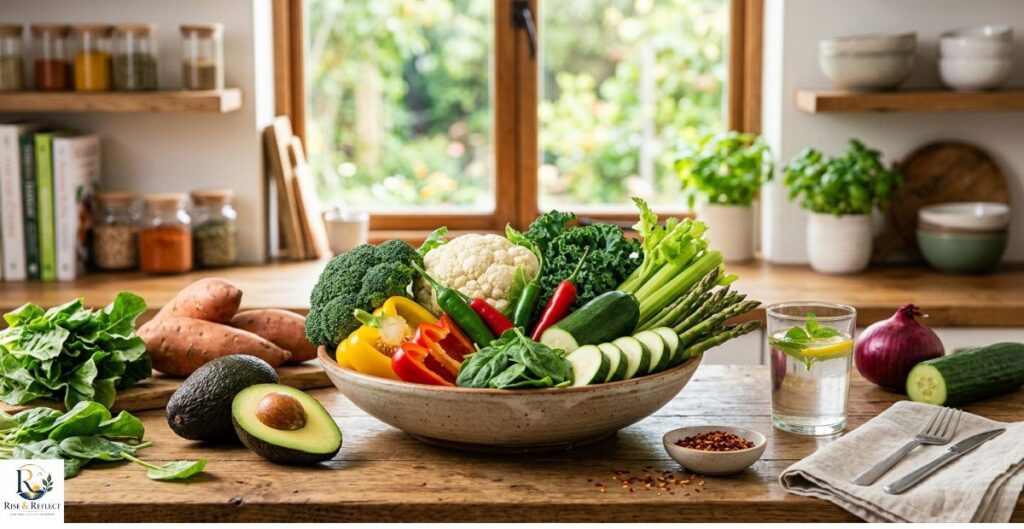
No not literally. That’s a marketing phrase, not something your body actually does. What’s true is that low-calorie, high-fiber vegetables like leafy greens, broccoli, and cucumber support fat loss indirectly, by keeping you full on very few calories. That makes it a lot easier to stay in the calorie deficit that’s actually driving the fat loss.
Why some vegetables feel like they work faster: vegetables high in water and fiber celery, cucumber, zucchini sometimes get called “negative calorie” foods, the idea being your body burns nearly as much energy digesting them as they contain. That’s a slight exaggeration, but the underlying point holds up: these vegetables add real volume to a meal without adding meaningful calories, which is exactly why they feel like they’re accelerating results.
15 Vegetables Worth Building Meals Around
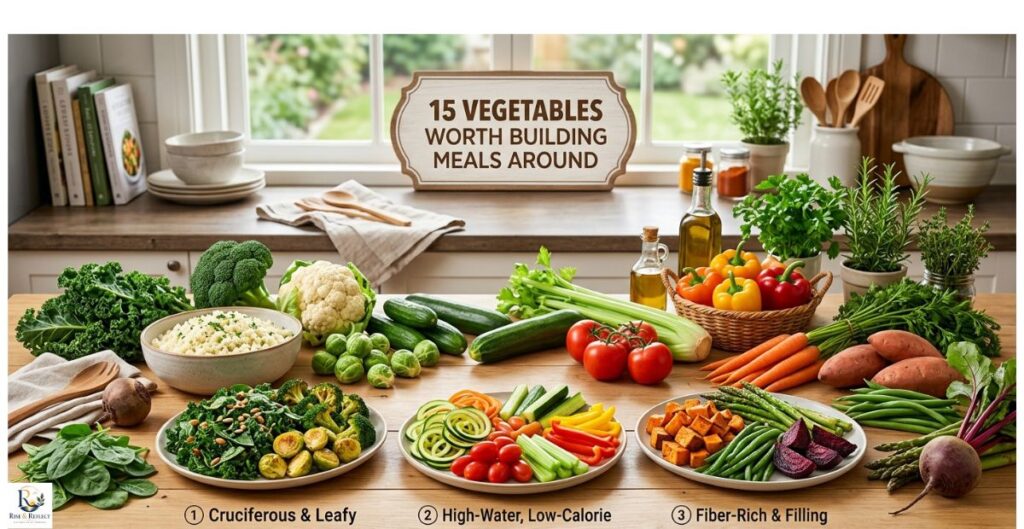
Leafy and Cruciferous
Spinach. Barely any calories, solid iron and fiber, and it disappears into almost any meal without a fight.
Kale. Dense in nutrients and fiber, with a heartier texture that actually holds up in cooked dishes instead of wilting into nothing.
Broccoli. More fiber and protein than most vegetables manage, and it takes long enough to chew that it naturally slows down your eating.
Cauliflower. A genuinely good low-calorie stand-in for rice or mashed potatoes — adds volume without the calorie load those usually carry.
Brussels sprouts. High fiber, and roasted properly, they’re a lot more filling than people expect.
High-Water, Low-Calorie
Cucumber. Over 95% water — about as low-calorie as snacking gets.
Zucchini. Versatile, low calorie, and works well as a pasta stand-in if you’re cutting carbs somewhere.
Celery. Very low calorie, and it adds a satisfying crunch that a lot of vegetables just don’t have.
Tomatoes. Low calorie with a decent amount of fiber and antioxidants baked in.
Bell peppers. Crunchy, low calorie, and genuinely high in vitamin C.
Fiber-Rich and Filling
Carrots. Naturally sweet, decent fiber, and satisfying enough to curb a sugar craving in a pinch.
Sweet potatoes. More filling than white potatoes because of the fiber, though worth keeping the portion moderate.
Green beans. Low calorie, decent fiber, easy to toss into almost any dinner without thinking twice.
Asparagus. Low calorie and a natural diuretic, which can help take the edge off water retention.
Beets. Rich in fiber and antioxidants, filling enough to hold its own as a side dish.
The Broader List: 20 More Best Vegetables for Weight Loss
The 15 above are specifically strong for weight loss, but if you’re thinking more generally about health, here’s a wider list of 20 — a lot of overlap with what’s above, plus a few more:
Spinach, kale, broccoli, cauliflower, Brussels sprouts, cucumber, zucchini, celery, tomatoes, bell peppers, carrots, sweet potatoes, green beans, asparagus, beets, Swiss chard, garlic, onions, mushrooms, and artichokes.
These consistently rank high for nutrient density — meaning you get a lot of vitamins and minerals relative to how few calories they carry, which matters for both weight loss and health more broadly.
Does Boiling Vegetables Actually Help You Lose Weight?
Yes, actually — mostly because boiling doesn’t add extra calories the way frying or roasting in oil does. It also softens fiber, which can make some vegetables easier to eat in bigger volumes. That said, boiling isn’t some superior method for weight loss specifically. What matters more is what you’re not adding — butter, cream sauces, a heavy pour of oil.
Worth knowing: boiling can leach out some water-soluble vitamins, like vitamin C and a few B vitamins, into the cooking water. Steaming or roasting without oil tends to hold onto more of those nutrients while keeping calories just as low. If you like your vegetables boiled, that’s fine don’t assume it’s required for them to “count.” Portion size and what you pair them with matter a lot more than the cooking method.
The 5 “Superfoods” Worth Knowing
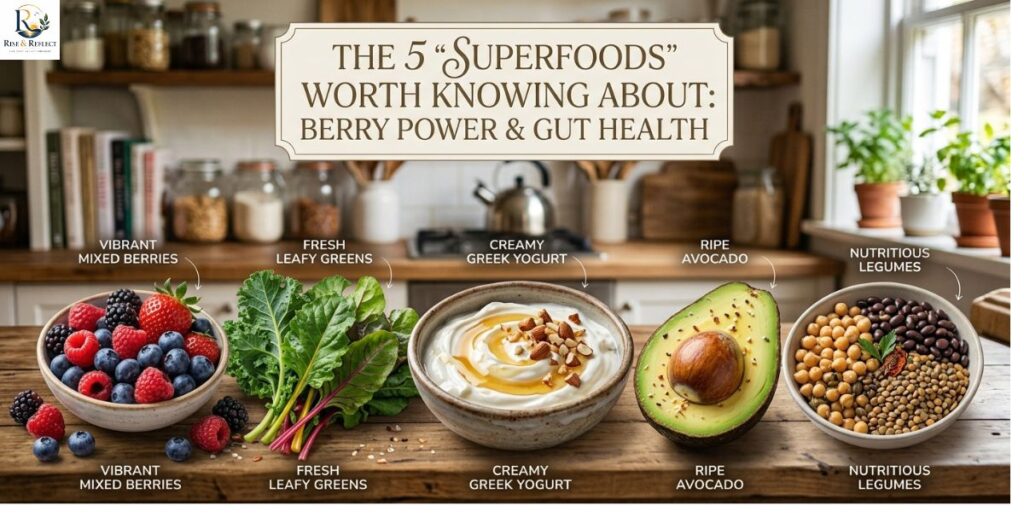
Vegetables are only one part of the picture. These five keep showing up as superfoods for weight loss, vegetables and beyond:
- Leafy greens (spinach, kale) — barely any calories, huge nutrient density
- Berries — high fiber, low sugar relative to most fruit
- Greek yogurt — protein that supports fullness
- Legumes (lentils, chickpeas) — fiber and plant protein together, a rare combo
- Avocado — healthy fat that improves satiety and slows digestion
Notice the thread running through all five: high fiber, high protein, or both. That’s really the whole formula behind most “superfood” claims, once you strip away the marketing.
Getting More Vegetables In, Without It Feeling Like a Chore
- Add them to every meal, not just dinner. Spinach in your eggs, peppers in a wrap — small additions add up.
- Roast a big batch once a week. Vegetables that are already ready to grab get eaten. Ones you have to prep from scratch don’t.
- Swap starchy sides a few times a week. Cauliflower rice instead of white rice, for instance.
- Season generously. Herbs, garlic, spices — skip the heavy sauces and excess oil that quietly add calories back.
- Keep pre-cut vegetables visible in the fridge. If they’re the easy option, they’re the one you’ll actually reach for.
Questions People Ask
Do any vegetables actually burn fat fast? Not directly, no. But low-calorie, high-fiber options like leafy greens, broccoli, and cucumber support fat loss by keeping you full on very few calories — which makes a calorie deficit a lot easier to hold onto.
What are the 20 healthiest vegetables? Spinach, kale, broccoli, cauliflower, Brussels sprouts, cucumber, zucchini, celery, tomatoes, bell peppers, carrots, sweet potatoes, green beans, asparagus, beets, Swiss chard, garlic, onions, mushrooms, and artichokes.
What are the 5 superfoods for weight loss? Leafy greens, berries, Greek yogurt, legumes, and avocado — mostly because they combine high fiber, protein, or healthy fat with a low calorie count.
Do boiled vegetables actually help with weight loss? Yes — boiling doesn’t add extra calories the way frying or roasting in oil does. Steaming edges it out slightly for preserving nutrients, but both are solid, low-calorie cooking methods.
Can I eat unlimited vegetables and still lose weight? Most non-starchy vegetables, sure — generous portions aren’t much of a concern. Starchy ones like potatoes and corn still count toward your calorie intake, though, and should be portioned more like a carb.
Bottom Line
Vegetables aren’t a gimmick — they’re one of the most reliable tools you actually have, mainly because they let you eat a genuinely satisfying portion without piling on calories. Lean toward leafy greens, cruciferous vegetables, and high-water options like cucumber and celery, and don’t overthink boiling versus steaming versus roasting. What actually matters is eating more vegetables, consistently, in place of lower-nutrient options.
Add one extra serving of vegetables to your next meal today, and do it again tomorrow. Small, repeatable changes like that are what actually add up to real results.