

Walking gets overlooked constantly, probably because it doesn’t feel like “real” exercise the way a gym session does. No membership, no special gear, no learning curve, just shoes and a bit of will to actually go outside. But done consistently, it genuinely supports weight loss, helps your heart, and lifts your mood, all without the joint pounding you get from running or high-impact training.
This guide covers how walking actually contributes to walking for weight loss, how to get started if you’re brand new to exercise, whether it can touch belly fat specifically, and what’s going on if you’ve been walking daily and the scale just.. isn’t moving.
How Does Walking for Weight Loss Actually Work?
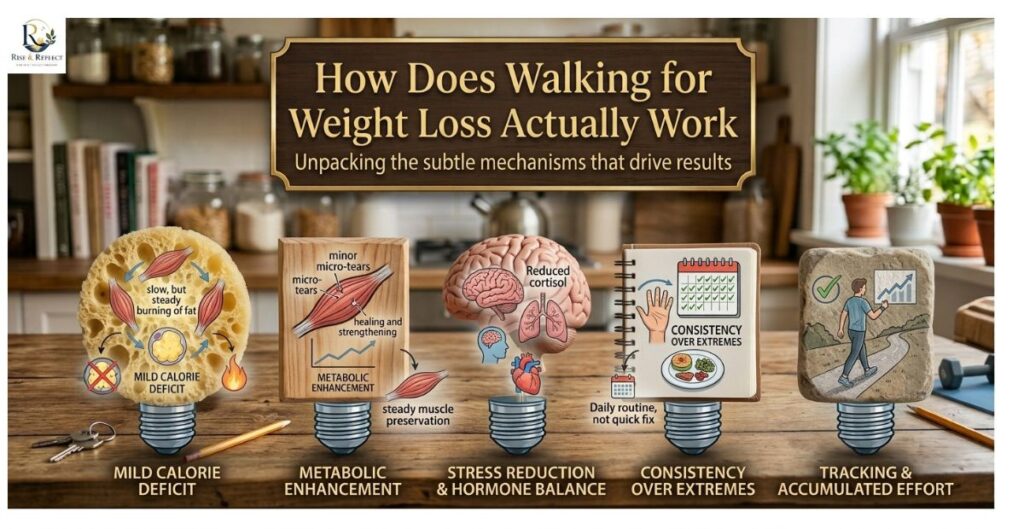
The mechanism is straightforward: walking burns calories, and when you’re consistently burning more than you eat, your body starts pulling from stored fat. The actual number varies based on your weight, pace, and terrain, but a brisk 30-minute walk generally burns somewhere between 150 and 300 calories.
What makes walking work isn’t really the calorie burn itself, though, it’s that you can actually keep doing it. It’s low-impact enough that most people can walk daily without it wrecking them, and that day-after-day consistency ends up mattering more for long-term results than any single brutal workout ever could.
How to Start Losing Weight Through Walking
If exercise is completely new to you, walking is about as gentle an entry point as it gets. Here’s how to approach it without overwhelming yourself:
Start with something manageable, 15-20 minutes a day rather than jumping straight to an hour. In these first few weeks, showing up matters more than how hard you push. Once that duration feels easy, start walking a bit faster, brisk enough that talking is fine but singing wouldn’t be, that pace is roughly where fat-burning kicks in more noticeably. Add incline or intervals when you’re ready, walking uphill or alternating fast and slow stretches burns more without adding impact stress on your knees. Tracking steps helps too, a lot of people aim for 8,000-10,000 daily, though honestly any increase from wherever you’re starting counts as progress. And none of this replaces paying attention to what you eat, walking works best alongside a reasonable calorie deficit, not instead of one.
Can I Lose 5kg in a Month by Walking?
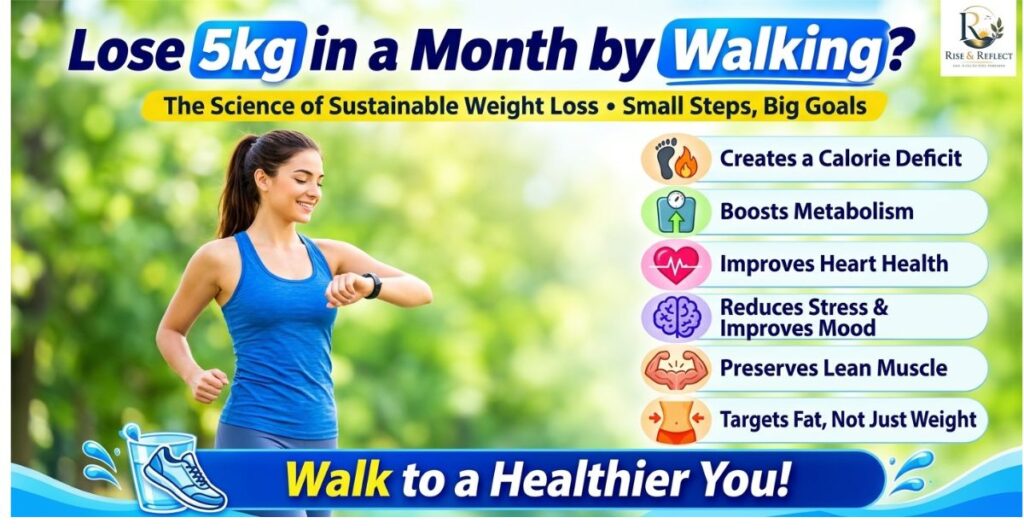
Maybe, depending on your starting point, how hard you walk, how long, and what you’re eating alongside it. Walking on its own, with zero dietary changes, probably won’t get most people to 5kg in a month. But pair it with a modest calorie deficit and consistent daily walking, 45-60 minutes at a brisk clip, and 3-5kg in a month becomes a realistic range, especially if you’re new to regular movement in general.
Here’s something worth knowing before you start Walking for Weight Loss: those first couple of weeks often move fast, but a lot of that early drop is just water weight shifting around, not fat loss. Once your body settles into the routine, things naturally slow down and that’s completely normal.
With walking for weight loss, the goal was never supposed to be some dramatic number on the scale each month. Aim for something steadier around 0.5 to 1 kg a week. It’s a pace your body can actually keep up with, and honestly, that’s the kind of progress that tends to stick around instead of bouncing right back the moment life gets busy.
That’s really the whole idea behind walking for weight loss: slow and steady beats a quick crash every time. And when you think about it, walking for weight loss at that gradual pace is exactly why it works long-term your body isn’t fighting you the whole way, so the results actually stay off.
That’s really the whole point of Walking for Weight Loss as a long-term strategy it’s not flashy, but it’s realistic. And realistic is what actually works.
If you’re tracking your weight loss walking progress, don’t panic when the scale slows down in week three or four. That’s your body adjusting, not you failing.
Can I Lose Belly Fat by Walking Daily?
Yes, walking daily contributes to belly fat reduction, but it helps to understand the mechanism here. You can’t target fat loss from one specific spot on your body through exercise, that’s the whole “spot reduction” myth, and it doesn’t hold up when you look at the actual research. What happens instead is walking reduces your overall body fat, and belly fat comes down along with everything else as that total percentage drops.
There’s actually decent research tying regular walking to reductions in visceral fat specifically, the deeper abdominal fat that’s linked to heart disease and type 2 diabetes risk. Add strength training and a reasonably balanced diet into the mix, and that’s generally where the best belly-fat-specific results show up.
What Can I Do If I Can’t Lose Weight Despite Walking?
This is genuinely frustrating, and more common than people realize: you’re walking every day, doing everything “right,” and the scale won’t budge. A few places to look.
Start with your diet, honestly. It’s easy to unintentionally cancel out a walk’s calorie burn with a slightly bigger portion or an extra snack you didn’t think twice about. Tracking your food for even a week often reveals patterns you weren’t consciously aware of. If your body’s adapted to your current walking routine, it might be time to push the pace, add hills, or extend how long you’re out there, plateaus happen when the body gets too comfortable. Strength training helps too, building muscle raises your resting metabolic rate, so you’re burning more even when you’re not exercising at all. Sleep and stress matter more than people give them credit for, both affect cortisol, which can stall weight loss even when your diet and exercise are technically dialed in. And don’t ignore the non-scale wins, more energy, looser clothes, better stamina, these are real progress even before the number on the scale reflects it.
If you’ve been consistent for several weeks with genuinely nothing moving, it’s worth a conversation with a doctor to rule out something like a thyroid issue or a hormonal imbalance.
Frequently Asked Questions
How long should I walk daily to lose weight? Aim for at least 30 minutes of brisk walking most days, working up to 45-60 minutes as your fitness improves for quicker results.
Can I lose 5kg in a month by walking? It’s possible for some people when paired with a modest calorie deficit, though a steadier 0.5-1 kg per week is a safer, more sustainable target to aim for.
Does walking help reduce belly fat specifically? It helps reduce overall body fat, which includes belly fat, but you can’t target one specific area through exercise alone.
What’s the best time of day to walk for weight loss? There isn’t one. Consistency beats timing, pick whenever you can realistically stick with, morning, lunch break, evening, doesn’t matter.
Why am I not losing weight even though I walk every day? Usually comes down to diet, portions, stress, or sleep rather than the walking itself. Reviewing those factors, or bumping up your walking intensity, often breaks the plateau.
Final Thoughts
Walking for Weight Loss doesn’t come with the hype of a gym membership or some flashy fitness plan and honestly, that’s kind of the point. No fancy equipment, no complicated routine, just one foot in front of the other. That’s exactly why it’s the tool that actually sticks.
Whether you’re just getting off the couch for the first time in months or you’ve hit a stubborn plateau despite doing everything “right,” walking for weight loss works for one simple reason: you’ll actually keep doing it. No burnout, no dread, no excuses about not having the right gear or enough time.
Here’s the truth nobody tells you about weight loss walking it was never about finding one perfect workout. It’s about showing up most days, eating reasonably, and getting decent sleep. Do that consistently for a few months, and the results start speaking for themselves, no gimmicks required.
So don’t overthink it. Lace up, walk for 20 minutes today, and build from there. That’s really all walking for weight loss takes to get started. And once you feel how good that first walk actually feels clearer head, less stress, a little more energy your future self will thank you for starting with something this simple.
At the end of the day, walking for weight loss is not flashy. It’s just consistent. And consistent is what actually works.