

Some new mothers can’t get the scale to budge after surgery. Others watch the kilos disappear faster than they expected, and that feels worrying rather than exciting. If you searched for rapid weight loss after C-section, you probably want to know whether it’s okay.
This guide covers why weight drops so fast for some women and when to call a doctor. It also gives you a simple diet chart, safe ways to lose belly fat after a cesarean, and what Alia Bhatt has said about her own postpartum journey.
Is Rapid Weight Loss After C-Section Normal?
Short answer: Yes, some quick loss in the first six weeks is normal. After that, a steady pace of about 0.5 kg (1 lb) a week is considered safe. Losing much faster, especially with dizziness, exhaustion, or falling milk supply, is a reason to see your doctor.
At delivery, your baby, placenta, and amniotic fluid account for roughly 5 to 6 kg. Over the next few weeks your body also gets rid of extra fluid through sweat and urine, which is why the scale often drops quickly at first. That early loss is water and pregnancy tissue, not fat, so it isn’t a sign you’re doing anything “right” or “wrong.”
Why Am I Losing So Much Weight After a C-Section?
Several things can be going on at once:
- Breastfeeding. Making milk burns roughly 400 to 500 extra calories a day.
- Low appetite. Pain, nausea from medication, and constipation can make eating feel like a chore.
- Sleep loss and stress. Night feeds raise stress hormones and can throw off hunger cues.
- Muscle loss. Weeks of limited movement after surgery can reduce muscle, which shows up on the scale.
- Skipped meals. With a newborn, lunch often becomes a few bites of whatever is nearby.
When Rapid Weight Loss After C-Section Needs a Doctor’s Attention
Call your doctor if you notice any of these:
- Fever, or redness or discharge at the incision
- Racing heartbeat, tremors, or feeling too hot (possible thyroid trouble)
- Extreme tiredness, pale skin, or breathlessness (possible anemia)
- Persistent sadness, anxiety, or no interest in food
- A sudden drop in milk supply
- Losing more than 1 kg a week after the first month
If rapid weight loss after C-section comes with any of these, don’t wait for the routine checkup. ACOG’s postpartum guidance lists thyroid problems and mood changes among the issues to screen for, and recommends contact with your provider within three weeks of birth.
What Is a Good Diet Chart for Weight Loss After a C-Section?
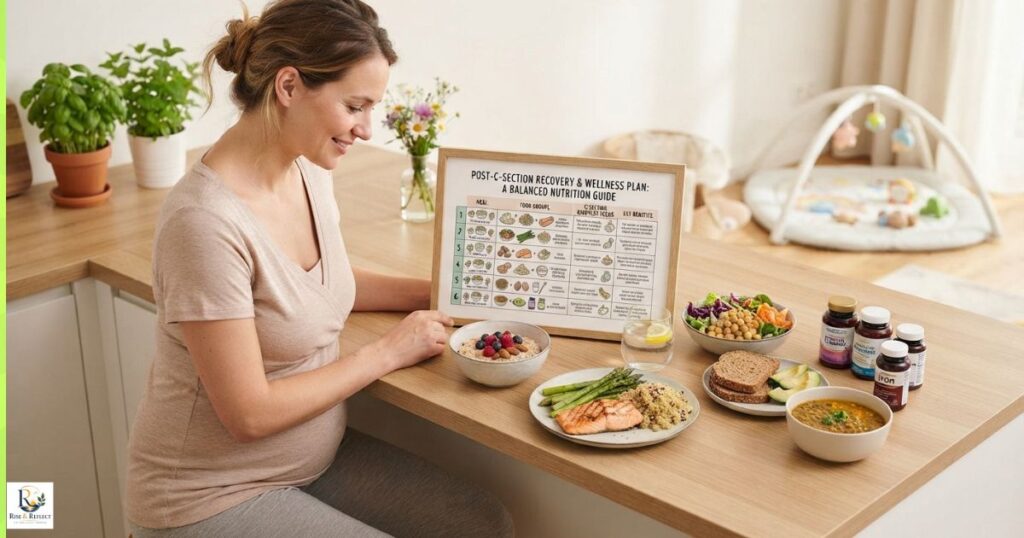
A good plan supports healing instead of chasing rapid weight loss after C-section. Aim for protein at every meal, plenty of fluids (around 2.5 to 3 litres a day if you’re nursing), and no crash dieting. This sample chart is a starting point, so adjust it to your appetite, culture, and any food allergies.
| Time | What to Eat | Why It Helps |
| Early morning | Warm water, 4–5 soaked almonds, 1–2 dates | Gentle hydration and steady energy |
| Breakfast | Vegetable omelette or oats with fruit and seeds | Protein and fibre keep you full |
| Mid-morning | Fruit and a glass of buttermilk or coconut water | Fluids and electrolytes |
| Lunch | 2 rotis or 1 cup rice, dal, cooked vegetables, curd | Balanced carbs, protein, and gut-friendly probiotics |
| Evening | Roasted chana, soup, or a handful of nuts | Prevents overeating at dinner |
| Dinner | Grilled fish, chicken, or paneer with vegetables and a small roti | Iron and protein for tissue repair |
| Bedtime | Warm milk | Calcium and better sleep |
Keep tea and coffee to one or two cups a day. If you’re breastfeeding, skip “detox” teas and fad diets.
Still Not Losing Weight? What Might Be Going On
I Am 5 Months Postpartum and Still Not Losing Weight. What Could Be Causing This?
You’re not failing. At five months, the usual culprits are:
- Poor sleep, which raises cortisol and cravings
- Breastfeeding hunger that leads to extra snacking
- Too little protein
- Very little movement beyond baby care
- Medical causes such as an underactive thyroid, low vitamin D or B12, or PCOS
If nothing shifts after a few months of consistent habits, ask your doctor about thyroid and blood tests. Fixing a hidden deficiency often does more than cutting calories.
Is It Normal to Feel Fat 3 Months After Giving Birth?
Yes, and it’s very common. Your body spent nine months changing, and it won’t reverse in twelve weeks. Your belly may look soft, your skin may feel loose, and hormones can make you feel low about your body. Give yourself six to twelve months. If the sadness lingers or starts affecting your daily life, talk to your doctor, because it could be postpartum depression, which is treatable.
How to Remove Belly Fat After Cesarean Delivery
Belly fat after a cesarean takes patience. Don’t chase rapid weight loss after C-section with crunches or starvation, because both can slow healing.
- Get clearance first. Most doctors okay gentle exercise around six weeks. Some women need longer.
- Start with walking and breathing. Ten-minute walks, deep belly breathing, and pelvic floor exercises rebuild your core gently.
- Check for diastasis recti. Ask your doctor or physiotherapist about abdominal separation before planks or sit-ups.
- Add strength training. More muscle burns more calories, even at rest.
- Sleep and eat protein. Both matter more than any “fat-burning” trick.
- Skip spot reduction. No exercise burns fat from only your stomach.
How Does Alia Bhatt Lose Weight After Pregnancy?
Alia Bhatt’s approach was gradual, and she has been open about it. On a chat show with Kareena Kapoor Khan, she credited healthy eating and long-term breastfeeding, said a strict diet wasn’t possible while nursing, and said she could only start proper workouts after about 12 weeks. bollywoodshaadis
About six weeks after delivery she shared that she was slowly rebuilding her core connection with her yoga teacher. In the first weeks her workouts were mostly breathing and walking, and she urged mothers to listen to their bodies. She has also said the weight came off naturally with clean eating and breastfeeding, even though online trolls assumed unnatural methods. thequintzarintv
The takeaway is patience, not a magic routine. She had trainers and a support system, and she hasn’t shared full delivery details in interviews I found, so treat her story as inspiration and not a benchmark for rapid weight loss after C-section.
Frequently Asked Questions
How much weight loss is normal postpartum?
About 5 to 6 kg leaves your body at delivery. After that, around 0.5 kg (1 lb) a week is a steady pace, and many women take 6 to 12 months to reach their pre-pregnancy weight.
Which drink is best for weight loss for breastfeeding mothers?
Water is the best choice, with coconut water, buttermilk, and milk as good extras. Keep caffeine low and avoid detox teas, which can affect your milk.
How many stitches are in a C-section?
There’s no fixed number. Surgeons close several layers (uterus, muscle, fat, skin) using dissolvable stitches, staples, or glue. Ask your surgeon for details about your surgery.
What is the best position to sleep after C-section?
Sleep on your back with a pillow under your knees, or on your side with a pillow between your knees and another hugging your belly. Roll to your side before sitting up to protect the incision.
How many months take rest after a C-section?
Plan on 6 to 8 weeks of proper rest with no heavy lifting, and expect full recovery to take up to three months. Attend your postpartum visit, which ACOG says should happen no later than 12 weeks after birth.
Final Thoughts on Rapid Weight Loss After C-Section
Rapid weight loss after C-section can be completely harmless, or it can be your body asking for help. If you feel strong, eat regularly, and your milk supply is steady, fast early loss is usually fine. If you feel weak, sad, feverish, or unable to eat, don’t ignore it.
Your next step: Book a postpartum checkup this week and bring your questions about weight, diet, and exercise. Share this guide with a new mom who needs it, and leave a comment with your experience below.
Disclaimer: This article is for general information and isn’t a substitute for medical advice. Reviewed by: [Doctor’s name, credentials]
References
- American College of Obstetricians and Gynecologists. Committee Opinion No. 736: Optimizing Postpartum Care. Obstetrics & Gynecology, 2018. https://pubmed.ncbi.nlm.nih.gov/29683911/
- World Health Organization. WHO Recommendations on Maternal and Newborn Care for a Positive Postnatal Experience, 2022 (who.int).