
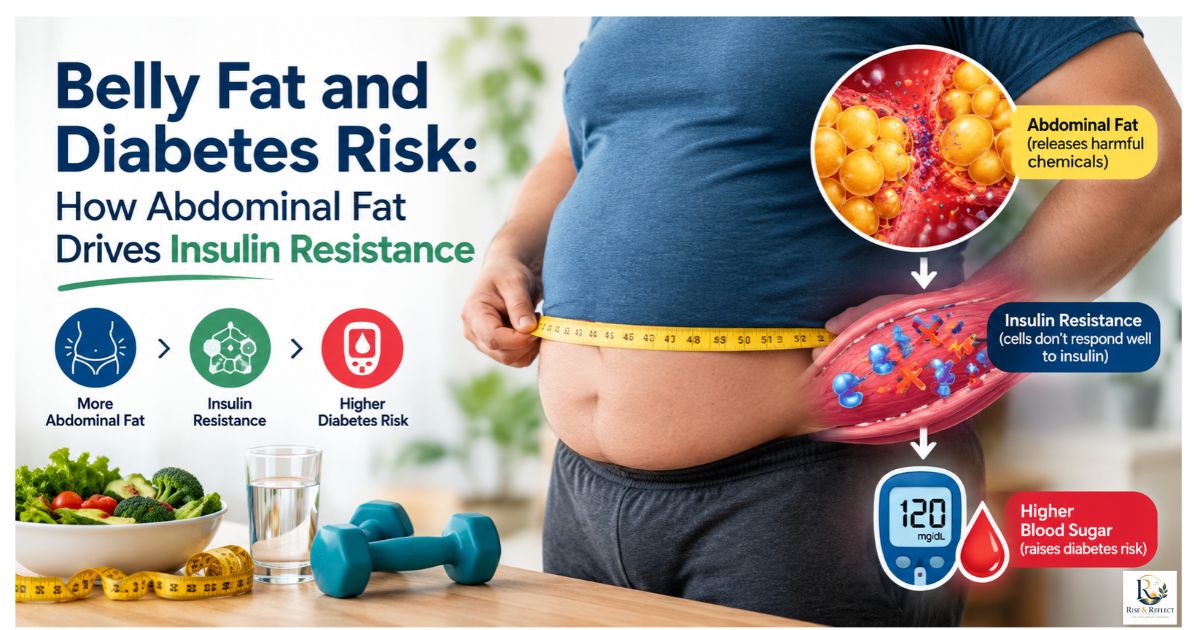
Belly fat and diabetes risk go hand in hand. The fat stored deep inside your abdomen does far more than change how your clothes fit. It sends out chemical signals that make your cells respond poorly to insulin, and that is one of the earliest steps toward type 2 diabetes.
Maybe your waistline has crept up over the years. Maybe a doctor called your blood sugar “borderline.” Either way, you probably want to know what is happening inside your body and whether you can change it. The encouraging answer is yes. Even a modest amount of weight loss can help your body handle glucose better.
In this guide you will learn:
- How obesity and type 2 diabetes are connected
- What the liver, muscles, and fat cells do in blood sugar control
- Which waist and weight numbers matter, and how to measure them at home
- What research says about weight loss and diabetes prevention
- Everyday habits that support a healthy weight and steadier blood sugar
How Are Obesity and Type 2 Diabetes Connected?
Obesity raises the chance of type 2 diabetes because extra body fat, especially around the abdomen, makes cells less sensitive to insulin. Over time the pancreas can no longer keep up, and blood sugar rises.
Insulin is the hormone that moves glucose from your blood into your cells. Type 2 diabetes develops when two things go wrong together: your tissues resist insulin’s message, and your pancreatic beta cells, the cells that make insulin, gradually lose the ability to compensate. Most people with type 2 diabetes carry excess body fat, though not everyone with obesity develops it, and some people at a normal weight do too.
Where you store fat matters as much as how much you carry. The link between belly fat and diabetes risk is stronger than the link with fat stored on the hips or thighs. Doctors often catch the early stage as prediabetes, when an HbA1c blood test (which reflects your average glucose over roughly two to three months) falls between 5.7% and 6.4%. A reading of 6.5% or higher points to diabetes.
How Belly Fat Increases Insulin Resistance
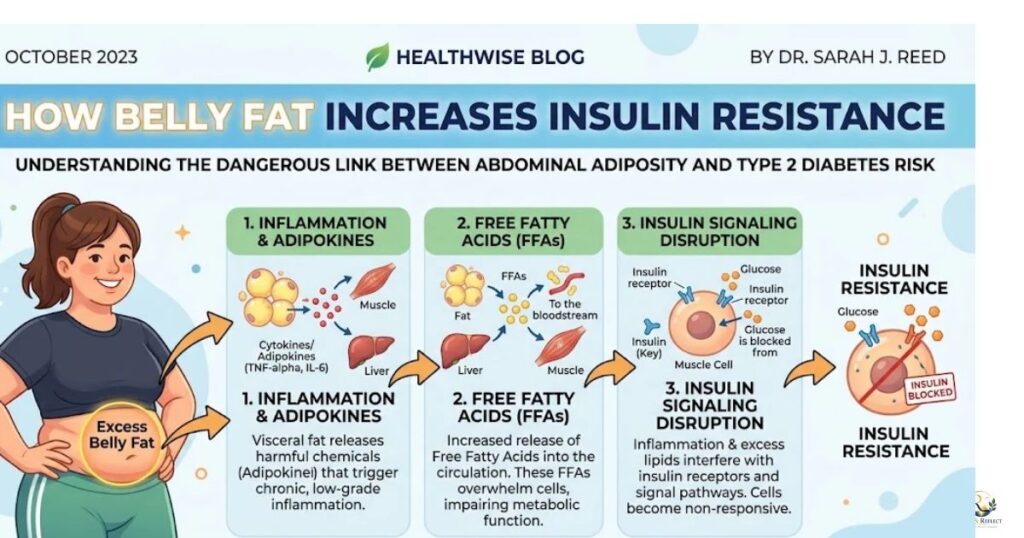
Belly fat increases insulin resistance because visceral fat, the type packed around your internal organs, releases fatty acids and inflammatory signals directly toward the liver. These signals interfere with how insulin works throughout the body.
Visceral Fat vs. Subcutaneous Fat
Subcutaneous fat sits just under the skin. You can pinch it. Visceral fat lies deeper, wrapped around the liver, intestines, and other organs, and you cannot pinch it. Visceral adipose tissue is also more metabolically active and more prone to dysfunction. Its blood supply drains into the portal vein, which leads straight to the liver, so whatever this fat releases reaches the liver first and in high concentrations.
Chemical Signals From Fat Tissue
Fat tissue works like an organ that sends messages. When it becomes overloaded, it changes what it sends:
- More free fatty acids (FFAs): these flood the liver and muscles and make it harder for them to respond to insulin.
- More inflammatory adipokines: these low-grade inflammatory signals, along with proteins such as PAI-1, are tied to metabolic dysfunction.
- Less adiponectin: this hormone normally helps tissues stay insulin sensitive, and levels tend to fall as visceral fat grows.
Researchers are also studying exosomes, tiny packages that fat cells release to send molecular messages to distant tissues. This area is still developing, but it adds to the picture of fat tissue as an active communicator.
This chain of events explains why belly fat and diabetes risk are so closely tied, even in people whose weight on the scale looks only slightly high.
The Role of the Liver, Muscles, and Fat Cells in Blood Sugar Control
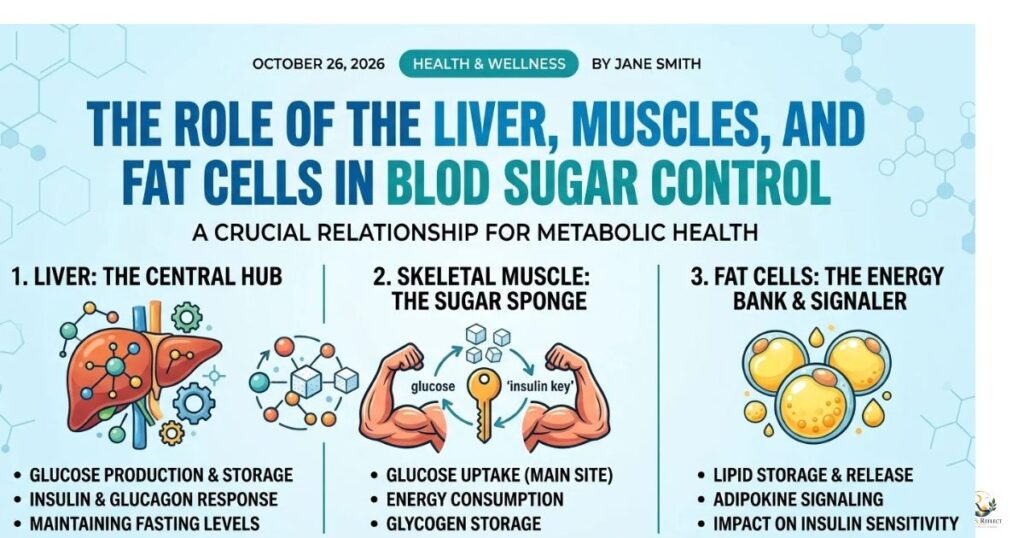
Three tissues do most of the work of keeping blood glucose steady: the liver, skeletal muscle, and fat cells. Insulin resistance in any of them pushes blood sugar up.
The Liver
Between meals, the liver releases glucose by breaking down stored glycogen (glycogenolysis) and by making new glucose from other sources (gluconeogenesis). After you eat, insulin tells the liver to stop. With liver insulin resistance, that stop signal is weak, so the liver keeps producing glucose even when blood sugar is already high. Fatty liver, or hepatic steatosis, is closely tied to this problem.
Skeletal Muscle
Muscle takes up most of the glucose from a meal. Insulin triggers GLUT4, a glucose transporter, to move to the muscle cell surface so glucose can enter and be stored as glycogen. When muscle becomes insulin resistant, GLUT4 does not respond well, and glucose stays in the blood.
Fat Cells
Healthy fat cells store triglycerides safely and release them in a controlled way. When insulin works poorly in fat tissue, it fails to hold back fat breakdown, so more free fatty acids leak into the bloodstream. Those fatty acids then worsen resistance in the liver and muscle.
How Insulin Resistance Develops in People With Obesity
Insulin resistance usually builds slowly, often over years, as stored fat overwhelms the body’s safe storage space and spills into places it does not belong. The process tends to follow this order:
- Fat tissue becomes overloaded. Fat cells enlarge, become inflamed, and release more fatty acids and fewer protective signals such as adiponectin.
- Fat spills into the liver and muscle. This “ectopic” fat builds up as liver fat and as lipids inside muscle cells.
- Fat-derived molecules block insulin signaling. Lipids such as diacylglycerols (DAGs) and ceramides interfere with the steps that let insulin do its job inside the cell.
- The pancreas compensates. Beta cells release more insulin, causing hyperinsulinemia. Blood sugar may stay normal for years during this stage.
- Beta cells tire. Eventually insulin output cannot match demand, glucose rises (hyperglycemia), and prediabetes turns into type 2 diabetes.
This is how belly fat and diabetes risk connect at the cellular level. The good news is that the early steps are reversible. When fat leaves the liver and muscle, insulin signaling often recovers.
Why Waist Circumference Matters for Diabetes Risk
Waist circumference matters because it gives a simple estimate of how much visceral fat you carry, and visceral fat predicts diabetes risk better than weight alone. Two people can have the same body mass index (BMI) and very different amounts of fat around their organs.
This is why some people at a “normal” BMI still develop prediabetes. They carry most of their fat around the middle. The pattern is especially common in South Asian adults, who tend to develop type 2 diabetes at lower BMIs and smaller waist sizes than people of European background. For this reason, many health bodies use lower waist cutoffs for South Asian populations.
What Research Says About Belly Fat and Diabetes Risk
Large studies consistently find that a bigger waist is linked to a higher chance of developing type 2 diabetes, even after accounting for BMI. A waist measurement is also free, takes a minute, and can be repeated at home, which makes it a practical early warning sign.
What Is a Healthy Weight and Waist Size for Reducing Diabetes Risk?
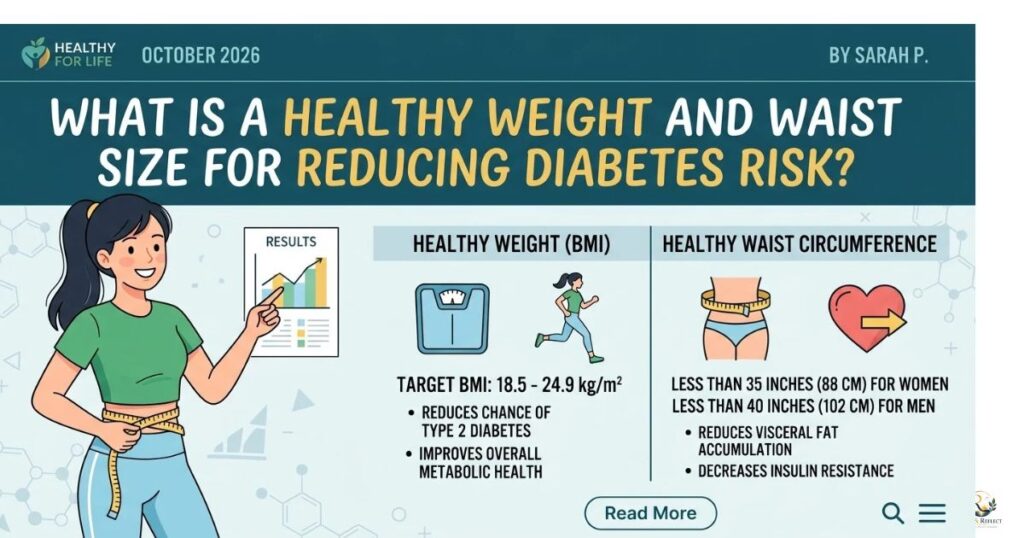
A healthy weight for most adults is a BMI of 18.5 to 24.9, and a waist under 35 inches (88 cm) for women or 40 inches (102 cm) for men. Lower cutoffs apply to South Asian adults, as the table below shows. These numbers are useful guides for keeping belly fat and diabetes risk low, but they are screening tools, not diagnoses.
| Measure | Lower-risk range | Higher-risk range |
| BMI (general adult guidelines) | 18.5 to 24.9 | 25 to 29.9 overweight; 30 or more obesity |
| BMI (Asian cutoffs, WHO) | 18.5 to 22.9 | 23 to 27.4 increased risk; 27.5 or more high risk |
| Waist, women (general) | Under 35 in (88 cm) | 35 in (88 cm) or more |
| Waist, men (general) | Under 40 in (102 cm) | 40 in (102 cm) or more |
| Waist, South Asian women | Under 80 cm (31.5 in) | 80 cm or more |
| Waist, South Asian men | Under 90 cm (35.5 in) | 90 cm or more |
| Waist-to-height ratio | Under 0.5 | 0.5 or more |
How to Measure Your Waist and Understand Your BMI
Measuring your waist takes about a minute:
- Stand up straight with your feet together and your belly relaxed.
- Find the top of your hip bone and the bottom of your ribs, and place a soft tape measure midway between them, usually level with your navel.
- Breathe out normally, then read the number without pulling the tape tight enough to dent the skin.
- Measure twice and use the average.
To calculate BMI, divide your weight in kilograms by your height in meters, squared. For example, a person who weighs 80 kg and is 1.70 m tall has a BMI of about 27.7. BMI does not distinguish fat from muscle or show where fat sits, so read it alongside your waist size, not instead of it.
Can Losing Weight Reduce the Risk of Type 2 Diabetes?
Yes. Weight loss is one of the most reliable ways to lower belly fat and diabetes risk, because it improves insulin sensitivity in the liver and muscle. Two landmark studies show how much it can matter.
The Diabetes Prevention Program (DPP). In this U.S. trial of 3,234 adults with prediabetes, people who lost about 7% of their body weight and walked or did similar activity for 150 minutes a week cut their chance of developing type 2 diabetes by 58% over roughly three years. That beat the diabetes drug metformin, which lowered risk by 31%.
The DiRECT trial. In this study of adults with recent-onset type 2 diabetes, 46% of those in a supervised weight management program reached diabetes remission after one year, compared with 4% in the usual-care group. Among people who lost 15 kg (about 33 lb) or more, 86% reached remission.
Diabetes remission means blood glucose stays below the diabetes threshold (HbA1c under 6.5%) without glucose-lowering medication. It is not the same as a cure, and the benefit lasts only if the weight stays off. Even so, results like these show that early, sustained weight loss can change the course of the disease.
Best Lifestyle Changes to Support a Healthy Weight and Blood Sugar
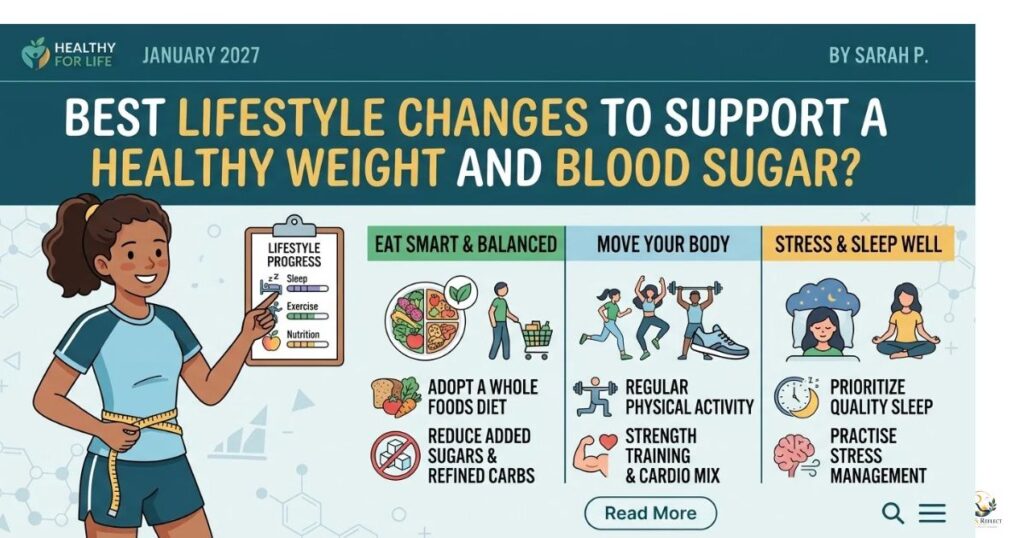
The best lifestyle changes are the ones you can keep doing: regular movement, a fiber-rich eating pattern, enough sleep, and routine blood sugar checks. Small steps add up.
Daily Habits That Lower Belly Fat and Diabetes Risk
- Move most days. Aim for at least 150 minutes a week of brisk walking, cycling, or swimming. Add two strength sessions a week, since muscle is a major site of glucose uptake.
- Break up sitting. A 5-minute walk every hour or so helps blood sugar after meals.
- Sleep 7 to 9 hours. Short sleep and high stress both push appetite and insulin resistance in the wrong direction.
- Limit sugary drinks and alcohol. Liquid calories add up fast and raise liver fat.
- Skip smoking. It increases belly fat storage and diabetes risk.
- Get checked. If your waist is above the ranges in the table, ask your doctor about an HbA1c or fasting glucose test.
Healthy Diets for Women Over 40
After 40, and especially around menopause, falling estrogen levels shift fat storage toward the abdomen and muscle mass tends to decline. A Mediterranean-style pattern is a practical, well-studied choice:
- Fill half your plate with vegetables and add legumes, whole grains, and fruit.
- Include protein at every meal (fish, eggs, lentils, yogurt, poultry) to protect muscle.
- Choose olive oil, nuts, and seeds over refined and fried fats.
- Cut back on white bread, sweets, and sugary drinks, which cause sharp glucose spikes.
If you take diabetes medication or have kidney disease, check with your doctor or a registered dietitian before changing your diet or exercise plan.
Frequently Asked Questions
How do you get rid of insulin belly fat?
There is no way to burn fat from just one spot. Gradual weight loss through regular activity, strength training, better sleep, and a high-fiber diet lowers visceral fat first and improves insulin sensitivity.
Is diabetic belly fat common in type 1 diabetes?
It is less typical, because type 1 diabetes is autoimmune and often starts with weight loss. Weight gain can still happen on insulin therapy, and extra belly fat can add insulin resistance on top of type 1.
What are the symptoms of diabetes when you are overweight?
Common signs include increased thirst, frequent urination, fatigue, blurred vision, slow-healing wounds, and dark, velvety skin patches on the neck or armpits. Many people have no symptoms at first, so testing matters.
Does obesity cause type 1 diabetes?
No. Type 1 diabetes occurs when the immune system destroys insulin-producing cells, and obesity does not cause it. Obesity mainly raises the risk of type 2 diabetes.
What is a diabetic belly in women?
It usually means extra fat around the middle linked to insulin resistance, often seen after menopause or with PCOS. A waist of 35 inches (88 cm) or more, or 80 cm for South Asian women, signals higher risk.
Conclusion
Belly fat and diabetes risk are connected through insulin resistance: visceral fat sends fatty acids and inflammatory signals to the liver and muscles, the pancreas works overtime, and blood sugar eventually rises. The reassuring part is that this process responds to action. Losing even 5% to 7% of your body weight, moving more, and eating well can improve insulin sensitivity and lower your chance of type 2 diabetes.
Your next step: grab a tape measure today and record your waist size. Compare it with the table above, then book a check-up to ask about an HbA1c or fasting glucose test. If you are above the healthy range, set one small goal this week, such as a 20-minute daily walk, and build from there.
This article is for education only. It is not a substitute for advice from your own doctor.
References
- Diabetes Prevention Program Research Group. Reduction in the Incidence of Type 2 Diabetes with Lifestyle Intervention or Metformin. New England Journal of Medicine, 2002. doi.org/10.1056/NEJMoa012512
- Lean MEJ, et al. Primary care-led weight management for remission of type 2 diabetes (DiRECT). The Lancet, 2018. doi.org/10.1016/S0140-6736(17)33102-1