

Search “how to lose weight naturally” and you’ll get buried in detox teas, 3-day cleanses, and promises of dropping a dress size by Friday. None of it really sticks. If you’ve tried a quick-fix diet before, you already know how this goes fast results, then the weight creeps back, sometimes bringing a little extra with it.
Natural weight loss was never about finding some trick nobody else knows. It’s a handful of habits, done consistently, that work with your body instead of fighting it. Below are the tips that actually move the needle, an honest answer on whether losing weight fast is realistic (or safe), and how to make results stick instead of bouncing right back in a month.
The 5 Tips That Actually Matter

If you strip everything down to the essentials, it’s really five things: eat more protein and fiber, watch your portions, move daily, prioritize sleep, and manage stress. None of these does much on its own. Together, though, they create the calorie deficit and hormonal balance your body actually needs to lose fat and keep it off.
1. Eat More Protein and Fiber the Foundation of How to Lose Weight Naturally Protein keeps you full and protects muscle while you’re losing fat. Fiber slows digestion and cuts down on overeating. Together they’re probably the single biggest lever most people can pull eggs, chicken, beans, lentils, oats, vegetables, at basically every meal.
2. Watch portions, not just food choices. Even healthy food adds up fast in large portions. A smaller plate, occasionally measuring servings, eating a little slower these sound too simple to matter, but they genuinely help you eat less without feeling like you’re being punished.
3. Move daily, not just at the gym. You don’t need an intense workout every single day. Walking, taking the stairs, staying a little active throughout the day it adds up more than people expect. For most people trying to lose weight naturally, consistency beats intensity, every time.
4. Prioritize sleep. Poor sleep raises ghrelin (the hormone that makes you hungry) and lowers leptin (the one that tells you you’re full). Getting 7-8 hours isn’t some luxury it’s honestly one of the most underrated tools in the entire weight loss conversation.
5. Manage stress. Chronic stress raises cortisol, and cortisol is linked to increased appetite and more fat storage, particularly around the midsection. Something as simple as a walk, some deep breathing, or journaling supports weight loss indirectly but the effect is real, not just wellness-industry noise.
Is Losing 5 kg in 10 Days Actually Realistic?
This is one of the most-searched weight loss questions out there, so let’s be straight about it: no, not safely, not through actual fat loss. A safe pace is roughly 0.5-1 kg a week, which means 5 kg realistically takes 5-10 weeks not 10 days. Any dramatic drop in 10 days is almost always water weight, not fat, and it tends to come right back once you go back to eating normally.
That’s not to say 10 days is worthless, though. Cutting back on sodium, refined carbs, and alcohol for that stretch can lead to a real, visible drop on the scale mostly from shedding water retention. That’s a perfectly fine way to feel lighter and build some momentum, and honestly a decent entry point if you’re still figuring out how to lose weight naturally without diving into anything extreme. Just know it isn’t the same thing as losing 5 kg of actual fat. Chasing that number too hard tends to lead to extreme restriction, muscle loss, and a metabolism that slows down over time the opposite of what you actually want, and the opposite of what how to lose weight naturally is supposed to mean in the first place.
The 10-day reset can be a nice kickstart, but it was never meant to be the whole plan for how to lose weight naturally it’s a warm-up, not the workout. Once the water weight is gone, the real question becomes whether you’re ready to build the habits that make how to lose weight naturally something you can actually stick with, not just survive for a week and a half.
20 Habits Worth Building Over Time
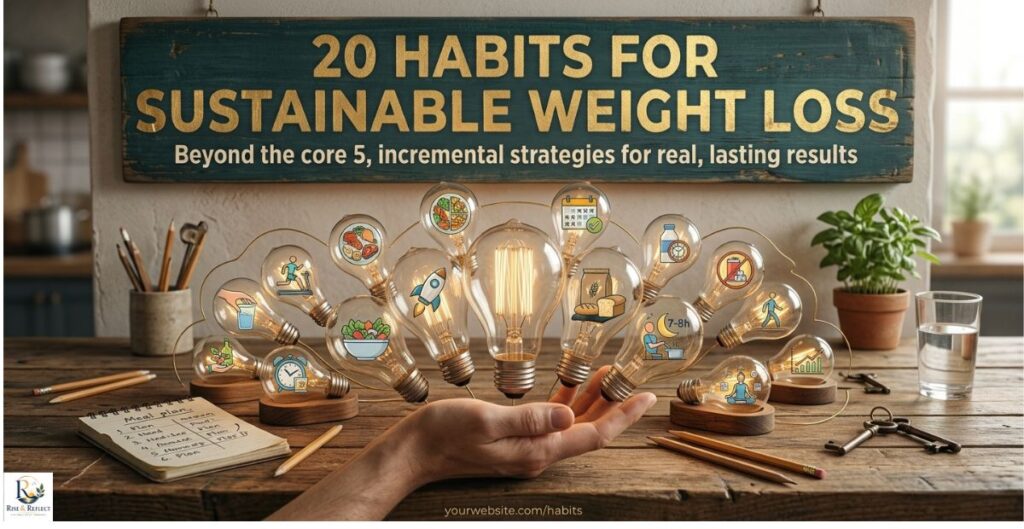
Beyond the core 5, here are 20 habits that support real, lasting weight loss when you actually stick with them:
- Drink water before meals
- Eat protein at every meal
- Fill half your plate with vegetables
- Choose whole grains over refined carbs
- Limit sugary drinks and juices
- Cook at home more often
- Eat a little slower, more mindfully
- Get 7-8 hours of sleep
- Walk at least 20-30 minutes daily
- Cut back on added sugar
- Plan meals a little ahead of time
- Skip eating straight out of the package
- Limit alcohol
- Manage stress through small daily habits
- Track progress without obsessing over the scale
- Include healthy fats — nuts, olive oil
- Don’t skip meals, breakfast included
- Practice portion control rather than strict elimination
- Build a routine you can actually repeat
- Aim for progress, not perfection
You genuinely don’t need all 20 at once that’s a recipe for burning out by week two. Pick 3-4, work on those for a few weeks, then add more once they’re second nature. That approach tends to beat an all-or-nothing overhaul by a wide margin.
Losing 10 kg and Actually Keeping It Off
Permanent weight loss was never about a diet with an end date. It’s about habits you can keep long after the “diet” part is technically over.
The realistic path: a moderate calorie deficit, strength training, enough protein, and daily habits you can actually maintain not short-term restriction. At a safe pace of 0.5-1 kg a week, 10 kg usually takes somewhere around 10-20 weeks. And here’s the part people skip: the habits you use to lose the weight should look a lot like the habits you plan to keep using afterward. If they’re wildly different, the weight tends to find its way back.
Why this requires a different mindset: most rebound weight gain happens because people treat weight loss like a temporary project instead of an actual lifestyle shift. Strength training matters a lot here it protects muscle mass, which keeps your metabolism from tanking once the weight’s off. Combine that with an eating pattern you can actually sustain, not one you’re counting down the days to escape, and that’s really what separates people who keep the weight off from people who don’t.
Mistakes That Quietly Slow Everything Down
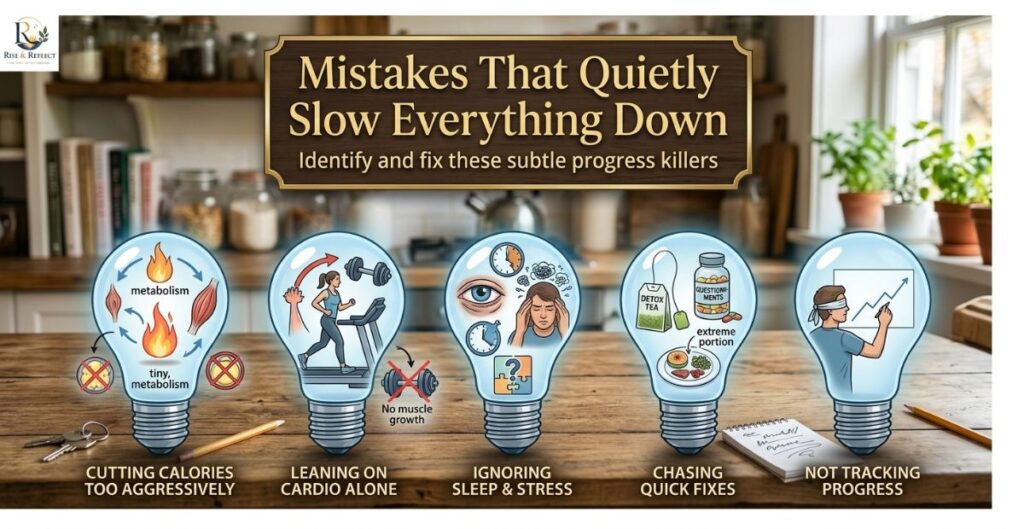
- Cutting calories too aggressively slows your metabolism and burns through muscle, not just fat
- Leaning on cardio alone and skipping strength training entirely
- Ignoring sleep and stress, probably the two most overlooked pieces of this whole puzzle
- Chasing quick fixes detox teas, extreme short-term diets, all the usual suspects
- Not tracking progress at all, which makes it nearly impossible to tell what’s actually working
Questions People Ask
What are the 5 best tips for weight loss? Eat more protein and fiber, watch your portions, move daily, prioritize sleep, and manage stress. Done together, these five form the actual foundation of sustainable weight loss.
Can I lose 5 kg in 10 days? Not safely through fat loss alone. A realistic pace is 0.5-1 kg a week, so 5 kg usually takes 5-10 weeks. Fast drops in 10 days are almost always water weight.
What are some good habits for weight loss? Drinking water before meals, protein at every meal, a daily walk, 7-8 hours of sleep, cutting back on added sugar small, repeatable habits that add up over time.
How do I lose 10 kg permanently? A moderate calorie deficit, regular strength training, and habits you can actually keep long-term not a restrictive short-term diet. Expect roughly 10-20 weeks at a safe, sustainable pace.
Is natural weight loss slower than dieting hard? It can feel slower at first, sure. But habit-based weight loss is far more likely to actually stick, since it doesn’t rely on extreme restriction that’s basically impossible to sustain for long.
Bottom Line
Losing weight naturally was never about finding the one trick that finally clicks. If you’ve been searching how to lose weight naturally, the honest answer is less exciting than most headlines make it sound. It’s about stacking small, sustainable habits until they stop feeling like effort. Skip the 10-day miracle promises and stick to the basics — protein, fiber, movement, sleep, stress management. Not flashy, but it’s what actually produces results that last, and it’s really the whole answer to how to lose weight naturally without burning out by week three.
Pick one habit from this list today. Maybe it’s more water before meals, maybe it’s a 20-minute walk. Real, lasting weight loss starts with one habit at a time, not an overnight overhaul — which is the part most guides on how to lose weight naturally tend to skip over. Give it a few weeks before judging whether it’s working, because how to lose weight naturally almost always looks slower at first than the version that doesn’t last.