

Looking for the best foods to eat at night that won’t wreck your progress? Here’s the thing: It’s 9 p.m. You’re standing in front of the open fridge, and there’s this little voice in your head arguing with you. Half of it wants a snack. The other half is convinced that eating anything right now is going to undo the entire day.
Sound familiar? For a long time, the go-to advice was “don’t eat after dinner.” Simple rule, easy to remember, mostly wrong. Your body doesn’t flip a switch at sundown and stop processing food. What actually changes at night is your activity level and a few hormone patterns and that shift matters more than the clock does.
Here’s the short version: a bowl of chips at 10 p.m. is a problem. A handful of almonds or some Greek yogurt at 10 p.m.? Not really. The food matters a lot more than the timestamp.
Late-night cravings hit everyone eventually, and having the right snacks on hand makes all the difference. Below you’ll find 12 of the best foods to keep stocked for those moments, along with the reasoning behind each pick plus honest answers to the questions I get asked all the time about eating at night, so-called fat-burning foods, and losing weight quickly. Think of this as your go-to list of the best foods for smarter, guilt-free snacking after dark
Why What You Eat at Night Actually Matters

Cortisol and insulin sensitivity both shift as the day goes on. Practically speaking, that means a heavy, carb-loaded meal at 11 p.m. is more likely to get stored than a similar meal eaten at noon. Your body just isn’t primed to burn through it the same way.
That doesn’t mean nighttime eating is the enemy, though. Pick the right combination protein, some fiber, a little healthy fat and you can actually work in your favor:
- Blood sugar stays steadier through the night
- Cravings and mindless snacking drop off
- Muscle repair gets a boost while you sleep
- Sleep quality itself improves, and that’s tightly linked to weight
So really, the goal isn’t “eat nothing after 7 p.m.” It’s choosing food that’s working with you instead of against you.
The 12 Best Foods
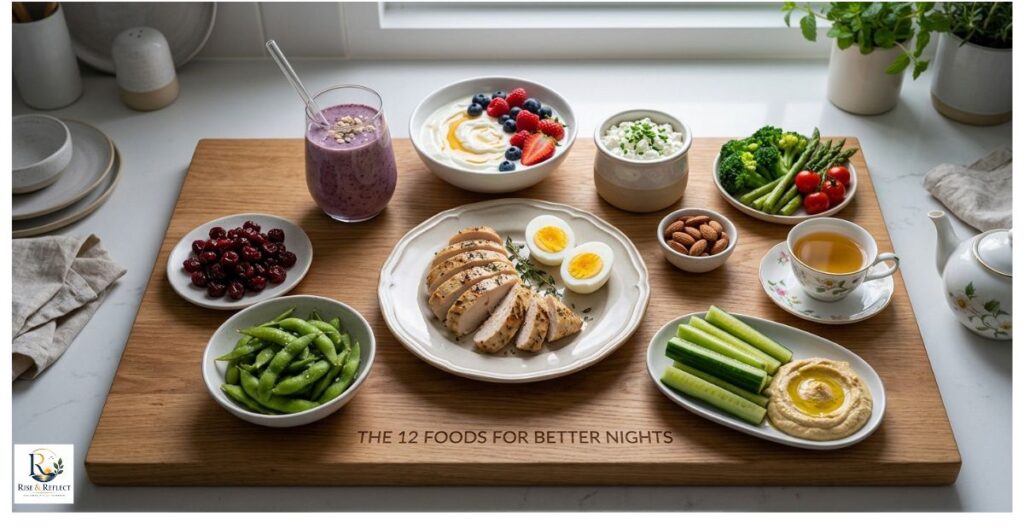
1. Greek yogurt. This one comes up constantly when people ask what to eat at night for fat loss, and for good reason a single serving can pack 15-20 grams of protein, which keeps you full and gives your muscles something to work with overnight. It’s got probiotics too, and gut health plays a bigger role in weight than most people give it credit for.
2. Cottage cheese. The protein here (casein) digests slowly, so it trickles amino acids into your system for hours instead of all at once. That slow release helps hold off hunger until morning. Toss in a few berries and it’s genuinely satisfying, not just “diet food.”
3. A small handful of almonds. Healthy fat, fiber, a bit of protein that combination slows digestion down enough to keep your blood sugar from spiking (and then crashing, which is usually what triggers the next craving). Keep it to about 15-20 almonds, though. They’re calorie-dense, and it’s easy to eat way more than you meant to.
4. A couple of boiled eggs. Hard to beat for a low-carb night snack. Between the protein and the choline, eggs keep you full without leaving you feeling weighed down before bed.
5. Steamed vegetables. Broccoli, spinach, zucchini anything non-starchy. High fiber, high water content, so you get actual volume on your plate for very few calories. Steam them lightly and they’re easy on digestion too.
6. A small portion of grilled chicken. If dinner was on the lighter side and you’re genuinely hungry a few hours later, lean chicken is one of the better options. Protein has a higher thermic effect than fat or carbs, meaning your body spends more energy just digesting it which is a small but real point in your favor.
7. Berries. Strawberries, blueberries, raspberries. Naturally sweet, low calorie, loaded with fiber and antioxidants. If what you’re really craving is dessert, this scratches the itch without the sugar crash that follows a bowl of ice cream.
8. Chamomile or peppermint tea. Not technically a food, but it earns its spot here. A warm cup can ease digestion, take down bloating, and — maybe just as importantly — signal to your brain that the kitchen is closing for the night.
9. Cucumber with hummus. Cucumber is over 95% water, so it’s about as low-calorie as snacking gets. Pair it with a tablespoon of hummus for some protein and fat, and you’ve got something crunchy and satisfying that won’t sit like a brick in your stomach.
10. Edamame. A cup of steamed edamame gives you plant protein, fiber, and a decent hit of magnesium which happens to support better sleep. And better sleep, it turns out, is one of the more underrated tools for managing weight.
11. Tart cherries. These contain natural melatonin, so a small serving can genuinely help regulate your sleep cycle. Since poor sleep drives up appetite the next day, cherries end up doing double duty here.
12. A low-sugar protein smoothie. For nights when a snack isn’t enough unsweetened almond milk, a scoop of protein powder, a handful of spinach. Filling, but it won’t load you up on sugar right before bed.
What Actually Burns Fat? The Bigger Picture
No single food on that list is magic on its own. What matters is the pattern behind them and most of these foods share a few traits:
- High protein. Costs more energy to digest, protects muscle.
- High fiber. Slows everything down, keeps you full longer.
- Low glycemic impact. Doesn’t spike insulin or push your body toward storing fat.
- Minimal processing. Whole food beats a package almost every time.
Build your meals day or night around those four things, and you’re doing most of what actually drives fat loss. No single snack is going to do the heavy lifting by itself.
Can You Really Slim Down in 7 Days
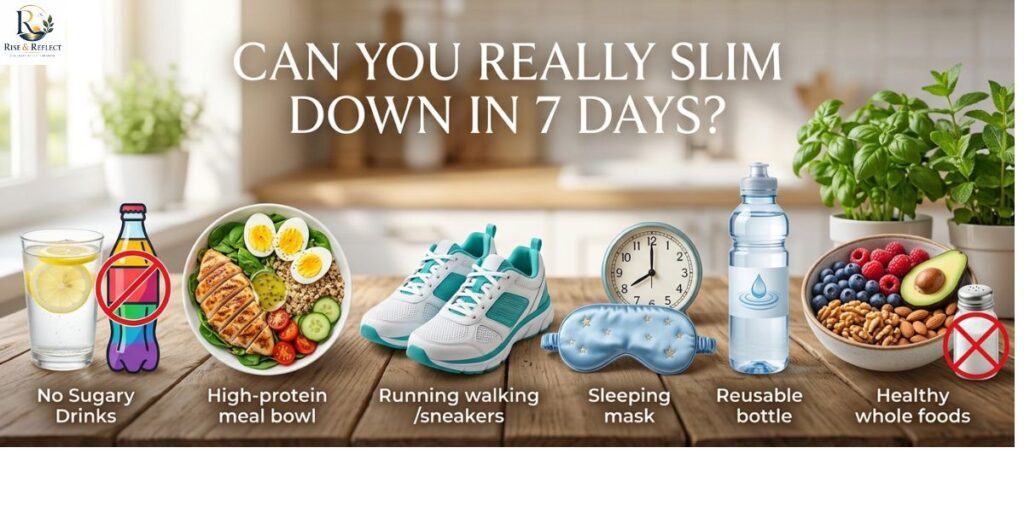
People search for this constantly, so let’s be straight about it: in one week, you’re not going to lose much actual fat. What you can do is cut bloating, shed some water weight, and build momentum. Here’s a realistic version of a 7-day reset:
- Cut liquid calories — soda, sweetened coffee, and alcohol add up faster than people realize
- Get protein into every meal, night snacks included
- Dial back sodium to ease water retention
- Walk daily, even just 20-30 minutes
- Sleep 7-8 hours — short sleep drives up hunger hormones
- Drink water consistently; thirst gets mistaken for hunger more often than you’d think
- Reach for the foods above instead of whatever’s in the pantry
Burning Fat at Home, No Equipment Needed
You do not need a gym for this to work. Squats, lunges, push-ups, planks mix in some jumping jacks or stair climbing for cardio, and you’ve got a workout that genuinely moves the needle. Pair that with smarter nighttime eating and you’re supporting your metabolism around the clock, not just during the 20 minutes you’re exercising.
Questions People Ask
Is eating after 8 p.m. bad for weight loss? Not inherently. A light, protein-heavy snack after 8 isn’t going to derail anything. A huge, calorie-dense meal will — but that’s true no matter what time it is.
What should I eat if I’m still hungry after dinner? Greek yogurt, cottage cheese, a small handful of almonds — anything high in protein and fiber. Fills the gap without adding a ton of calories.
Does drinking water at night help with weight loss? Yes, to a modest degree. It supports digestion and cuts down on false hunger signals. Just don’t chug a big glass right before bed unless you enjoy 2 a.m. bathroom trips.
Will eating carbs at night make me gain weight? Not automatically it depends on which carbs. A serving of steamed vegetables and a plate of pasta are not the same thing, even though both technically count as “carbs.”
How long before bed should I stop eating? Somewhere around 1-2 hours is a reasonable target. Enough time for digestion to get moving without interfering with your sleep.
The Bottom Line
Losing weight was never about refusing to eat after sundown. It’s about having some of the best foods ready for when hunger actually shows up and it usually does, somewhere around 9 p.m., standing in front of an open fridge.
That’s really the whole point of this list. These aren’t the best foods because some study said so — they’re the best foods because they’re satisfying enough to quiet that voice without derailing anything. Pick just one from the list above and swap it in tonight instead of your usual go-to.
Small changes like that, repeated night after night, are what actually add up. Keep a couple of these best foods stocked in your kitchen, and the 9 p.m. fridge standoff stops being a fight you have to win through willpower.