
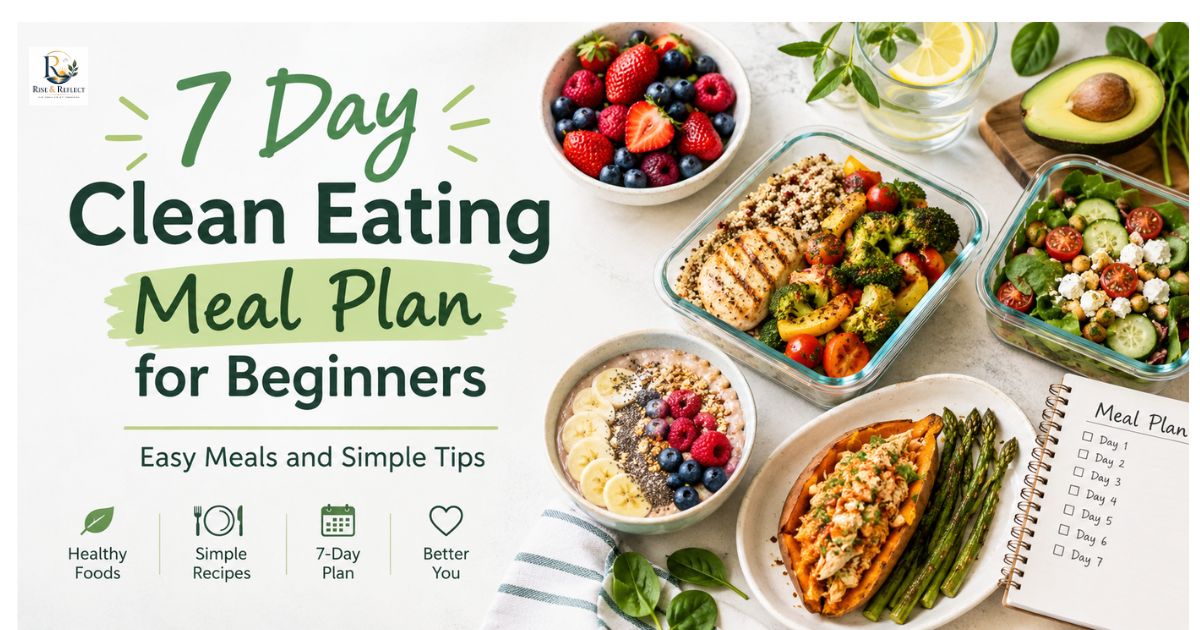
Starting a healthier way of eating usually fails for one reason: the plan is too complicated. Strict rules, long ingredient lists, and unfamiliar recipes make most people quit by day three. This 7 day clean eating meal plan for beginners takes the opposite approach. It uses everyday foods, simple recipes, and a repeatable routine so you can eat well without spending hours in the kitchen.
Below, you’ll learn what clean eating really means, how to build a balanced plate, and exactly what to eat each day for a week. You’ll also get a beginner grocery list, meal prep shortcuts, answers to common questions (including healthy diets for women over 40), and tips for making the habit last. Whether you want more energy, better digestion, or just a calmer relationship with food, this is a practical place to start.
What Is Clean Eating and How Does It Work?
Clean eating means choosing whole, minimally processed foods most of the time and cutting back on added sugar, refined flour, and heavily packaged products. It is not a medical diet, and it doesn’t require you to give up entire food groups. Think of it as a food quality upgrade: more vegetables, fruits, whole grains, lean protein, and healthy fats, with fewer ultra-processed extras.
The core principles of a clean eating diet plan
- Eat food close to its natural form. An apple beats apple-flavored snacks; plain oats beat sugary instant packets.
- Read nutrition labels. A short ingredient list you can pronounce is usually a good sign.
- Limit added sugar. Check labels for sugar hiding under other names.
- Cook more at home. You control the oil, salt, and portion sizes.
- Stay hydrated. Water, herbal tea, and sparkling water count; sugary drinks don’t.
Clean eating works because it raises nutrient density. Whole foods deliver dietary fiber, vitamins and minerals, and antioxidants that refined foods often lose in processing. Fiber and protein also keep you full longer, which naturally supports sensible calorie intake without counting every bite. If you’re looking for a simple starting point, this 7 day clean eating meal plan for beginners shows how those principles look on a real plate.
How to Build a Balanced Clean Eating Plate
You don’t need a scale or an app to build balanced meals. Use your plate as the guide, a method that mirrors the Harvard Healthy Eating Plate and the USDA’s MyPlate model.
- Half the plate: fruits and vegetables. Aim for variety and color. Leafy greens, broccoli, peppers, and berries are easy wins. Frozen vegetables count too.
- A quarter of the plate: lean protein. Choose eggs, Greek yogurt, lentils, chicken breast, salmon, or beans.
- A quarter of the plate: whole grains or healthy carbohydrates. Brown rice, quinoa, oats, sweet potatoes, and whole-grain bread keep energy steady.
- A small serving of healthy fats. Olive oil, avocado, nuts and seeds supply unsaturated fats that help you absorb certain vitamins.
- Water on the side. Hydration supports digestion and helps you tell thirst from hunger.
Quick portion sizes for beginners
Use your hand as a rough guide: a palm-sized portion of protein, a cupped handful of grains, a thumb of oil or nut butter, and as many non-starchy vegetables as you like. Balanced meals built this way make a healthy meal plan for beginners feel almost automatic.
Your Complete 7-Day Clean Eating Meal Plan
Here is the full 7 day clean eating meal plan for beginners. Meals repeat ingredients on purpose, so you shop once, cook in batches, and waste less food. Adjust portions to your appetite and activity level.
Your 7 Day Clean Eating Meal Plan for Beginners at a Glance
| Day | Breakfast | Lunch | Dinner | Snack |
| 1 | Greek yogurt with berries and chia seeds | Quinoa bowl with chickpeas, cucumber, and olive oil | Baked salmon, roasted broccoli, brown rice | Apple and a small handful of almonds |
| 2 | Spinach and tomato omelet with whole-grain toast | Leftover salmon over leafy greens with avocado | Chicken breast stir-fry with frozen vegetables and brown rice | Carrot sticks with hummus |
| 3 | Overnight oats with banana and walnuts | Lentil soup with a side salad | Sheet-pan chicken with sweet potato and green beans | Greek yogurt with cinnamon |
| 4 | Smoothie: spinach, frozen berries, yogurt, flaxseed | Chicken and avocado wrap on a whole-grain tortilla | Black bean and vegetable tacos on corn tortillas | Hard-boiled egg and cucumber slices |
| 5 | Scrambled eggs with peppers and tomatoes | Chickpea salad with lemon and olive oil | Baked cod with quinoa and asparagus | Pear and a few walnuts |
| 6 | Avocado toast on whole-grain bread with a poached egg | Black bean and brown rice bowl with salsa | Lentil and vegetable curry with brown rice | Mixed berries with yogurt |
| 7 | Vegetable frittata with fruit on the side | Grilled chicken, quinoa, and leafy green salad | White bean and vegetable soup with whole-grain toast | Banana with a spoonful of peanut butter |
This healthy meal plan for beginners averages roughly three meals and one snack a day. Hungrier days can take a second snack, and that’s fine. Clean eating is about food quality, not strict rules.
Healthy diets for women over 40
If you’re following this plan in your 40s or beyond, keep protein steady at each meal and include calcium- and vitamin D-rich foods such as yogurt, leafy greens, and fortified options. Pair your meals with regular strength training to help maintain muscle, and check with your doctor if you have a health condition or take medication.
Easy Clean Eating Breakfast, Lunch, Dinner, and Snack Ideas
Want to swap meals or keep things interesting? Use these easy clean eating recipes as building blocks. Each one follows the plate method above.
Healthy breakfast ideas
- Overnight oats with fruit, nuts, and a pinch of cinnamon
- Veggie scramble with whole-grain toast
- Greek yogurt parfait with berries and seeds
Healthy lunch ideas
- Quinoa or brown rice bowls with beans and roasted vegetables
- Big salads topped with chicken, tuna, or lentils
- Homemade soups made in a large batch
Healthy dinner ideas
- Baked salmon or chicken with a vegetable side and a whole grain
- Stir-fries built on frozen vegetables
- Lentil curry or bean tacos for a meatless night
Healthy snacks for beginners
Keep snacks simple: fruit with nuts, hummus with vegetables, yogurt with berries, or a boiled egg. Pairing fiber with protein keeps hunger steady between meals.
Easy healthy food substitutions
- White rice → brown rice or quinoa
- Sugary yogurt → plain Greek yogurt with fruit
- Chips → air-popped popcorn or roasted chickpeas
- Creamy dressings → olive oil and lemon
- Soda → sparkling water with citrus
Clean Eating Grocery List for Beginners
This clean eating grocery list covers everything in the 7 day clean eating meal plan for beginners, serving one person. Scale up for your household.
- Proteins: eggs, chicken breast, salmon fillets, cod, plain Greek yogurt
- Legumes (canned beans and dry): chickpeas, black beans, white beans, lentils
- Whole grains: brown rice, quinoa, rolled oats, whole-grain bread, whole-grain tortillas, corn tortillas
- Vegetables: spinach and other leafy greens, broccoli, asparagus, green beans, sweet potatoes, cucumbers, tomatoes, peppers, carrots, plus bags of frozen vegetables
- Fruits: bananas, apples, pears, berries (fresh or frozen), lemons
- Healthy fats: olive oil, avocados, almonds, walnuts, chia seeds, flaxseed, peanut butter (no added sugar)
- Pantry staples: hummus, salsa, low-sodium vegetable broth, cinnamon, garlic, onions, herbs and spices
Shopping tip: Frozen vegetables and canned beans are budget-friendly, last longer, and are just as useful as fresh. Rinse canned beans to cut sodium, and check labels for added sugar.
How to Meal Prep for Your 7-Day Clean Eating Plan
A 90-minute prep session on Sunday makes the 7 day clean eating meal plan for beginners far easier to follow. Here’s a simple clean eating meal prep routine:
- Cook the grains. Make a big pot of brown rice and quinoa.
- Roast the vegetables. Broccoli, sweet potatoes, and peppers all roast well on one or two trays.
- Prepare the proteins. Bake chicken breast, hard-boil a half dozen eggs, and simmer a pot of lentils.
- Wash and chop. Portion greens, cucumbers, and carrots into containers.
- Assemble grab-and-go items. Make overnight oats and portion snacks into small bags.
Day 1
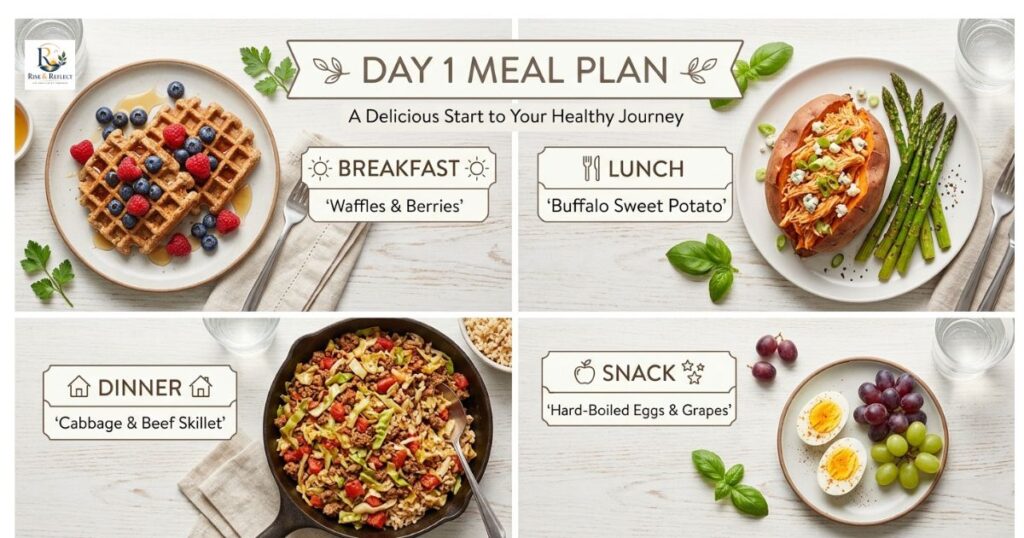
- Breakfast: Start your morning with whole-grain waffles topped with fresh berries. Add a little honey or pure maple syrup if you like them sweeter.
- Lunch: Bake a sweet potato, fill it with shredded buffalo chicken, and serve it with roasted asparagus on the side.
- Dinner: Make a simple cabbage and ground beef skillet with tomatoes and brown rice. It’s a comforting meal that works well for a busy evening.
- Snack: Keep things simple with a couple of hard-boiled eggs and a handful of fresh grapes.
Day 2
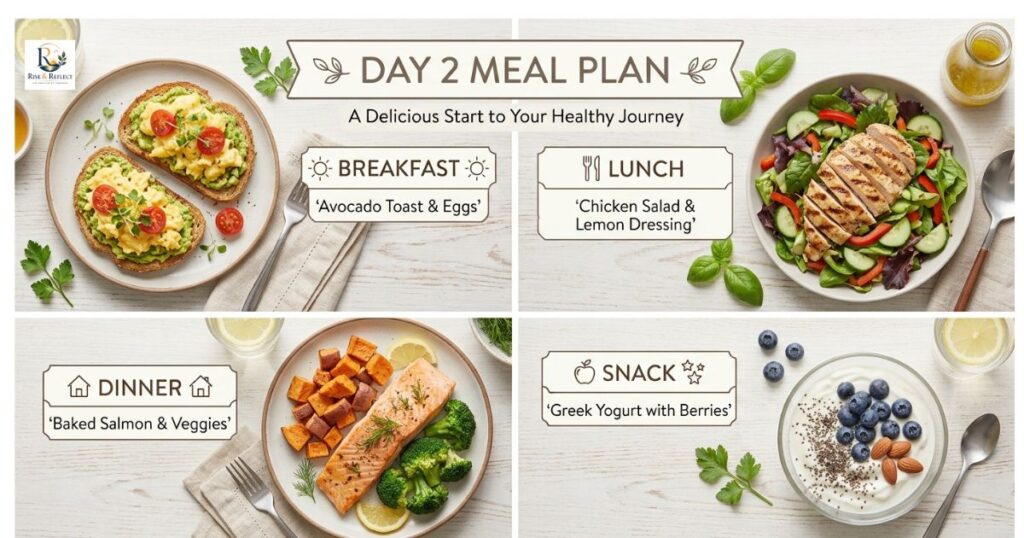
- Breakfast: Toast a slice or two of whole-grain bread and top it with mashed avocado, scrambled eggs, and sliced tomatoes.
- Lunch: Toss grilled chicken with mixed greens, cucumber, and bell peppers. Finish with a homemade dressing made from olive oil and lemon juice.
- Dinner: Bake a salmon fillet and serve it with roasted sweet potatoes and steamed broccoli.
- Snack: Have a bowl of plain Greek yogurt with blueberries and a sprinkle of chia seeds.
Day 3
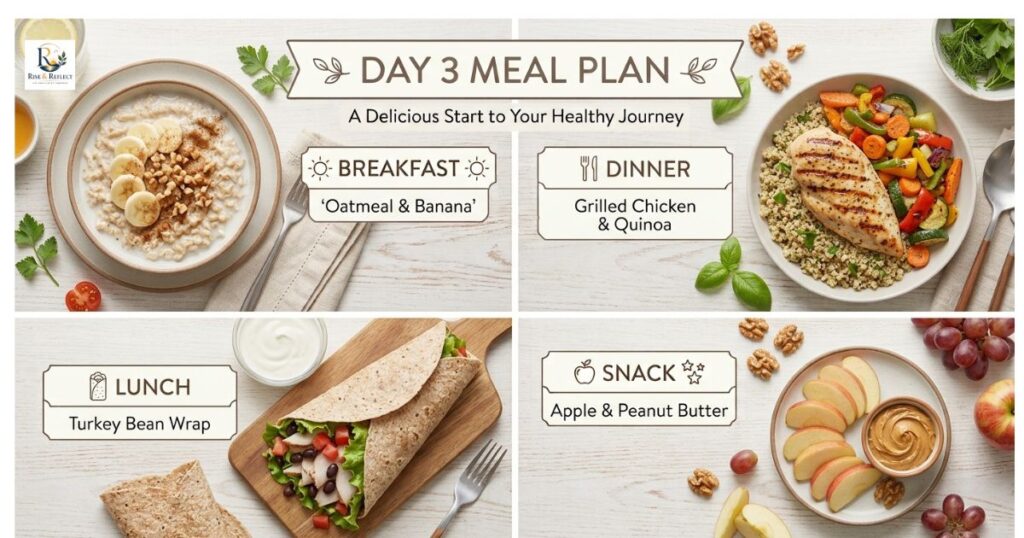
- Breakfast: Cook a bowl of oatmeal with milk, then add sliced banana, cinnamon, and a few chopped walnuts.
- Lunch: Fill a whole-grain wrap with turkey, black beans, lettuce, and tomatoes. A spoonful of plain yogurt makes an easy dressing.
- Dinner: Serve grilled chicken breast with quinoa and a mix of roasted vegetables. Season everything with your favorite herbs and spices.
- Snack: Slice up an apple and enjoy it with a little natural peanut butter.
Day 4
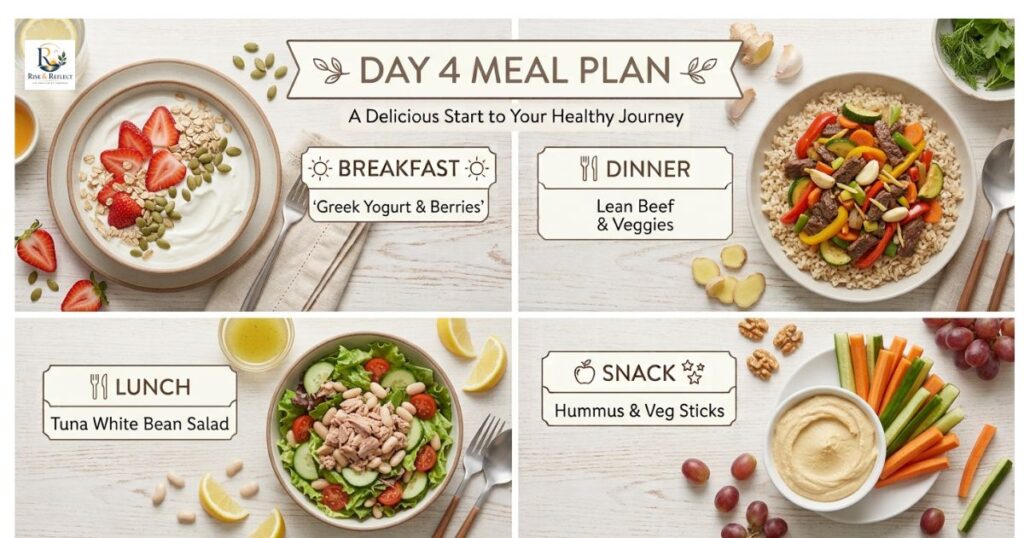
- Breakfast: Spoon plain Greek yogurt into a bowl and top it with strawberries, oats, and pumpkin seeds for a quick breakfast.
- Lunch: Mix tuna and white beans with cucumber, tomatoes, and leafy greens. Add lemon juice and a little olive oil for flavor.
- Dinner: Cook lean beef with colorful vegetables in a pan, adding garlic and ginger for extra flavor. Serve it with brown rice.
- Snack: Cut carrots and cucumber into sticks and serve them with hummus for dipping.
Day 5
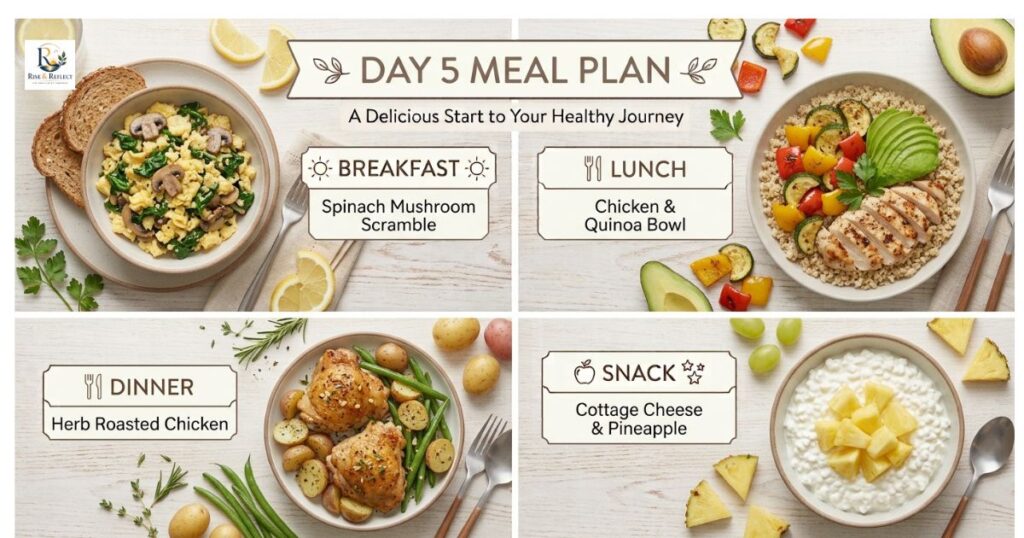
- Breakfast: Whisk together a couple of eggs and cook them with spinach and mushrooms. Serve with whole-grain toast.
- Lunch: Build a chicken and quinoa bowl with roasted zucchini, bell peppers, and avocado. It’s an easy way to combine protein, vegetables, and healthy fats in one meal.
- Dinner: Roast chicken thighs with potatoes and green beans. Season with garlic, black pepper, and herbs before cooking.
- Snack: Enjoy cottage cheese with a few chunks of fresh or canned pineapple.
Day 6
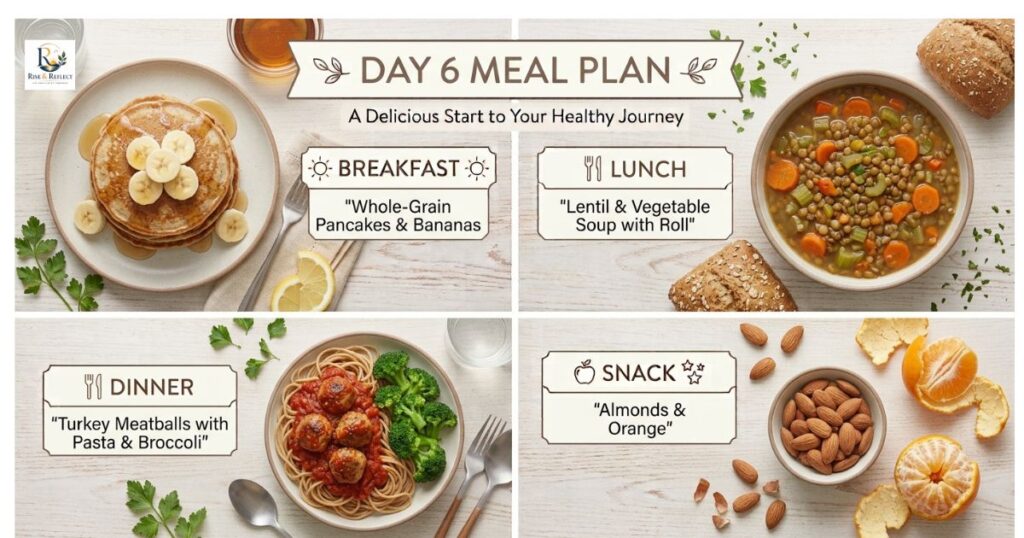
- Breakfast: Make whole-grain pancakes and top them with sliced bananas. A small drizzle of pure maple syrup adds sweetness without making the meal complicated.
- Lunch: Warm up a bowl of lentil and vegetable soup and serve it with a whole-grain roll and a side salad.
- Dinner: Prepare turkey meatballs and serve them with whole-wheat pasta and tomato sauce. Add steamed broccoli to round out the meal.
- Snack: Grab a handful of almonds and an orange when you want something easy between meals.
Day 7
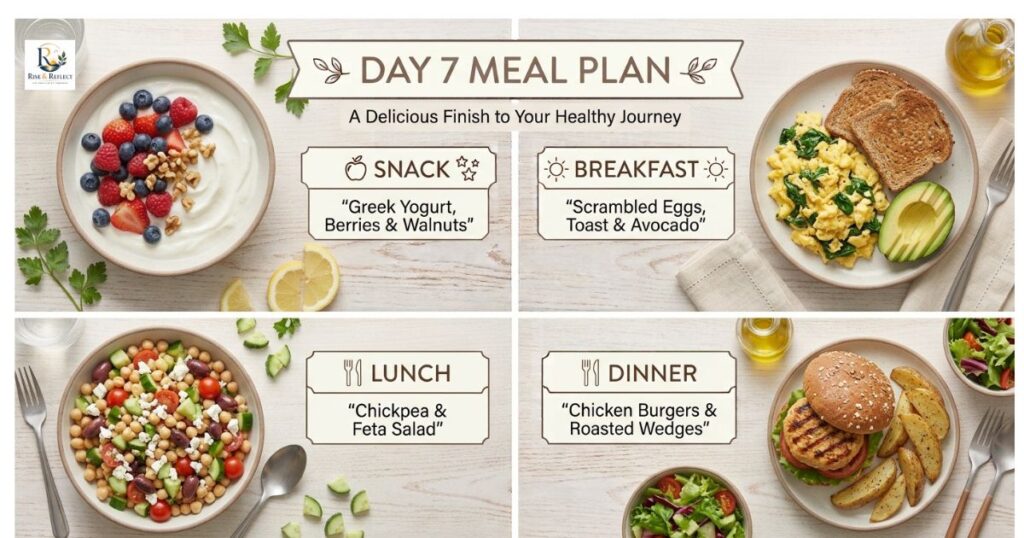
Snack: Finish the week with plain Greek yogurt topped with fresh berries and a few chopped walnuts.
Breakfast: Scramble eggs with spinach and serve them with whole-grain toast and sliced avocado.
Lunch: Make a chickpea salad with cucumber, tomatoes, olives, and a little feta cheese. Toss everything with olive oil and lemon juice.
Dinner: Put together homemade chicken burgers using whole-grain buns. Serve with roasted potato wedges and a fresh side salad.
Food storage basics
Cooked grains, proteins, and roasted vegetables keep well in airtight containers in the fridge for about three to four days. Freeze extra portions of soup, lentils, and cooked chicken for later in the week. Label everything with the date so nothing gets forgotten.
Health Benefits of Clean Eating
Research on whole-food, plant-forward eating patterns consistently links them to better long-term health. Common benefits include:
- Steadier energy from healthy carbohydrates and balanced meals instead of sugar spikes
- Better digestion thanks to high-fiber foods such as beans, oats, and vegetables
- Heart health support from unsaturated fats, fish, and less processed food
- Easier weight management because whole foods are more filling per calorie
- Improved nutrient intake, including vitamins, minerals, and antioxidants
These benefits build over time, so treat a 7 day clean eating meal plan for beginners as the first week of a habit, not a quick fix.
Common Clean Eating Mistakes Beginners Should Avoid
- Going too strict. Cutting out everything at once usually backfires. Start by improving most meals, not every bite.
- Skipping protein and fiber. Meals made only of fruit or salad leave you hungry within an hour.
- Trusting “healthy” labels. Granola bars and flavored yogurts can be high in added sugar. Read the nutrition label.
- Ignoring portion sizes. Healthy foods still count toward your calorie intake.
- Forgetting to drink water. Thirst is often mistaken for hunger.
- Not planning ahead. Without a plan and a grocery list, takeout wins on busy days.
Frequently Asked Questions About Clean Eating
What is a healthy 7-day eating plan?
A healthy 7-day eating plan fills half the plate with vegetables and fruit, plus lean protein, whole grains, and healthy fats at each meal. The plan above is one example you can follow as written.
What is the 3-3-3 rule for weight loss?
It isn’t an official guideline, and versions vary online. A common take is three balanced meals, three servings of vegetables daily, and three workouts a week.
Can you lose 5kg in 7 days?
Not safely. Most of a rapid drop is water, and it usually returns, so health agencies recommend a slower pace of about 0.5 to 1 kg per week.
How to lose 2kg in 7 days?
Skip crash diets. Eat balanced meals, limit added sugar, drink water, sleep well, and walk daily, and talk to your doctor first if you have a health condition.
What is the most famous 7-day diet?
The cabbage soup diet is often cited, but it is a restrictive fad that lacks balance. A whole-food plan like this one is a safer and more sustainable choice.
Tips for Making Clean Eating a Sustainable Lifestyle
Sustainable healthy eating comes down to habits, not perfection. These tips help the 7 day clean eating meal plan for beginners turn into a long-term routine:
- Follow the 80/20 approach. Eat clean most of the time and enjoy treats without guilt.
- Change one thing at a time. Master breakfast first, then lunch.
- Keep easy backups. Frozen vegetables, canned beans, and eggs make quick meals.
- Rotate recipes. Swap proteins, grains, and vegetables weekly to avoid boredom.
- Listen to your body. Adjust portions and food choices to your hunger, activity, and any dietary preferences.
Conclusion
Clean eating doesn’t need to be complicated. With a plate built on vegetables, lean protein, whole grains, and healthy fats, plus a bit of weekend prep, you can eat well all week. Print the grocery list, cook your first batch of grains, and start Day 1 of this 7 day clean eating meal plan for beginners tomorrow. After seven days, note what felt easy and keep those meals in your rotation.
This article is for general education and isn’t medical advice. Talk to your doctor or a registered dietitian before changing your diet, especially if you have a health condition, are pregnant, or take medication.