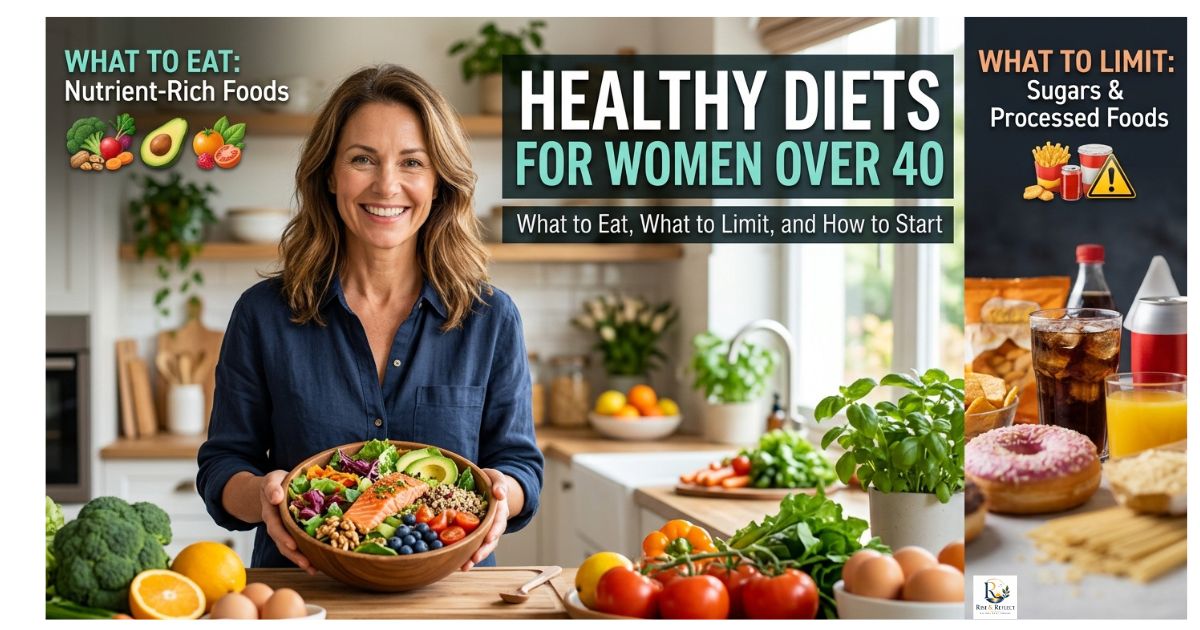
If your jeans feel tighter than they did at 38 and the habits that used to work have quietly stopped working, you’re not imagining it. Somewhere around the early forties, hormones shift, muscle starts to thin out, and appetite can behave strangely. The good news is that small, steady changes at the table make a real difference.
This guide walks through healthy diets for women over 40 in plain language. You’ll learn why weight loss gets harder, which nutrients matter most, the best foods to fill your plate with, how to compare popular eating plans, and a simple 7-day menu you can borrow. We’ve leaned on guidance from Harvard Health and Mayo Clinic, two of the most trusted names in consumer health information.
Why Weight Loss Becomes More Difficult for Women After 40
Many women blame willpower when the scale stops moving. Usually, biology is doing more of the work than discipline.
How Aging Affects Metabolism
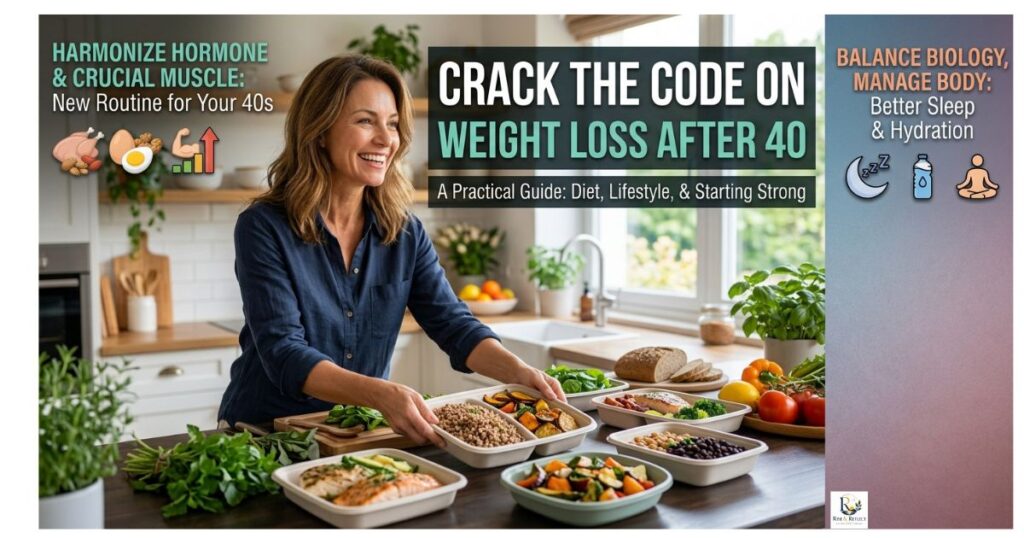
Your body burns calories to keep you alive, and that “resting” burn tends to drift down with age, mostly because you carry less muscle. Less muscle means fewer calories used, even on a lazy Sunday. Add a busier life and less movement, and the gap widens without you noticing.
Hormonal Changes During Perimenopause and Menopause
Perimenopause often begins in the mid-40s, and menopause is officially reached after twelve months without a period. As estrogen levels swing and then fall, many women notice more fat around the middle, poorer sleep, and stronger cravings. These changes are normal, but they mean the old playbook needs an update.
Muscle Loss, Fat Distribution, and Weight Gain
Harvard-affiliated dietitian Nancy Oliveira has pointed out that after 40, women naturally begin losing muscle and need to eat more protein to hold onto it. At the same time, fat tends to settle around the abdomen instead of the hips and thighs. Protecting muscle is therefore one of the smartest moves you can make.
Essential Nutrients Women Need After 40
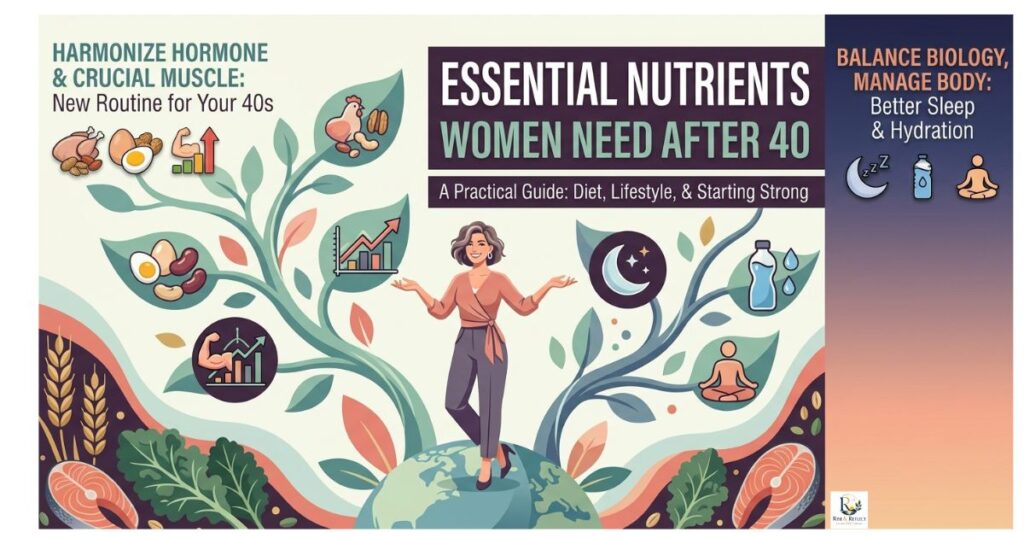
The most effective healthy diets for women over 40 are built around nutrient density, not calorie obsession. Here’s what deserves a spot on your radar.
Protein for Muscle Maintenance and Weight Management
Protein helps preserve muscle, keeps you full, and supports appetite control. For postmenopausal women, Mayo Clinic guidance cited by health writers suggests roughly 1 to 1.2 grams per kilogram of body weight daily, spread across meals at about 15 to 30 grams each. Australia’s CSIRO recently reported that many women aged 40 to 55 fall around 35 grams short of the 1.2 g/kg level.
Calcium and Vitamin D for Bone Health
Bone density declines faster once estrogen drops. Dairy or fortified alternatives, canned fish with soft bones, tofu set with calcium, and leafy greens supply calcium, while sunlight, eggs, and fatty fish help with vitamin D. Ask your doctor about testing before you start supplements.
Iron, Vitamin B12, and Other Important Nutrients
Women who still have periods may need iron, while those on plant-based diets or certain medications should keep an eye on vitamin B12. Magnesium and potassium, found in beans, nuts, bananas, and spinach, support sleep and blood pressure. A blood test beats guessing.lemen
Healthy Fats and Complex Carbohydrates
Olive oil, avocado, nuts, and oily fish support heart health and hormone balance. Complex carbs such as oats, lentils, brown rice, and sweet potatoes release energy slowly and help steady blood sugar. Think “slow-burning fuel,” not “no carbs.”
Best Foods for Weight Loss and Hormonal Health After 40
Here’s what shows up again and again in healthy diets for women over 40 that people can actually stick with.
Fruits and Vegetables Rich in Fiber
Berries, apples, pears, broccoli, carrots, and leafy greens add volume and fiber for few calories. Mayo Clinic’s DASH guidance suggests filling about half your plate with fruits and vegetables. Fiber also feeds beneficial gut bacteria, which plays a role in how your body handles estrogen.
High-Protein Foods for Fullness and Muscle Support
Eggs, Greek yogurt, fish, chicken, lentils, chickpeas, tofu, and cottage cheese all work. Mix animal and plant sources, and favor fish and legumes more often than processed meats.
Whole Grains, Nuts, Seeds, and Healthy Fats
Oats, barley, quinoa, and whole-wheat roti or bread bring fiber and minerals. A small handful of almonds, walnuts, or pumpkin seeds takes the edge off hunger between meals.
Foods to Limit for Better Health and Weight Control
You don’t need a “forbidden” list, but these deserve less space on your plate:
- Sugary drinks and sweetened coffee
- Ultra-processed snacks and packaged baked goods
- Fried foods and excess saturated fat
- Very salty foods (the standard DASH plan caps sodium at 2,300 mg a day)
- Alcohol in large amounts
How to Boost Metabolism Naturally After 40
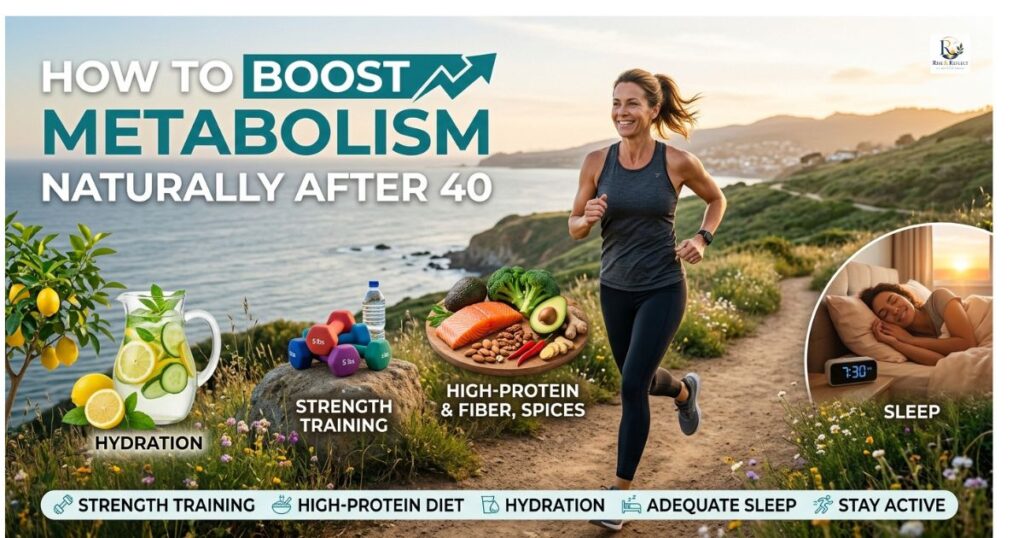
You can’t flip a metabolism switch, but you can nudge it in the right direction.
Eat Enough Protein and Fiber
Digesting protein uses more energy than digesting fats or refined carbs, and both nutrients keep hunger in check. Aim for a protein source at every meal, including breakfast, where many women fall short.
Build and Maintain Muscle Mass
Muscle is metabolically active tissue. Two or three strength sessions a week are the single best long-term investment for your metabolic rate.
Stay Hydrated and Remain Physically Active
Thirst is often mistaken for hunger, so keep water nearby. Daily walking, taking the stairs, and breaking up long sitting stretches add up.
Common Metabolism Myths Women Should Know
- Myth: Skipping meals speeds up fat loss. Reality: It often leads to overeating later.
- Myth: Certain “fat-burning” teas fix a slow metabolism. Reality: Any effect is tiny.
- Myth: Menopause makes weight loss impossible. Reality: It makes it slower, not impossible.
Best Diet Plans and Healthy Diets for Women Over 40
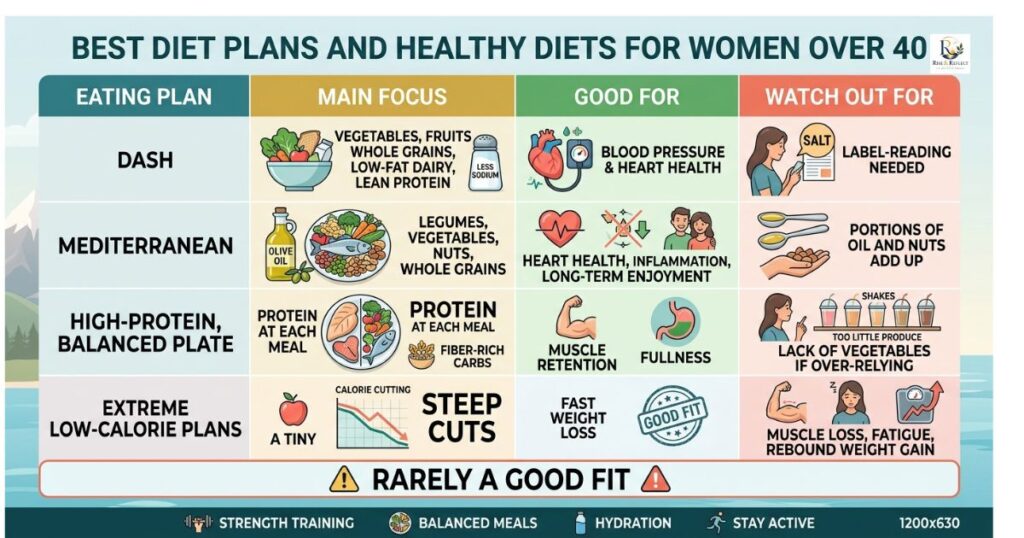
No single plan wins for everyone. The table below compares the approaches that doctors and dietitians mention most often.
| Eating Plan | Main Focus | Good For | Watch Out For |
| DASH | Vegetables, fruits, whole grains, low-fat dairy, lean protein, less sodium | Blood pressure and heart health | Needs label-reading to keep salt low |
| Mediterranean | Olive oil, fish, legumes, vegetables, nuts, whole grains | Heart health, inflammation, long-term enjoyment | Portions of oil and nuts add up |
| High-protein, balanced plate | Protein at each meal plus fiber-rich carbs | Muscle retention, fullness | Too little produce if you lean on shakes |
| Extreme low-calorie plans | Fast weight loss through steep cuts | Rarely a good fit | Muscle loss, fatigue, rebound weight gain |
Is the DASH Diet Good for Women Over 40?
Yes, for many women. Mayo Clinic describes DASH, short for Dietary Approaches to Stop Hypertension, as a balanced plan rich in potassium, calcium, and magnesium that emphasizes vegetables, fruits, and whole grains. It requires no special foods, and many people also lose weight on it, even though it isn’t designed as a weight-loss plan. It’s a strong match if blood pressure or cholesterol is a concern.
Mediterranean Diet and Balanced Eating
The Mediterranean pattern leans on olive oil, fish, beans, vegetables, and nuts, with modest amounts of dairy and meat. It’s flexible, flavorful, and easy to adapt to local cuisines. Anti-inflammatory foods like berries, oily fish, and leafy greens fit right in.
How to Choose a Sustainable Weight-Loss Diet
Whichever of the healthy diets for women over 40 you pick, ask three questions. Can I eat this way on a busy Wednesday? Does it include foods I enjoy? Would I still be doing this in a year? If the answer to any of them is no, keep looking.
Why Extreme Calorie Restriction Can Backfire
Crash diets cut muscle along with fat, which lowers your metabolism and makes regain more likely. CSIRO scientist Dr. Gilly Hendrie has noted that eating less isn’t always the answer to midlife weight gain, partly because many women in this age group aren’t getting enough protein to begin with.
A Simple 7-Day Healthy Eating Plan for Women Over 40
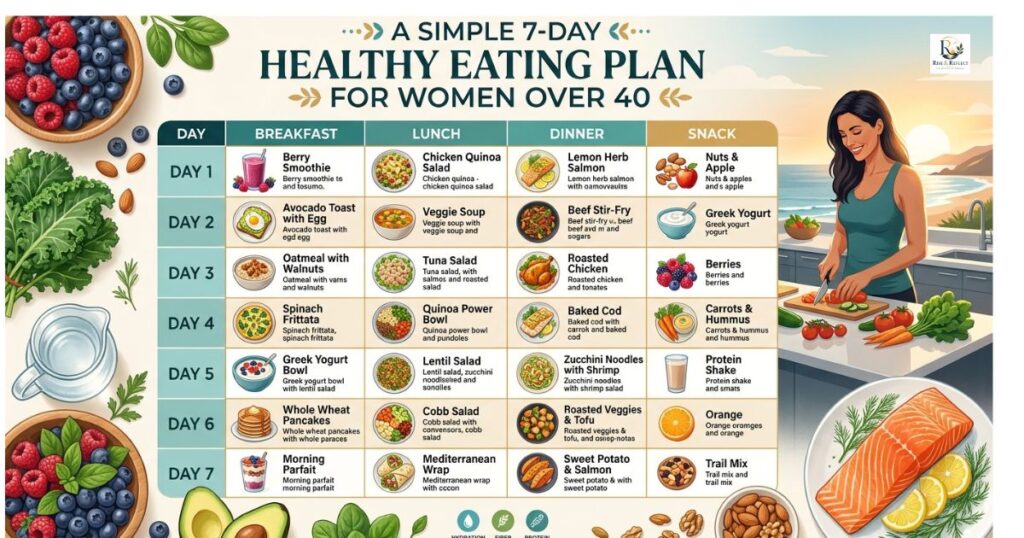
This sample week turns healthy diets for women over 40 into actual meals. Swap items freely based on your culture, budget, and taste.
| Day | Breakfast | Lunch | Dinner | Snack |
| Mon | Veggie omelet with whole-grain toast | Lentil soup and side salad | Baked fish, roasted vegetables, brown rice | Apple with almond butter |
| Tue | Greek yogurt, berries, chia seeds | Chickpea and cucumber salad with olive oil | Grilled chicken, sautéed greens, quinoa | Handful of walnuts |
| Wed | Oatmeal with nuts and cinnamon | Tuna and bean wrap | Vegetable and tofu stir-fry | Cottage cheese and tomatoes |
| Thu | Besan chilla with mint chutney | Chicken and vegetable bowl | Dal, sautéed spinach, one small roti | Carrot sticks and hummus |
| Fri | Scrambled eggs, avocado, fruit | Quinoa salad with roasted pumpkin | Grilled salmon, steamed broccoli, sweet potato | Pear and a few almonds |
| Sat | Protein smoothie (milk, banana, oats) | Vegetable soup with egg | Chicken karahi-style stew with less oil, salad, small portion of rice | Roasted chickpeas |
| Sun | Whole-grain pancakes with yogurt and fruit | Bean and vegetable chili | Baked chicken, roasted root vegetables | Fruit and a boiled egg |
Healthy Breakfast Ideas
Look for protein plus fiber: eggs with vegetables, Greek yogurt with berries, oats with nuts, or chilla with a side of fruit. Toast and coffee alone won’t carry you to lunch.
Balanced Lunch and Dinner Options
Use a simple plate: half vegetables, a quarter protein, a quarter whole grains or starchy vegetables, and a spoonful of healthy fat. It works for soups, bowls, and home-style curries alike.
High-Protein Snacks for Hunger Control
Boiled eggs, roasted chickpeas, cottage cheese, a small handful of nuts, or yogurt keep afternoon cravings in check. Snacks are where many women miss their protein.
Healthy Portion Sizes and Meal Timing
General U.S. dietary guidance puts most women aged 41 to 50 at roughly 1,800 to 2,200 calories a day depending on activity, so your own number may differ. A palm-sized portion of protein and a fist of grains is a handy visual. Regular meals spaced a few hours apart help many women avoid evening overeating.
Exercise and Strength Training for Weight Loss After 40
Food is only half of the picture in healthy diets for women over 40. Movement protects muscle, bones, and mood.
Walking and Cardiovascular Exercise
Brisk walking, cycling, swimming, or dancing raise heart health and burn calories without punishing your joints. Start with 20 minutes and build up.
Strength Training to Preserve Muscle
Lifting weights, using resistance bands, or doing bodyweight moves signals your body to keep its muscle. It also supports bone density, which matters more as estrogen falls.
Beginner-Friendly Exercises for Busy Women
Try squats to a chair, wall push-ups, glute bridges, bent-over rows with water bottles, and planks on the knees. Ten to fifteen minutes at home counts.
How Much Exercise Do Women Over 40 Need?
Common public-health guidance recommends at least 150 minutes of moderate activity weekly plus muscle-strengthening sessions on two or more days. Any starting point beats waiting for the perfect plan.
Sleep, Stress, and Other Factors That Affect Weight After 40
Diet and exercise get all the credit, yet sleep and stress quietly steer your appetite.
How Poor Sleep Affects Hunger and Appetite
Short sleep is linked with stronger hunger and cravings for sugary, fatty food. Aim for a steady bedtime, a cooler bedroom, and less caffeine after midday.
Managing Stress and Emotional Eating
Stress can push you toward comfort foods. A ten-minute walk, breathing exercises, journaling, or calling a friend gives you another outlet than the snack drawer.
Alcohol, Sugary Drinks, and Late-Night Snacking
Liquid calories are easy to miss and rarely fill you up. Swap sweet drinks for water, herbal tea, or sparkling water with lemon, and keep alcohol occasional. Mayo Clinic notes that even moderate drinking can raise blood pressure in some people.
Building Healthy Daily Habits
Pick one habit per week: protein at breakfast, a daily 20-minute walk, a prepared lunch. Small wins compound faster than dramatic overhauls.
Health Conditions That Can Affect Weight Loss After 40
If you’re doing the right things and nothing changes, a medical factor may be involved.
Thyroid Problems and Unexplained Weight Gain
An underactive thyroid can bring fatigue, feeling cold, dry skin, and weight gain. A simple blood test can check it.
Insulin Resistance and Blood Sugar Changes
When cells respond poorly to insulin, blood sugar and fat storage are affected. Fiber-rich meals, regular movement, and fewer refined carbs help manage blood glucose levels.
Menopause Symptoms and Weight Management
Hot flashes, night sweats, and disrupted sleep make healthy routines harder. Treatment options exist, so don’t just push through.
When to Talk to a Healthcare Professional
Book an appointment if you have sudden unexplained weight changes, very irregular or heavy periods, constant fatigue, or you have a medical condition or take medication. A registered dietitian can build a plan around your health history.
Frequently Asked Questions
What is a good diet plan for a 40-year-old woman? A balanced plan with protein at every meal, plenty of vegetables and fiber, whole grains, and healthy fats works well. DASH and Mediterranean styles are both solid choices.
What is the 30-30-30 rule for women? It suggests eating about 30 grams of protein within 30 minutes of waking, followed by 30 minutes of gentle exercise. It’s a popular habit, but research directly proving it works better than other routines is limited.
What is Madhuri Dixit’s diet plan? The actress has said in interviews that she favors simple, home-cooked meals, moderate portions, and regular dance and exercise. There’s no verified official plan, so treat it as inspiration rather than a prescription.
What is the 3-3-3 rule for eating? There’s no single official version. Popular takes suggest three balanced meals with a few small snacks spaced about three hours apart to avoid long gaps and overeating.
What foods speed up female metabolism after 40? No food magically speeds it up, but protein-rich foods like eggs, fish, yogurt, and lentils slightly raise the energy used in digestion. Pair them with strength training to keep metabolism-friendly muscle.
Conclusion: Your Next Step
You don’t need a perfect plan to start. Healthy diets for women over 40 come down to protein at each meal, plenty of fiber, smart fats, regular strength training, good sleep, and patience with your changing body. Choose one change from this guide, try it for a week, then add another.
Ready to begin? Save the 7-day plan, pick tomorrow’s breakfast, and book a check-up with your doctor or a registered dietitian to personalize your goals.
References
- Harvard Health Publishing, “Building blocks: Women’s protein needs change at different stages of life.” https://www.health.harvard.edu/womens-health/building-blocks
- Mayo Clinic, “DASH diet: Healthy eating to lower your blood pressure.” https://www.mayoclinic.org/healthy-lifestyle/nutrition-and-healthy-eating/in-depth/dash-diet/art-20048456
This article is for general education and isn’t a substitute for personal medical advice.