
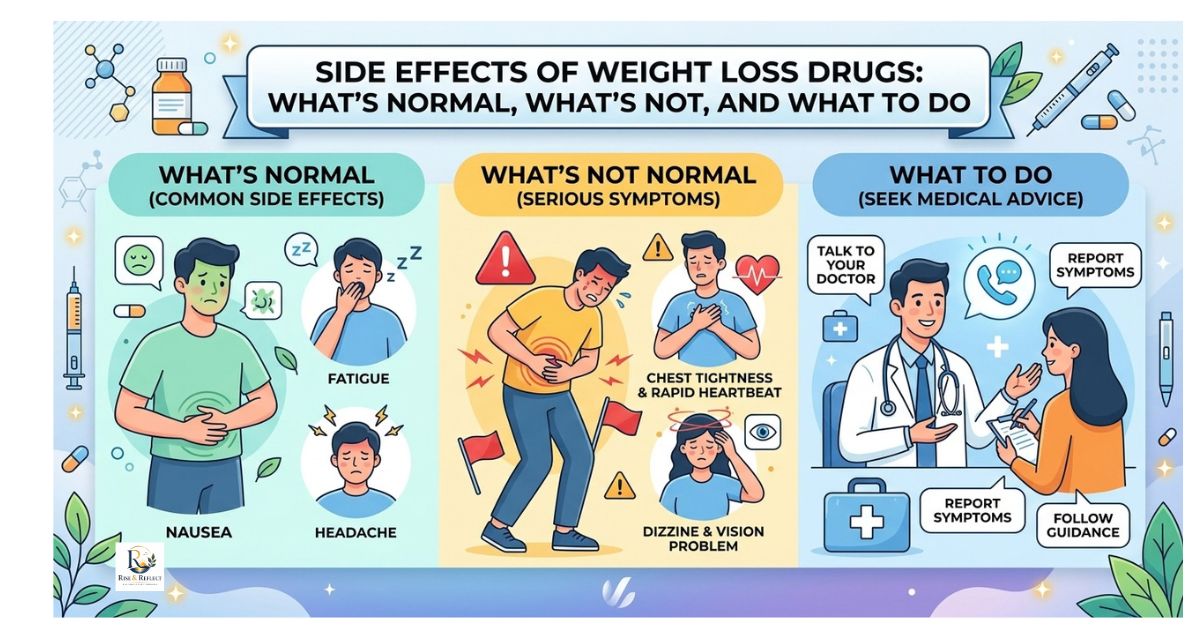
Weight loss medications have moved from niche prescriptions to everyday conversation. Maybe you’re curious about Wegovy, a pill like phentermine, or a supplement you spotted online. Before the first dose, the question that matters is what it might do to your body besides shrink the number on the scale.
This guide covers the side effects of weight loss drugs, from the mild and annoying to the genuinely serious. You’ll learn what each type of medication tends to cause, who qualifies for treatment, whether herbal pills are safer, and when to call your doctor. This is general information, not personal medical advice.
What Are Weight Loss Drugs and How Do They Work?
Weight loss drugs are medicines that help people lose weight and keep it off. They are meant to be used alongside changes to eating, movement, and sleep, not instead of them.
They work in a few different ways:
- Appetite regulation: GLP-1 medicines like semaglutide mimic a gut hormone that makes you feel full sooner and stay full longer.
- Brain signaling: Drugs like phentermine and naltrexone-bupropion act on brain pathways that control hunger and cravings.
- Fat absorption: Orlistat blocks about a third of the fat you eat from being absorbed.
Because these drugs act on digestion and the brain, most of their side effects show up in those same places.
FDA-Approved Weight Loss Medications: Types and Uses
Several prescription options are approved in the United States for long-term weight management, with a few others used short-term. Here’s a quick comparison:
| Medication (Brand) | How It Works | Most Common Side Effects | Key Warning |
| Semaglutide (Wegovy) | GLP-1 agonist, reduces appetite | Nausea, diarrhea, constipation, vomiting | Pancreatitis, gallbladder problems, thyroid tumor warning |
| Tirzepatide (Zepbound) | GLP-1/GIP agonist | Nausea, diarrhea, stomach pain | Similar to semaglutide |
| Liraglutide (Saxenda) | GLP-1 agonist | Nausea, headache, dizziness | Pancreatitis, thyroid tumor warning |
| Phentermine-topiramate (Qsymia) | Appetite suppressant plus anticonvulsant | Dry mouth, tingling, insomnia, constipation | Birth defects; avoid in pregnancy |
| Naltrexone-bupropion (Contrave) | Targets hunger and reward pathways | Nausea, headache, dry mouth | Suicidal thoughts warning, raised blood pressure |
| Orlistat (Xenical, Alli) | Blocks fat absorption | Oily stools, gas, urgent bowel movements | Low fat-soluble vitamin levels |
| Phentermine (Adipex-P) | Stimulant, suppresses appetite | Fast heartbeat, insomnia, dry mouth | Short-term use only; not for heart disease |
Your doctor picks among these based on your health history, other medicines, and goals.
Common Side Effects of Weight Loss Drugs
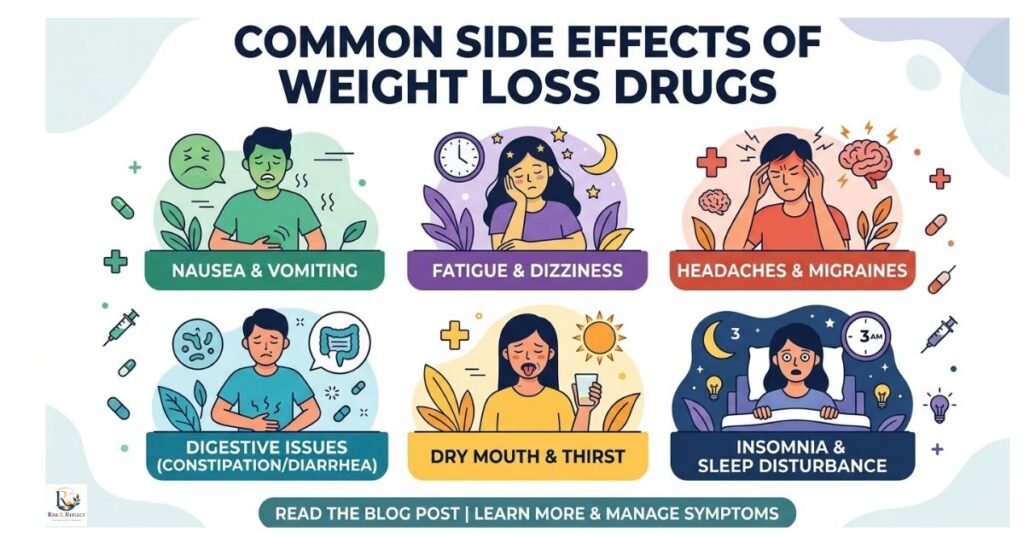
Most people notice at least one side effect, and the common side effects of weight loss drugs are usually mild and fade within a few weeks as your body adjusts. They tend to be worst when you start or raise your dose.
Nausea and Reduced Appetite
Nausea is the most reported complaint with GLP-1 medications. In the landmark semaglutide trial (STEP 1), about three-quarters of people on the drug had stomach-related events, compared with fewer than half on placebo. Reduced appetite is partly the point, but eating too little can leave you tired and short on protein. Small, slow meals help.
Constipation, Diarrhea, and Stomach Pain
Both constipation and diarrhea are common, sometimes in the same week. Cramping and belly pain often come with them. Orlistat adds its own twist: oily spotting and sudden urgency, especially after greasy meals.
Heartburn, Bloating, and Gas
Slower stomach emptying on GLP-1 drugs can mean acid reflux, burping, and a stuffed feeling after small meals. Orlistat causes gas as undigested fat moves through the gut.
Headaches, Fatigue, and Dizziness
Eating much less often leads to headaches, low energy, and lightheadedness, and dehydration makes all three worse. Stimulant-type drugs can also cause jitteriness and trouble sleeping.
Changes in Taste and Other Mild Symptoms
Some people report a metallic taste, dry mouth, hair thinning, or a tingling feeling in the hands and feet (especially with topiramate). Hair shedding is often tied to rapid weight loss itself rather than the drug alone.
Serious Side Effects of Weight Loss Drugs: Risks and Warning Signs
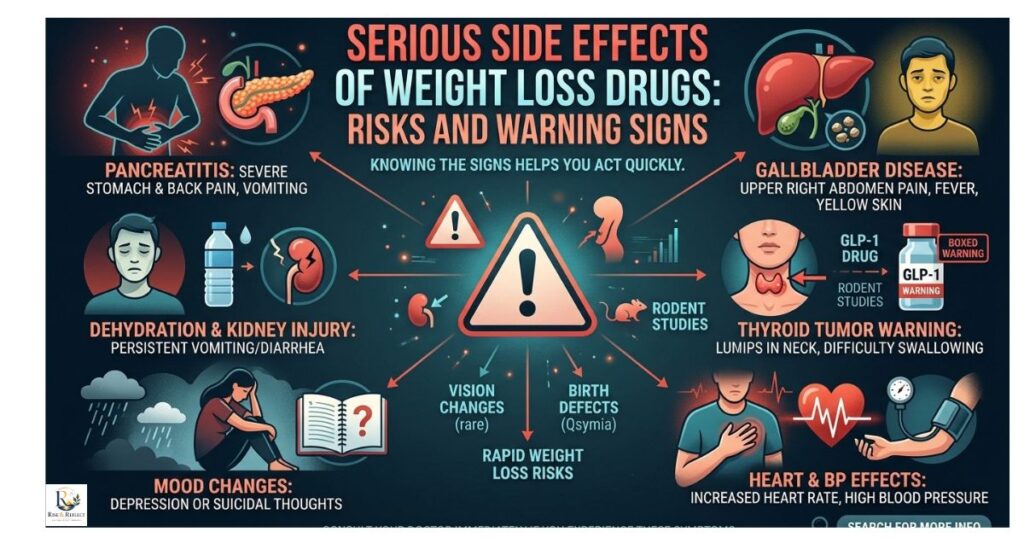
Serious problems are much less common, but they are the reason these medicines need a prescription and follow-up. Knowing the serious side effects of weight loss drugs helps you act quickly if something is wrong.
Watch for these:
- Pancreatitis: severe stomach pain that may spread to your back, sometimes with vomiting.
- Gallbladder disease: pain in the upper right abdomen, fever, or yellowing skin. Rapid weight loss itself raises gallstone risk.
- Dehydration and kidney injury: persistent vomiting or diarrhea can strain the kidneys.
- Thyroid tumor warning: GLP-1 drugs carry a boxed warning based on rodent studies. Tell your doctor about any lump in your neck, trouble swallowing, or a personal or family history of medullary thyroid cancer.
- Mood changes: some drugs carry warnings about depression or suicidal thoughts, so tell someone right away if your mood shifts.
- Heart and blood pressure effects: stimulants and some combination drugs can raise heart rate and blood pressure.
- Birth defects: Qsymia must not be used during pregnancy.
- Vision changes: sudden vision loss has been reported rarely with semaglutide, and regulators have flagged it for monitoring.
Another concern is muscle loss. A portion of weight lost on any rapid program can be lean mass, which is why protein and strength training matter.
Side Effects of GLP-1 Medications, Stimulants, and Other Diet Pills
Each drug class has its own pattern, which helps you know what to expect.
GLP-1 and GIP/GLP-1 medicines (Wegovy, Zepbound, Saxenda): Mostly digestive: nausea, vomiting, diarrhea, constipation. Gallbladder and pancreas problems are the main serious risks.
Stimulants (phentermine): Fast heartbeat, higher blood pressure, restlessness, insomnia, and dry mouth. They’re approved for short-term use, and they carry some potential for misuse.
Combination drugs (Qsymia, Contrave): A mix of dry mouth, tingling, headache, and nausea. Contrave includes a mood-related warning, and Qsymia a pregnancy warning.
Fat blockers (orlistat): Oily stools, gas, and possible shortfalls in vitamins A, D, E, and K. Many doctors suggest a daily multivitamin taken apart from the dose.
Who Is Eligible for Weight Loss Medications?
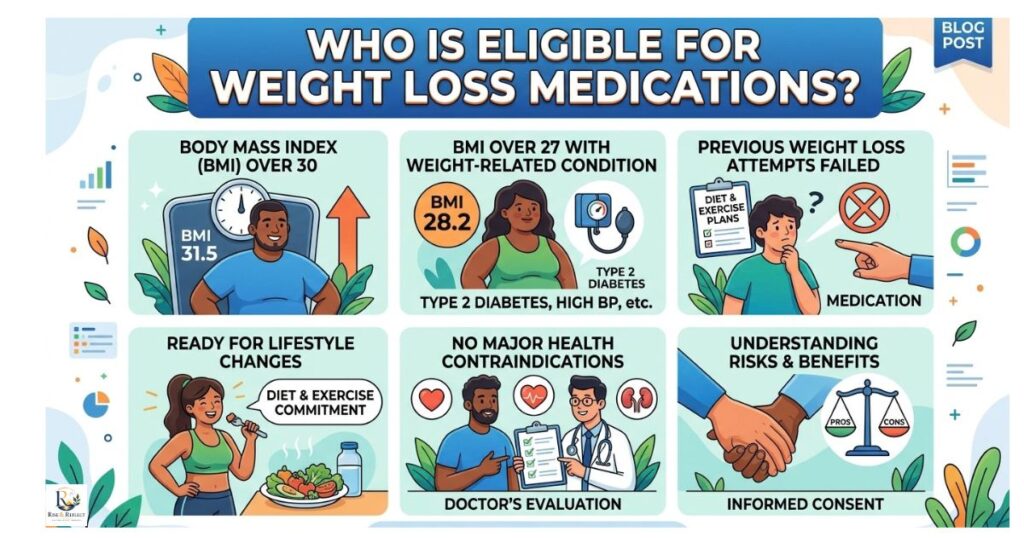
Guidelines generally say prescription options may suit adults with:
- A BMI of 30 or higher (obesity), or
- A BMI of 27 or higher plus a weight-related condition such as type 2 diabetes, high blood pressure, or high cholesterol.
Eligibility isn’t only about the number. Your doctor will also weigh pregnancy plans, past eating disorders, heart disease, kidney or liver issues, and current medications. Talking through the side effects of weight loss drugs with your prescriber at this stage helps you pick the safest match, not just the most popular one. Children and teens have separate guidance, and only some drugs are approved for them.
Are Herbal and Over-the-Counter Weight Loss Pills Safe?
“Natural” doesn’t mean safe. Supplements aren’t reviewed by the FDA for safety or effectiveness before they’re sold, so quality varies widely.
- Hidden ingredients: the FDA has repeatedly found “dietary supplements” spiked with undeclared drugs, including sibutramine, which was pulled from the market over heart risks.
- Liver harm: concentrated green tea extract has been linked to liver injury.
- Stimulant overload: products with bitter orange or heavy caffeine can raise heart rate. Ephedra was banned in 2004 after safety problems.
- Alli (orlistat 60 mg) is the one FDA-approved OTC option, and it brings the same oily-stool and vitamin concerns as the prescription version.
The side effects of weight loss drugs aren’t limited to prescriptions, and with supplements you often can’t be sure what’s in the bottle. Check with a pharmacist or doctor before starting any of them.
How to Manage and Reduce Weight Loss Drug Side Effects
A few habits make a big difference, and they’re worth knowing before you start:
- Start low, go slow. Dose increases are gradual for a reason. Don’t speed them up.
- Eat smaller meals. Stop when you feel full, and skip greasy, fried, or very sugary food.
- Drink plenty of water. Dehydration worsens nausea, dizziness, and constipation.
- Add fiber and movement if you’re constipated. Magnesium or a stool softener may help, but ask first.
- Prioritize protein and strength training to protect muscle.
- Avoid lying down right after eating to ease reflux.
- Keep every follow-up appointment. Your doctor can adjust your dose or switch drugs.
Managing the side effects of weight loss drugs well is often the difference between sticking with treatment and quitting in week three.
When Should You Stop Taking Weight Loss Medication and Seek Medical Help?
Don’t stop a prescription suddenly without talking to your doctor, but get urgent help if you notice:
- Severe or persistent stomach pain, especially with vomiting
- Yellowing skin or eyes, or dark urine
- Chest pain, fainting, or a racing heartbeat that won’t settle
- Signs of an allergic reaction, such as swelling of the face or throat, or trouble breathing
- Vomiting or diarrhea lasting more than a day or two, or signs of dehydration
- Sudden vision changes
- New depression, anxiety, or thoughts of self-harm
- A neck lump or trouble swallowing
Also call your doctor if you become pregnant or plan to, since several of these medicines aren’t safe in pregnancy. Mild symptoms that simply won’t go away deserve a conversation too, because a different dose or drug may help.
Frequently Asked Questions
What are the risks of taking weight loss drugs?
Most risks are digestive and mild, like nausea and constipation. Rarer ones include pancreatitis, gallstones, dehydration, and mood or heart effects, depending on the drug.
What is the fastest way to lose weight?
Medication and surgery produce the quickest results, but crash diets often backfire. Steady loss of about 1 to 2 pounds a week through diet, activity, and medical support is safer and easier to maintain.
What are the long-term side effects of Ozempic?
Long-term data is still growing. Known concerns include gallbladder problems, pancreatitis, ongoing digestive symptoms, and a thyroid tumor warning based on animal studies. Ozempic is approved for type 2 diabetes, while Wegovy is the same ingredient approved for weight loss.
How does life change after losing weight?
Many people see better blood sugar, blood pressure, mobility, and energy. Others deal with loose skin, muscle loss, or weight regain if medication and habits change, so a maintenance plan matters.
What’s the hardest age to lose weight?
Many people find it hardest in midlife, roughly the 40s and 50s, when muscle mass declines, metabolism slows, and hormones shift. Strength training and protein help offset this.
Conclusion
Weight loss medications can be powerful tools, and for many people the benefits outweigh the risks. But they are medicines, not magic. Learning about the side effects of weight loss drugs before you begin helps you tell normal adjustment symptoms from real warning signs, avoid preventable problems, and know when to call your doctor. Every person responds differently, so knowing the common side effects of weight loss drugs ahead of time lets you start treatment with realistic expectations and a clear plan. Being informed about the side effects of weight loss drugs is one of the best ways to stay safe and get the most out of your treatment.
Ready to explore your options? Book an appointment with your doctor or a licensed obesity medicine specialist, bring your full medication and health history, and ask which drug fits you best and how side effects will be monitored. Don’t buy unverified pills online.
References
- Wilding JPH, et al. “Once-Weekly Semaglutide in Adults with Overweight or Obesity” (STEP 1 trial). New England Journal of Medicine, 2021. DOI: 10.1056/NEJMoa2032183
- National Institute of Diabetes and Digestive and Kidney Diseases (NIDDK), NIH. “Prescription Medications to Treat Overweight & Obesity.” niddk.nih.gov