
You just did something incredible you grew and delivered a human being. And yet here you are, standing in front of the mirror wondering why your stomach still looks four or five months pregnant, even weeks after a vaginal birth. If that’s you, take a breath. You’re not doing anything wrong. Belly fat after normal delivery is probably the single most-searched postpartum question out there, and there’s a very real, very biological reason it happens.
This isn’t going to be another article promising a “flat tummy in 2 weeks.” Instead, we’ll walk through why your belly holds onto softness after delivery, what’s actually worth drinking or eating, which exercises help (and which to skip for now), and a timeline that’s honest rather than Instagram-filtered.
Why Is My Stomach Still Fat After Giving Birth?
Honestly? It’s not “fat” in the way most people picture it it’s a body still mid-recovery. A few things are happening under the surface all at once:
- Your uterus is still shrinking back down. This process, called involution, takes roughly six weeks on its own.
- Nine months of stretching doesn’t undo itself overnight. Skin and abdominal muscles were pushed further than they’ve ever been they need time, not a deadline.
- Diastasis recti is more common than people admit. Healthline notes that up to 60% of women deal with some degree of abdominal separation during or after pregnancy, which alone can create a visible pooch even if you haven’t gained a pound of fat.
- Your body stored fat on purpose. That extra padding around your middle is meant to fuel breastfeeding it’s not a mistake you made, it’s the plan working.
- Poor sleep and stress hormones don’t help. Cortisol tends to settle fat right around the midsection, and let’s be real, sleep isn’t exactly abundant right now.
Quick tip: if your stomach domes or bulges outward when you sit up or tighten your core, mention it to your doctor. That’s often diastasis recti, and regular crunches can actually make it worse instead of better.
How Can I Lose Belly Fat After Giving Birth?
There’s no shortcut here, but there is a sequence that actually works for most women dealing with this.
Wait for the Green Light
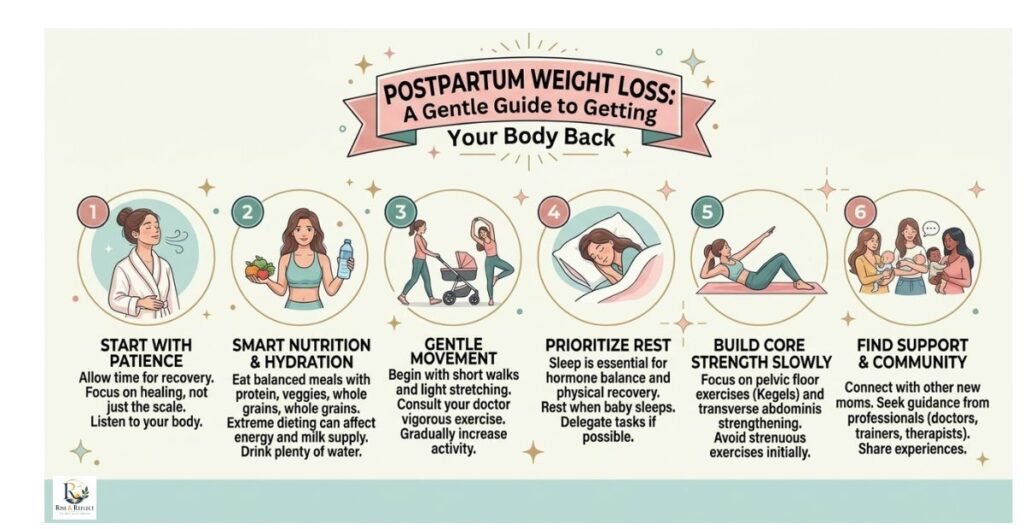
Don’t start anything diet or exercise before your six-week postpartum checkup. Vaginal deliveries usually heal faster than C-sections, but your body is still doing invisible repair work underneath.
Eat to Fuel, Not to Restrict
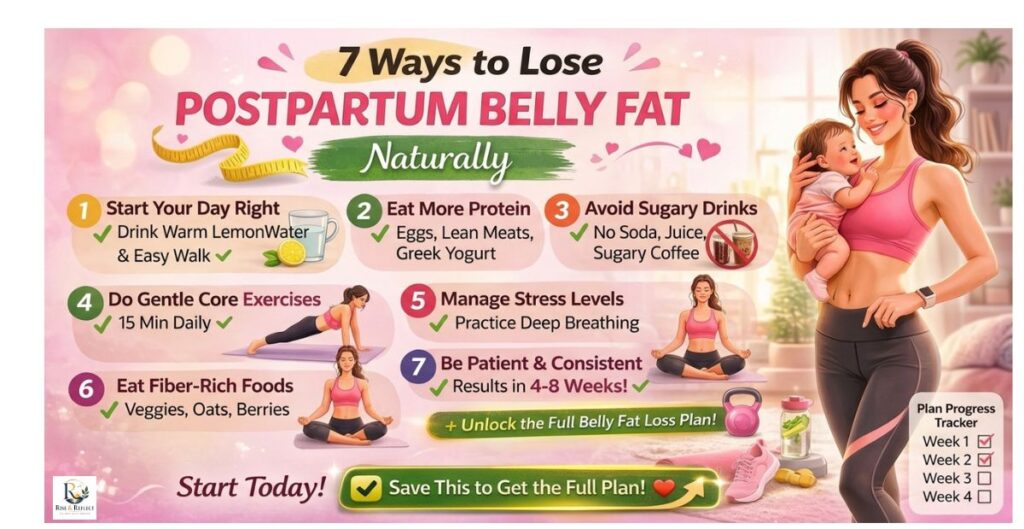
Skip the crash diets. Protein (eggs, lentils, chicken, yogurt) keeps you full and helps repair tissue, while fiber (oats, vegetables, whole grains) keeps digestion moving, which tends to slow down right after delivery.
Just Start Walking
It sounds too simple to work, but it’s genuinely one of the best places to start. Ten to fifteen minutes a day, gradually building up, does more for circulation, mood, and gentle calorie burn than most people expect.
Rebuild Your Core Slowly
Once cleared, start with pelvic tilts and breathing exercises before you even think about planks. Sit-ups and crunches too early especially with diastasis recti can undo progress rather than speed it up.
Don’t Underestimate Sleep
Easier said than done with a newborn, we know. But even small pockets of rest can lower cortisol and take some pressure off that stubborn midsection fat.
Give It Time
According to the American College of Obstetricians and Gynecologists (ACOG), most women take somewhere between six and twelve months to get back to their pre-pregnancy weight, and a safe pace is around 1–2 pounds (roughly half a kilo) per week once you’re cleared for activity. Anything faster usually isn’t sustainable or safe.
What to Drink After Delivery to Reduce Belly Fat?
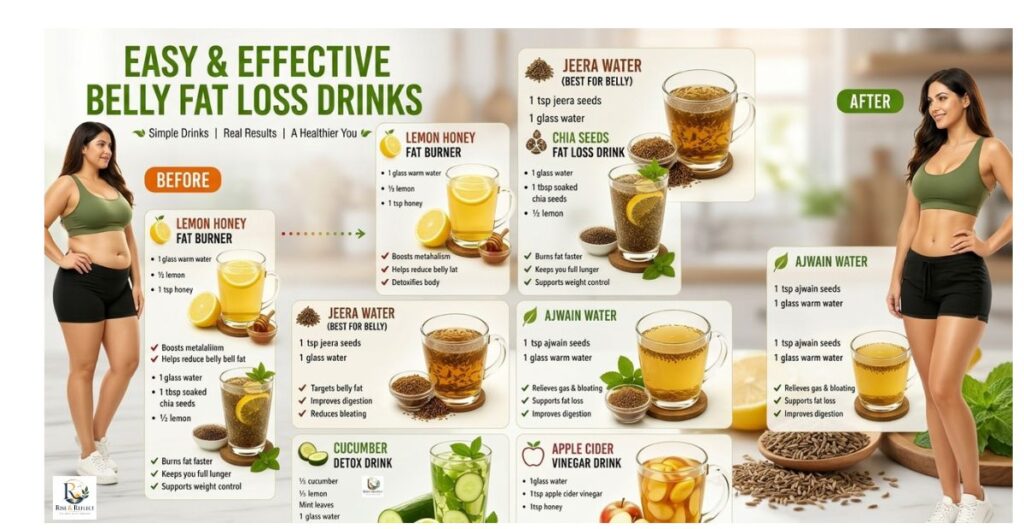
No drink is going to melt fat away by itself anyone promising that is selling something. But a few drinks do support digestion, hydration, and general metabolic function, which all play a supporting role.
| Drink | How It Helps | Best Time to Have It |
| Warm water with lemon | Eases digestion, supports hydration | First thing in the morning |
| Fenugreek (methi) water | Traditionally used for bloating and milk supply | Morning, empty stomach |
| Cumin (jeera) water | May reduce bloating and water retention | After meals |
| Ajwain (carom seed) water | Common postpartum remedy for gas and bloating | Morning or evening |
| Green tea (in moderation) | Antioxidants; watch caffeine while breastfeeding | Mid-morning, not on an empty stomach |
| Plain water | Supports metabolism and milk supply | 8–10 glasses spread through the day |
One caveat worth repeating: if you’re breastfeeding, run any herbal drink past your doctor first. Some haven’t been studied enough for infant safety, and a few can actually affect your milk supply.
How to Remove Saggy Belly After Pregnancy?
A saggy belly is rarely just one thing it’s usually some mix of loose skin, weaker muscles, and leftover fat layered together. That’s exactly why nobody’s single “trick” fixes it for everyone.
Rebuild the muscle underneath. Core rehab work think pelvic tilts, bird-dogs, and eventually modified planks gives your skin something firm to sit on top of again.
Give your skin what it needs to bounce back. Hydration, protein, and vitamin C all support elasticity. And going slow with weight loss genuinely matters here dropping weight too fast tends to leave more loose skin behind, not less.
Postpartum belly wraps can help, within reason. They’re mostly about comfort and posture support in the early weeks. The evidence that they speed up fat loss is thin, so think of them as a nice-to-have, not a fix.
Sometimes it really is just skin. If your muscles are strong and there’s not much fat left, but the skin still hangs loose especially after multiple pregnancies or major weight loss no workout is going to change that. That’s a conversation for a doctor about non-surgical options or, eventually, a tummy tuck once you’re done having kids.
Belly Fat After Normal Delivery: Is It Normal to Gain Weight 2 Years Later

Yes, and honestly, more common than you’d think. At the two-year mark, this usually has little to do with pregnancy anymore. It’s more likely:
- Activity levels quietly dropping once the early postpartum push fades
- A toddler wrecking your sleep schedule all over again
- Stress eating or skipped, irregular meals
- Metabolism naturally slowing a bit with age
- Hormones shifting once breastfeeding winds down
A study on postpartum weight retention (published in PMC) found average retention around 2 kg at one year, but with huge variation some women retain far more, and the risk doesn’t just disappear after year one if habits like activity and eating patterns slip. If you’re noticing new weight creeping on years later, treat it like any other unexplained weight change: look at diet, movement, and sleep, and get a thyroid check with your doctor, since postpartum thyroid issues sometimes show up later than expected.
A Realistic Timeline
- 0–6 weeks: Uterus shrinking, water weight dropping — this stage is about rest, not results
- 6 weeks–3 months: Light walking and gentle core work begin; things start firming up
- 3–6 months: This is usually where visible change actually shows up
- 6–12 months: Pre-pregnancy weight is realistic for many women by now
- 12+ months: Ongoing core work handles whatever muscle or skin looseness remains
Frequently Asked Questions
How many months will it take to reduce belly fat after delivery? Most women notice real change around the 3–6 month mark with consistent walking, decent eating habits, and safe core work full recovery to pre-pregnancy shape often takes closer to 6–12 months.
How to lose 20 kg while breastfeeding? Slowly, and with your doctor involved. Aim for the gentler end of the safe range rather than rushing it crash dieting while breastfeeding can hurt your milk supply and leave you running on empty.
Why is my belly still big 2 months postpartum? Two months in, your uterus and core muscles are still healing a round, soft belly at this stage is completely expected, not a sign anything’s wrong.
What exercises can I do to reduce belly fat after delivery? Start with walking, pelvic tilts, and breathing work, then ease into modified planks and postnatal core routines once your doctor gives the go-ahead, usually around six weeks.
How to lose 20 kg after pregnancy? Spread it out realistically, over many months to a year or more. Combine steady nutrition, gradually increasing activity, real sleep where you can get it, and regular check-ins with your provider instead of chasing a quick number.
Final Thoughts
Belly fat after normal delivery isn’t a flaw waiting to be fixed overnight it’s your body finishing what it started nine months ago. Stay consistent with walking, eat to support recovery rather than restrict it, rebuild your core gently, and give yourself the same patience you’d give a friend going through the exact same thing. If your belly stays bulged or painful longer than feels right, don’t wait it out — a quick check with your OB-GYN or a postpartum physical therapist can save you months of guesswork.