
Losing weight is not really a willpower problem, whatever the fitness ads want you to believe. Most people who feel stuck aren’t lazy or lacking discipline, they’re usually making a handful of small mistakes that quietly stall everything. And that’s the annoying part, these mistakes often look like healthy habits from the outside, which makes them genuinely hard to catch on your own.
This guide walks through the common weight loss mistakes that trip people up most, what a genuinely effective diet for fat loss actually looks like, how you’ll know it’s time to stop losing weight, and how to actually keep the results once you’ve got them.
If you’ve been putting in real effort and the scale still isn’t moving, there’s a good chance one of these common weight loss mistakes is quietly working against you even if everything else you’re doing looks right on paper.
By the end, you’ll have a clearer picture of which common weight loss mistakes might be slowing you down, plus a realistic plan for pushing past a plateau instead of just guessing at what to change next.
Why the Small Stuff Actually Matters

Weight loss is a consistency game, which means small mistakes, repeated day after day, tend to matter more than any single bad meal or missed workout. Underestimating a portion here, skipping a meal there, overestimating how many calories that workout actually burned, none of it seems like much on its own. But stack it up over a few weeks and it can completely cancel out a calorie deficit you thought you were maintaining. Spotting these patterns is usually the real turning point for most people.
The Mistakes That Trip People Up Most
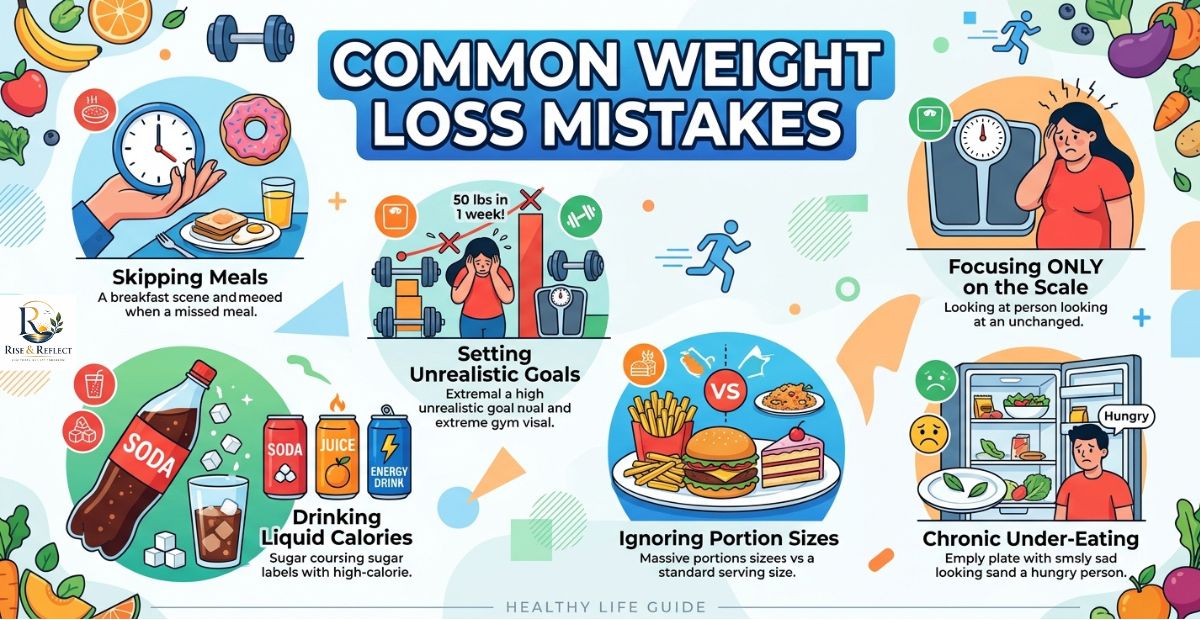
Cutting calories too aggressively. It’s tempting to slash your intake for faster results, but severe restriction tends to backfire. Your metabolism slows, hunger hormones ramp up, and you become far more likely to binge or just quit entirely. A moderate, sustainable deficit beats an extreme one every time, even if it feels slower.
Skipping meals. Skipping breakfast or lunch to “save calories” almost always backfires into overeating later. It also tanks your energy, which quietly reduces how much you move throughout the day, often without you noticing.
Underestimating portions. Even the healthy stuff, nuts, avocado, olive oil, is calorie-dense. Without some awareness of portion size, it’s easy to eat more than you think, especially with foods you’ve mentally filed under “healthy” and stopped questioning.
Leaning too hard on exercise. Exercise matters, but it’s shockingly easy to eat back the calories you just burned, usually without realizing it. Diet drives most of the results here; exercise plays more of a supporting role than people want to admit.
Not eating enough protein. Protein preserves muscle while you’re losing weight and keeps you full longer. Skimp on it and you’ll likely lose more muscle and feel hungrier, both working directly against your goals.
Expecting the scale to drop every day. Weight fluctuates constantly from water retention, hormones, digestion, you name it. Expecting a daily drop sets you up to feel discouraged even when you’re making real progress underneath the noise.
Not prioritizing sleep. Poor sleep messes with ghrelin and leptin, the hormones tied to hunger, which usually means more cravings and less willpower the next day. It’s easy to overlook, but it’s doing more damage than most people realize.
What Is the Best Diet for Fat Loss?

There’s no single “best” diet, honestly, the best one is whatever you can actually stick to for months, not days. That said, a few principles hold up across pretty much every eating style that works.
Adequate protein, roughly 1.2-2.0g per kg of body weight, helps preserve muscle. A moderate calorie deficit, typically 300-500 calories below maintenance, is sustainable without wrecking your energy. High-fiber foods, vegetables, legumes, whole grains, keep you full. Cutting back on ultra-processed foods matters too, they’re calorie-dense and dangerously easy to overeat without noticing. And consistency beats perfection, always, sustainable habits outperform short bursts of extreme restriction every single time.
Whether that ends up looking Mediterranean, lower-carb, or just simple portion control depends entirely on your life and preferences. The best diet is the one that actually fits into it.
When to Stop Losing Weight
Knowing when to stop matters just as much as knowing how to start. A few signs it’s time to shift into maintenance: you’ve reached a healthy range for your height and build, you’re noticing low energy, hair loss, or disrupted sleep (all signs of excessive restriction), your performance in workouts or daily life is declining instead of improving, or you’ve hit a goal based on how you actually feel, not just a number you picked arbitrarily.
Pushing past a healthy point risks nutrient deficiencies, hormonal disruption, and a much higher chance of rapid regain once you return to normal eating. If you’re not sure where your healthy range sits, a doctor or dietitian can help you land on something sensible for your actual body.
What Is the Best Way to Maintain Weight Loss?
Maintenance is genuinely harder than the losing part, mostly because the habits that got you here need to become permanent rather than temporary. A few things that actually help: gradually raising your calories to your new maintenance level instead of reverting to old habits overnight, still tracking loosely, whether that’s weigh-ins or just how your clothes fit, keeping strength training in the mix to preserve muscle and support your metabolism, allowing yourself some flexibility since overly rigid rules tend to trigger burnout and rebound eating, and actually addressing whatever drove the weight gain in the first place, stress eating, poor sleep, an inactive routine, whatever it was for you.
Long-term research on people who successfully maintain weight loss points to two consistent factors: staying active and continuing to self-monitor, even loosely.
Common Weight Loss Mistakes to Fix First?
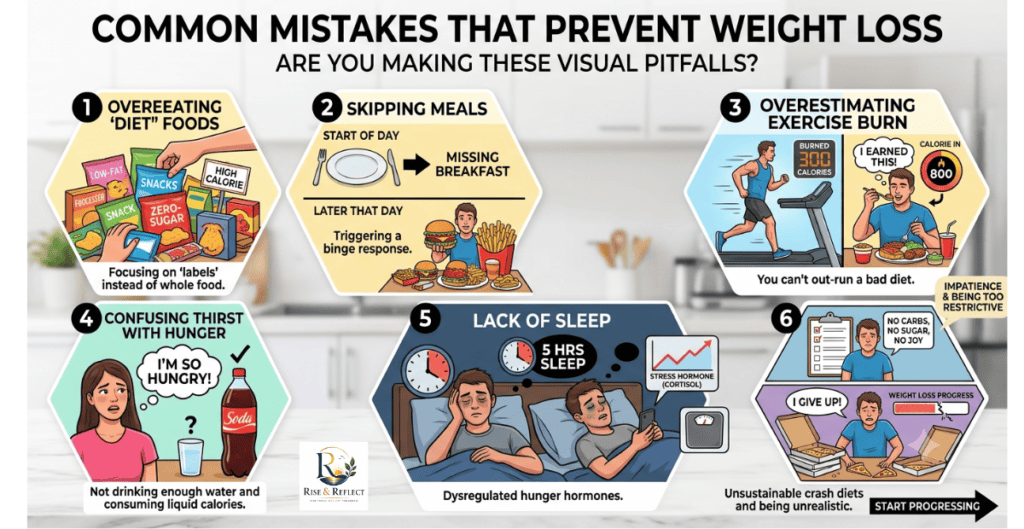
If you’ve been consistent for weeks with genuinely nothing to show for it, a few places to look. Actually track your intake for a few days, portion creep is incredibly common and easy to miss without writing it down. Reassess your activity level, bodies adapt to routines faster than people expect. Check your sleep and stress, both significantly affect the hormones tied to weight regulation. And if lifestyle changes still aren’t moving the needle after real effort, it’s worth ruling out medical factors like thyroid issues with a doctor.
Sometimes a plateau just means your body’s adjusted to your current intake and activity, and a small, deliberate change is what’s needed to get things moving again.
Frequently Asked Questions
What is the most common mistake people make when trying to lose weight? Underestimating portion sizes and calorie intake, even with foods generally considered healthy, tops the list by a wide margin.
What is the best diet for fat loss? One with adequate protein, a moderate calorie deficit, and enough fiber to keep you full, sustainable enough that you can actually follow it long-term.
When should I stop trying to lose weight? Once you’re in a healthy weight range, notice declining energy or performance, or further loss would start compromising your overall health.
How do I maintain weight loss once I reach my goal? Gradually raise your calories to a new maintenance level, keep strength training in your routine, and keep loosely monitoring your progress over time.
Why can’t I lose weight even though I’m trying hard? Usually comes down to underestimated intake, inconsistent tracking, poor sleep, or stress, not a lack of effort. A doctor can help rule out medical causes if nothing else adds up.
Final Thoughts
Common weight loss mistakes are rarely about laziness they’re usually just small, overlooked habits quietly adding up over time without you even noticing.
Figure out where your own routine is actually falling short portions, sleep, unrealistic expectations, whatever it is and you can make targeted fixes that genuinely move the needle instead of just guessing. That’s really the whole point of understanding common weight loss mistakes: it’s less about overhauling everything and more about spotting the one or two things quietly holding you back.
Pick one mistake from this list that sounds a little too familiar, address it this week, and build from there. Once you start recognizing these common weight loss mistakes in your own routine, they’re honestly a lot easier to fix than most people expect.
At the end of the day, avoiding common weight loss mistakes isn’t about being perfect. Small, informed changes are what create results that actually last and that’s a lot more sustainable than chasing quick fixes.