


Weight loss affect diabetes more than many people realize. Losing even a small amount of excess weight can improve Blood glucose levels, increase Insulin sensitivity, and lower A1C, making diabetes easier to manage. Research shows that reducing just 5% to 10% of your body weight may help control Blood sugar, reduce the risk of serious diabetes-related health problems, and improve your overall quality of life.
Whether you have Type 2 diabetes or Prediabetes, adopting healthy habits such as nutritious eating and regular physical activity can lead to lasting results. In this guide, you’ll discover how weight loss influences diabetes and the practical steps you can take to achieve better long-term health.
1.How Much Does Weight Loss Affect Diabetes?
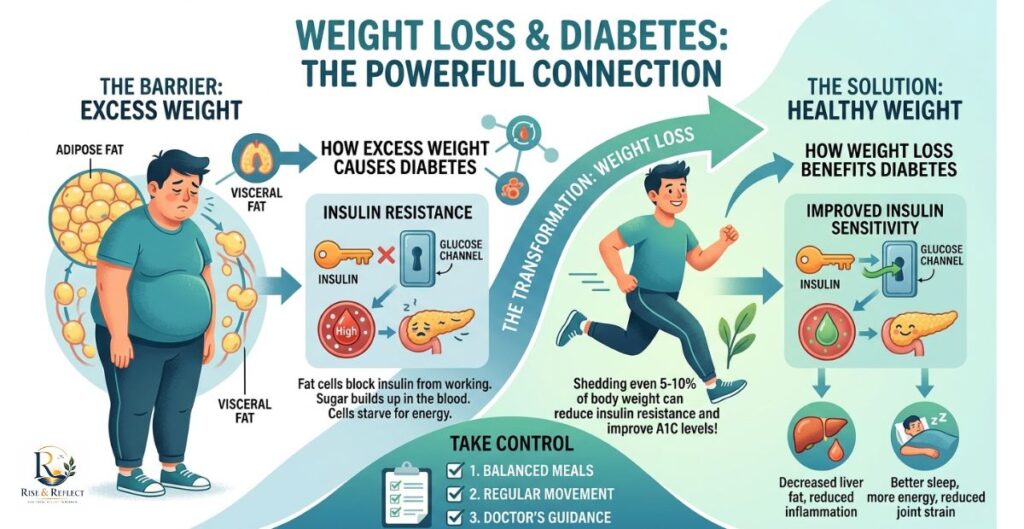
Why Body Fat Affects Blood Sugar Levels
Understanding how much does weight loss affect diabetes begins with learning how your body uses Insulin. This hormone moves sugar from your blood into your cells, where it becomes energy. When excess Body fat, especially around the abdomen, builds up, your cells stop responding properly. This condition is known as Insulin resistance. As a result, your pancreas produces more insulin to keep Blood sugar under control. Over time, the pancreas struggles to keep up, causing rising Blood glucose levels.
People with Obesity or a high Body Mass Index (BMI) often have greater Diabetes risk because excess fat increases inflammation and disrupts normal metabolism. A larger Waist circumference also indicates harmful abdominal fat, which is closely linked to poor Glucose control. Losing even a small amount of weight helps your body respond to insulin more effectively and supports healthier blood sugar levels.
2. Benefits of Weight Loss for People with Diabetes
How Much Does Weight Loss Affect Diabetes and Blood Sugar Levels
Weight loss benefits nearly every part of the body. Improved Blood glucose control reduces stress on the kidneys, eyes, nerves, and heart. Better Insulin sensitivity allows your body to use insulin more efficiently, while lower A1C reflects improved blood sugar management over several months.
Healthy weight loss also supports stronger Heart health, better mobility, increased confidence, and reduced joint pain. Many people sleep better, feel more energetic, and enjoy a higher quality of life after reaching a Healthy weight. These improvements make everyday activities easier and encourage long-term success.
3. Can Weight Loss Reverse Type 2 Diabetes?
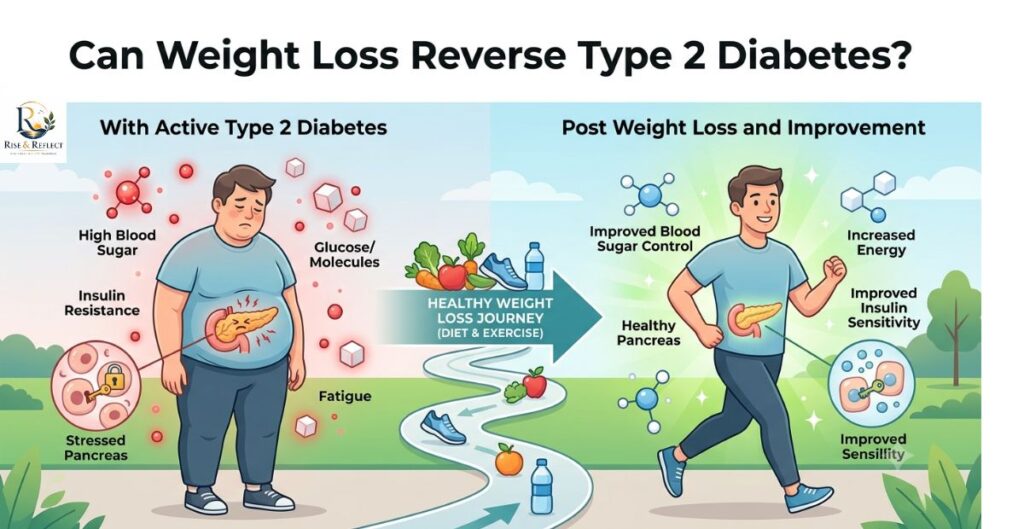
IncredibleUnderstanding Diabetes Remission
Many people ask whether how much does weight loss affect diabetes also means diabetes can disappear. The answer depends on the individual. Doctors now use the term Diabetes remission instead of “cure.” Remission means maintaining normal Blood sugar without diabetes medication for several months under medical supervision.
People diagnosed early with Type 2 diabetes have the best chance of achieving remission through healthy weight loss. Consistent Healthy eating, regular Physical activity, and ongoing monitoring remain essential because diabetes can return if weight is regained.
4. Best Diet Plans for Weight Loss and Diabetes
Choosing Foods That Support Better Health
There is no single perfect diet for everyone. The most successful eating plan is one you can follow for years. A Balanced diet built around Whole foods, Vegetables, Fruits, Whole grains, Lean protein, and Healthy fats provides essential nutrients while helping you create a safe Calorie deficit.
Limiting Processed foods, Sugary drinks, High-fat snacks, and oversized Portion sizes helps reduce Energy intake without feeling deprived. Choosing Low glycaemic index foods also slows the rise in blood sugar after meals and supports better Blood glucose control throughout the day.
| Include More | Limit |
| Vegetables | Sugary drinks |
| Whole grains | Processed foods |
| Lean protein | High-fat snacks |
| Healthy fats | Large Portion sizes |
5. How Much Does Weight Loss Affect Diabetes with Daily Physical Activity

How Much Does Weight Loss Affect Diabetes Every Day
Regular physical activity is one of the most effective ways to manage diabetes and improve overall health. If you are wondering How Much Does Weight Loss Affect Diabetes, exercise plays a major role in the answer. Physical activity helps your muscles use glucose for energy, lowering blood sugar levels and improving insulin sensitivity. It also supports healthy weight loss, making it easier to understand How Much Does Weight Loss Affect Diabetes in real-life diabetes management.
Simple activities such as walking, cycling, swimming, and resistance training can deliver significant health benefits when performed consistently. Health experts recommend at least 150 minutes of moderate-intensity exercise each week to improve blood glucose control, strengthen the heart, and promote overall well-being. Regular exercise is one of the clearest examples of How Much Does Weight Loss Affect Diabetes, as it helps the body use insulin more efficiently while supporting sustainable weight management.
Combining daily exercise with an active lifestyle can improve energy levels, enhance mood, and reduce the risk of diabetes-related complications. The more consistently you stay active, the more noticeable the benefits become. Understanding How Much Does Weight Loss Affect Diabetes can encourage lasting lifestyle changes that lead to healthier blood sugar levels, better fitness, and long-term weight maintenance.
6. How Much Does Weight Loss Affect Diabetes by Improving Insulin Sensitivity
Medicines and Surgery
Lifestyle changes remain the foundation of diabetes care, but some people benefit from medical treatment. Metformin is commonly prescribed to improve insulin action and help manage blood sugar. Newer GLP-1 medications such as Ozempic and Mounjaro help many people lose weight while improving glucose control.
For individuals with severe Obesity, Bariatric surgery may offer substantial weight loss and significant improvements in diabetes management. Every treatment should be discussed with a General practitioner (GP) or another qualified Health professional to ensure it matches your medical needs.
7. Challenges of Losing Weight with Diabetes

Overcoming Common Obstacles
Weight loss is rarely a straight path. Some diabetes medications contribute to Weight gain, while stress, poor Sleep quality, and emotional eating can make progress slower. Busy schedules and limited access to healthy foods also create challenges for many families.
The key is consistency rather than perfection. Practicing Mindful eating, staying well hydrated through proper Hydration, managing stress with healthy techniques, and focusing on Long-term healthy habits help overcome temporary setbacks. Small improvements made consistently often produce lasting success.
8. Practical Tips to Lose Weight Safely with Diabetes
How Much Does Weight Loss Affect Diabetes with Healthy Habits?
Successful Weight management depends on daily routines rather than quick fixes. Eat regular meals, monitor your progress, stay active, and celebrate small victories along the way. Working with a Dietitian, Diabetes educator, or another Health professional provides personalized guidance and reliable Medical advice.
If you have Prediabetes, taking action now may delay or even prevent Type 2 diabetes. A combination of Healthy eating, regular Physical activity, and maintaining a Healthy BMI offers one of the most effective strategies for Diabetes prevention. Every healthy choice moves you closer to better health.
Conclusion
Scientific evidence shows that even modest weight loss can have a powerful impact on diabetes management. If you have ever wondered, How Much Does Weight Loss Affect Diabetes, research provides a clear answer. Losing just 5% to 10% of your body weight can improve blood sugar levels, lower A1C, increase insulin sensitivity, and reduce the risk of diabetes-related complications. Understanding How Much Does Weight Loss Affect Diabetes helps people make informed decisions about improving their long-term health.
Studies also suggest that greater weight loss may help some individuals achieve diabetes remission when combined with medical supervision and healthy lifestyle changes. This highlights How Much Does Weight Loss Affect Diabetes, as reducing excess body weight allows the body to use insulin more effectively and maintain healthier blood glucose levels.
The journey to better health does not require perfection—it requires consistency. Following a balanced diet, staying physically active, eating nutrient-rich foods, maintaining a healthy waist circumference, and working closely with your healthcare team can lead to lasting improvements. Knowing How Much Does Weight Loss Affect Diabetes can motivate you to make small, sustainable changes that produce significant health benefits over time.
Every pound you lose is an investment in a healthier future. Better blood sugar control, improved heart health, increased energy, and a lower risk of diabetes complications are all possible with consistent lifestyle changes. When considering How Much Does Weight Loss Affect Diabetes, remember that even small, steady progress can make a meaningful difference in your overall health and quality of life.
FAQs
1.Can losing weight cure diabetes?
No. Weight loss does not cure diabetes, but it can improve Blood sugar control. Some people with Type 2 diabetes may achieve Diabetes remission through significant and sustained weight loss.
2.How much weight should I lose to lower my A1C?
Losing just 5% to 10% of your body weight can help lower A1C and improve Blood glucose levels. Greater weight loss may provide even better results.
3.Which exercise is best for diabetes?
A combination of walking, strength training, and other moderate exercise is best for managing diabetes. Aim for at least 150 minutes of physical activity each week.
4.Can diabetes go away if you lose weight?
Yes, losing weight can help some people with type 2 diabetes achieve remission, where blood sugar returns to a healthy range without medication. However, it is not a guaranteed cure.
5.Is type 1 diabetes reversible with diet?
No, type 1 diabetes cannot be reversed with diet or weight loss because the body no longer produces enough insulin. Healthy eating can help manage blood sugar but cannot cure the condition.