
Most people who want to start exercising don’t actually get stuck on motivation. They get stuck on not knowing where to begin. Should you do cardio first? Weights? Some 20-minute YouTube video with a person yelling at you? It’s a lot, and for a beginner, it’s often enough to make you close the laptop and do nothing at all.
Here’s the part nobody tells you: you don’t need a gym, a trainer, or any equipment to get real results. A patch of floor space and your own body weight is genuinely enough to start. This guide covers the best home exercises for beginners, breaks down the “3-3-3 rule” you’ve probably seen floating around online, and answers the questions most first-timers actually ask. No jargon, no 90-minute routines, just a plan you can start today.
Why Working Out at Home Actually Works for Beginners
There’s less friction. No driving anywhere, no monthly fee, no worrying about whether people are watching you fumble through a squat. You go at your own pace. You repeat a move five times if you need to, or skip a rest day if life gets in the way, and nobody’s tracking you but you.
And bodyweight training isn’t some watered-down version of “real” exercise. Studies on resistance training using just your own body weight show it builds strength, improves balance, and supports heart health about as well as equipment-based workouts do, especially if you’re new to this. So no, you’re not missing out by skipping the dumbbells.
What Is the 3-3-3 Rule for Workouts?
You’ve probably seen this trending. The 3-3-3 rule is exactly what it sounds like: exercise 3 days a week, do 3 sets per exercise, rest 3 minutes between sets. Some people also cap it at 3 exercises per session, just to keep the whole thing from feeling like homework.
Why does it work? Mostly because it removes the guesswork. You’re not sitting there wondering if you’re doing “enough” or overtraining, which is honestly one of the top reasons beginners quit within the first month. Three days a week is realistic. It fits around a job, kids, whatever else is going on, and that’s really the whole point, a routine you’ll actually keep doing.
What Is the Easiest Exercise to Do at Home?
If you want the honest answer: marching in place. That’s it. No coordination required, no equipment, nothing to learn. You just… walk, without going anywhere.
Bodyweight squats come in a close second, mainly because you already do a version of this movement every time you sit down or stand up from a chair. It’s not new to your body, just more deliberate.
But here’s the thing worth remembering: “easy” doesn’t mean “less effective.” Five minutes of marching in place, done daily, will get you further than one brutal workout you never repeat again. Consistency beats intensity, every time, especially early on.
7 Exercises You Can Do Every Day as a Beginner
These are gentle enough to repeat daily without wrecking your legs, but they still build real strength.
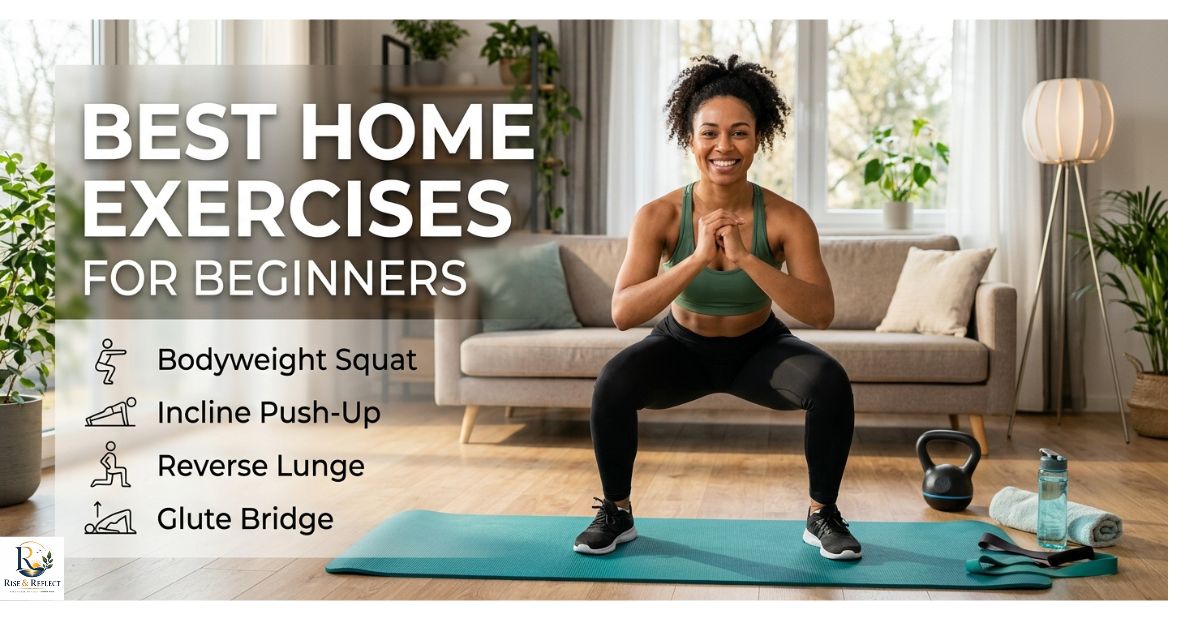
Bodyweight squats. Feet shoulder-width apart, lower like you’re sitting in a chair, stand back up. Hits your legs and glutes.
Wall push-ups. Face a wall, hands flat against it, bend your elbows to bring your chest closer. Way more approachable than floor push-ups if you’re starting from zero upper body strength.
Standing marches. Alternate lifting your knees while standing. Great warm-up, decent for balance too.
Glute bridges. Lie on your back, knees bent, lift your hips toward the ceiling. Your lower back and glutes will feel this one.
Standing side leg raises. Hold onto a chair, lift one leg out to the side, lower slowly. Repeat on the other side. Builds hip stability, which matters more than people think.
Calf raises. Rise onto your toes, lower back down. You can do this while brushing your teeth, honestly.
A short stretch or yoga flow. Five to ten minutes at the end keeps you flexible and cuts down on soreness the next day.
Do these daily, even just 10-15 minutes, and you’ll build a habit without the burnout that comes from doing too much too fast.
10 Exercises You Can Do at Home for a Full Workout
Once the basics feel comfortable, mix in these for a more complete routine that hits strength, cardio, and core:
- Squats
- Push-ups (wall or knee variations count)
- Lunges
- Plank
- Glute bridges
- Jumping jacks
- Mountain climbers
- Standing side crunches
- Superman hold
- High knees
A simple way to structure this: 30 seconds of work, 15-30 seconds of rest, two or three rounds through. It slots neatly into the 3-3-3 framework we talked about earlier, three sessions a week is plenty to see progress.
Staying Consistent (The Actual Hard Part)
Starting is easy. Week three is where most people fall off. A few things that genuinely help:
Start smaller than you think you need to. Ten minutes a day beats one exhausting hour that leaves you too sore to move for a week. Track how many reps you’re completing instead of obsessing over how you look in the mirror, that comes later and it’s not a good early motivator anyway. Mild soreness is normal; sharp pain isn’t, so listen to the difference. Attach the workout to something you already do daily, right after your morning coffee, right before your shower, whatever sticks. And actually notice when you hit a full week. That’s not nothing.
Frequently Asked Questions
Do I need equipment to start exercising at home? No. Squats, push-ups, and planks work fine on their own, no equipment required.
How long should a beginner workout at home? Somewhere around 15-30 minutes, three to four times a week, is a solid starting point. Build up from there as it gets easier.
Is it normal to feel sore after starting a new routine? Yes, that’s DOMS (delayed onset muscle soreness) and it’s common when you’re new to a movement. It usually fades in a few days. Sharp or lasting pain is different, that’s your cue to rest and check your form.
What’s a good workout schedule for a beginner? The 3-3-3 rule works well for a lot of people: three days a week, three sets per exercise, three-minute rests between sets.
Can I actually lose weight with home workouts alone? Yes, particularly when paired with reasonable eating habits. Bodyweight exercises burn calories and build muscle, both of which matter for weight management over time.
Final Thoughts
You don’t need a gym membership or a rack of equipment to start getting stronger. A few square feet of space and some consistency will take you further than you’d expect.
Pick three exercises from this list. Try your first 3-3-3 session this week. That’s really all it takes to get moving, literally and otherwise.